

Geopolitical Volatility Ignites Global Jet Fuel Crisis
The geopolitical landscape of the Middle East has reached a critical juncture, directly impacting global energy markets and sending reverberations through the intricate supply chains that fuel modern economies. Following an extensive bombing campaign by the U.S. and Israel targeting Iranian military infrastructure and leadership, the critical Strait of Hormuz, a vital maritime chokepoint, has become effectively blocked. This unprecedented disruption has triggered a severe scarcity of jet fuel, prompting the U.S. President to issue a stark warning to international allies regarding their role in global security and energy independence.
The U.S. President minced no words, publicly castigating allied nations for their perceived lack of support during the military actions against Iran. His message was clear: Washington will no longer unilaterally safeguard the interests of countries that failed to reciprocate support. In a series of pointed social media statements, he declared, “Nations must now cultivate their own defensive capabilities; the United States will not extend assistance where reciprocal support was absent.” This declaration signals a profound recalibration of international alliances, with immediate and tangible implications for energy security and market stability.
Specific criticism was leveled at France, which the President characterized as “VERY UNHELPFUL” in the confrontation with Iran. This diplomatic friction, coming just weeks after the commencement of the comprehensive bombing operations that decimated Iranian military assets and neutralized key figures, underscores the deep divisions within the Western alliance. The President’s direct and forceful rhetoric, including a warning that “The U.S.A. will REMEMBER!!!”, sets a confrontational tone that reverberates across global capitals and commodity trading floors.
The Strait of Hormuz: A Chokepoint Under Pressure
With the Strait of Hormuz now largely impassable, a significant proportion of the world’s maritime traffic, including crucial crude oil and refined product shipments, remains stranded within the Persian Gulf. This effective closure has precipitated an acute crisis for global energy supplies, with jet fuel emerging as a particularly vulnerable commodity. For investors tracking the intricate dynamics of the oil and gas sector, the implications are immediate and far-reaching, directly impacting airline operations, logistics, and global trade.
Global jet fuel demand stood at an impressive 7.8 million barrels per day last year, a figure that includes kerosene, which serves as both aviation fuel and a heating oil. This substantial demand profile highlights the catastrophic impact of disrupted supply flows from the Middle East. Refineries across Asia, heavily reliant on Middle Eastern crude, have already begun to curtail production as their feedstock dwindles, exacerbating the supply crunch for refined products. Analysts and oil traders are now forecasting an inevitable shortfall, necessitating either a reduction in air travel to curb demand or a strategic deployment of global oil stockpiles to bolster supplies.
Presidential Directives and Shifting Alliances
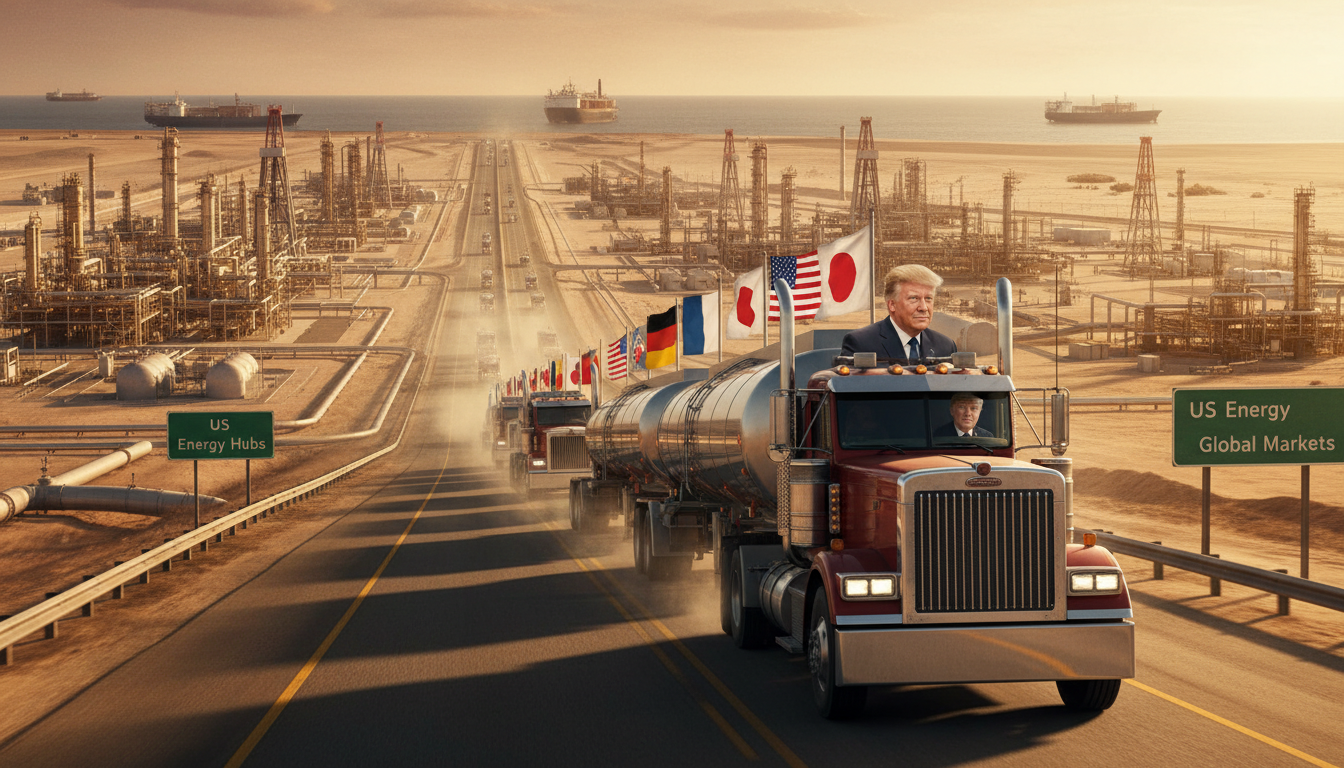
In an extraordinary directive, the U.S. President urged countries struggling to secure jet fuel to simply “take it” from the Strait of Hormuz, asserting that the initial, challenging phase of weakening Iran had already been completed by the United States. He specifically challenged the United Kingdom, noting its reluctance to participate in the “decapitation of Iran,” and offered a two-pronged solution: first, procure supplies from the abundant U.S. market, and second, “build up some delayed courage, go to the Strait, and just TAKE IT.” This aggressive stance not only underscores the depth of the geopolitical rift but also reflects a profound shift in Washington’s strategic calculus regarding global energy security.
The President’s remarks signal a new era of self-reliance for allies, pushing them to confront their energy security challenges directly. His statement, “The hard part is done. Go get your own oil,” resonates with investors contemplating the future of international energy cooperation and the potential for increased unilateral action or regionalized security efforts.
Quantifying the Jet Fuel Shortfall: Market Exposure and Supply Resilience
While the United States is a significant player in the jet fuel market, exporting approximately 80 million barrels last year, its capacity alone cannot fully offset the monumental loss of supply resulting from the Strait of Hormuz closure. Consultancy FGE NexantECA estimates a staggering shortfall of around 37 million barrels of jet fuel in March and April alone, a figure that dwarfs the U.S. export capacity and highlights the global nature of the crisis. A substantial portion of U.S. jet fuel exports is typically directed to immediate neighbors, Canada and Mexico, with the United Kingdom receiving a comparatively modest 4.5 million barrels last year.
Domestically, the U.S. currently maintains about 44.3 million barrels of kerosene-type jet fuel in its stockpiles, a volume slightly above the seasonal average. This inventory represents approximately four weeks of supply, according to official government data. While this provides a buffer for the U.S. market, it offers limited relief to other nations facing acute shortages.
Europe stands as the primary importer of jet fuel and kerosene from the Persian Gulf. Data compiled by Vortexa reveals that supplies from this volatile region account for roughly half of all jet fuel and kerosene imports into the European Union and the United Kingdom. This heavy reliance exposes European economies, particularly their aviation and logistics sectors, to immense vulnerability in the face of the ongoing Strait of Hormuz blockade. The current crisis underscores the critical importance of diversifying energy sources and fortifying supply chain resilience, especially for key refined products like jet fuel.
Investor Implications: Navigating a Fractured Energy Landscape
For investors, this escalating geopolitical tension and the ensuing energy market disruption present both significant risks and potential opportunities. The immediate outlook suggests heightened volatility in crude oil and refined product prices, with jet fuel likely experiencing premium pricing as supply constricts and demand remains robust. Airlines and logistics companies, particularly those with extensive international routes, face increased operational costs and potential service disruptions. Investors should closely monitor fuel hedging strategies and the financial health of these energy-intensive sectors.
Furthermore, the U.S. President’s call for allies to increase their self-reliance could stimulate investments in domestic refining capacity and alternative energy infrastructure in various nations. The imperative to diversify supply routes and reduce dependence on geopolitical hotspots will likely accelerate strategic shifts in global energy investments. Companies involved in energy infrastructure development, cybersecurity for critical assets, and advanced fuel technologies may see increased interest.
The long-term implications include a re-evaluation of energy security policies globally, potentially leading to increased strategic petroleum reserve buildups and a renewed focus on regional energy independence. Investors with exposure to oil and gas exploration, midstream infrastructure, and strategic storage solutions should assess how these geopolitical shifts will impact future cash flows and asset valuations. The current crisis is a stark reminder of the intricate interplay between international relations, military actions, and the fundamental dynamics of global energy markets.
