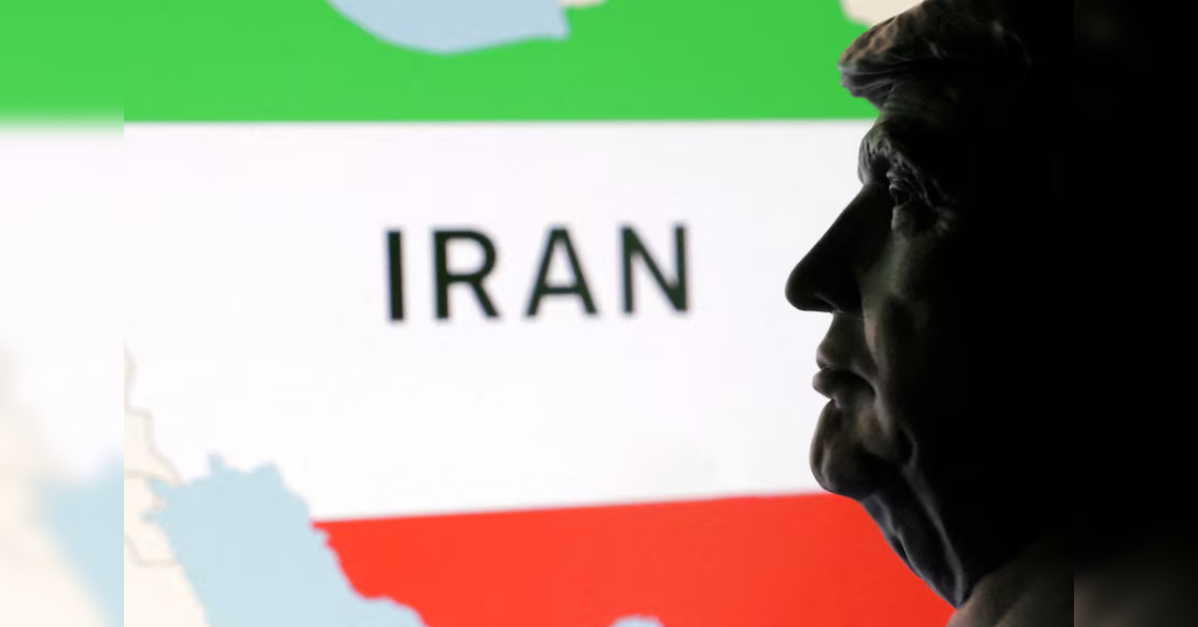
The global oil market is once again navigating a complex web of geopolitical statements and shifting alliances, following recent remarks from former President Donald Trump regarding China’s ongoing purchases of Iranian crude. This seemingly straightforward comment, made in the wake of an Israel-Iran ceasefire, has injected a fresh wave of uncertainty into an already volatile energy landscape. For oil and gas investors, understanding the nuances of this development – from its immediate impact on crude prices to its long-term implications for supply dynamics and international relations – is paramount. Our analysis delves into how this political maneuvering could reshape the investment thesis for the coming quarters, leveraging OilMarketCap’s proprietary data to provide unique insights beyond the headlines.
Geopolitical Shifts and Market Volatility: A Bearish Signal?
President Trump’s statement, suggesting China could continue importing Iranian oil while simultaneously urging them to purchase more US crude, struck a dissonant chord across the market. While the White House was quick to clarify that this did not signal a formal relaxation of US sanctions, the perception alone was enough to trigger a significant market reaction. As of today, Brent crude trades at $90.38 per barrel, marking a substantial 9.07% decline from its open and fluctuating within a daily range of $86.08 to $98.97. WTI crude followed suit, plunging 9.41% to $82.59, with its intraday range spanning $78.97 to $90.34. Gasoline prices also felt the pressure, dropping 5.18% to $2.93 per gallon.
This single-day plunge is not an isolated event but contributes to a broader bearish trend observed in recent weeks. Our proprietary data shows Brent crude has shed a notable $20.91, or 18.5%, from its March 30th peak of $112.78 to $91.87 on April 17th. The market interprets any hint of increased Iranian oil flowing unhindered into global markets as a direct boost to supply, thus exerting downward pressure on prices. Despite previous administrations’ efforts to drive Iran’s oil exports to zero through “maximum pressure” campaigns, the impact has often been limited, with Chinese “teapot” refineries frequently finding ways to circumvent restrictions. This latest development underscores the persistent challenge of enforcing sanctions against a determined buyer and seller, and its immediate market reverberations highlight investor sensitivity to potential supply increases.
The Paradox of Sanctions Enforcement and Investor Concerns
The core of the market’s unease lies in the perceived shift towards a more lenient stance on Iranian oil exports, irrespective of official policy declarations. Experts suggest this reflects a return to lax enforcement standards rather than a formal policy pivot. Implementing a formal suspension or waiver of sanctions would be a complex bureaucratic undertaking, requiring significant inter-agency coordination and potentially Congressional notification. Such a move is widely seen as unlikely ahead of critical US-Iran nuclear talks, where sanctions relief remains a key Iranian demand and a crucial piece of US leverage.
Our reader intent data indicates a strong underlying investor interest in the long-term price trajectory of crude, with many asking, “what do you predict the price of oil per barrel will be by end of 2026?” The answer to this question is intrinsically linked to the effectiveness of sanctions and the resulting supply picture. If China, the world’s top importer of Iranian crude, is indeed given a tacit greenlight to increase purchases, it could significantly alter the supply-demand balance. This situation also creates a delicate diplomatic tightrope, as larger purchases of Iranian oil by China could strain relationships with key US allies like Saudi Arabia, the world’s largest oil exporter, who often adjust their own production in response to market dynamics and geopolitical pressures. Investors must weigh the likelihood of continued informal laxity against the complexities of formal policy shifts, both of which will shape the global supply outlook.
Navigating Upcoming Supply Dynamics: OPEC+ and Beyond
Against this backdrop of evolving geopolitical rhetoric, the market’s attention is sharply focused on upcoming energy events that will provide further clarity on global supply dynamics. Investors are keenly watching the OPEC+ Joint Ministerial Monitoring Committee (JMMC) meeting scheduled for this Saturday, April 18th, immediately followed by the full Ministerial meeting on Sunday, April 19th. A recurring question from our readers, “What are OPEC+ current production quotas?”, underscores the market’s intense focus on the cartel’s strategy for managing global supply.
The potential for increased Iranian exports, even if unofficial, adds a layer of complexity to OPEC+’s deliberations. Will the group maintain its current production cuts to support prices, or will the specter of additional non-OPEC+ supply force a reconsideration of their strategy? Beyond OPEC+, weekly data releases will offer critical insights. The API Weekly Crude Inventory report on Tuesday, April 21st, and the EIA Weekly Petroleum Status Report on Wednesday, April 22nd, will provide snapshots of US crude stocks, refining activity, and product demand. These will be followed by the Baker Hughes Rig Count on Friday, April 24th, indicating future US production trends. The following week brings another round of API (April 28th), EIA (April 29th), and Baker Hughes (May 1st) data. Each of these events will be scrutinized for signals of market rebalancing in the face of shifting geopolitical supply variables.
Implications for Oil & Gas Investments: Where to Find Value
For oil and gas investors, these developments necessitate a re-evaluation of current positions and future strategies. While specific stock performance, such as questions like “How well do you think Repsol will end in April 2026?”, reflects individual investor focus, the broader question is how these geopolitical and supply shifts impact the entire exploration and production (E&P) sector. Increased supply, whether from Iran or potentially from the US if Trump’s call for more US crude purchases by China materializes, generally creates headwinds for crude prices, impacting the profitability of producers.
However, opportunities may emerge. US producers, particularly those focused on efficient extraction and lower operating costs, could benefit from any concerted effort to boost US crude exports. Companies with robust hedging strategies or diversified revenue streams may prove more resilient in a volatile price environment. Furthermore, the underlying demand fundamentals, particularly from China, remain a critical factor. Investors should scrutinize company balance sheets, production guidance, and exposure to different geopolitical regions. The current environment demands vigilance and a nuanced understanding of how political rhetoric, sanctions enforcement, and fundamental supply-demand dynamics will converge to shape the oil market’s trajectory through 2026 and beyond.


