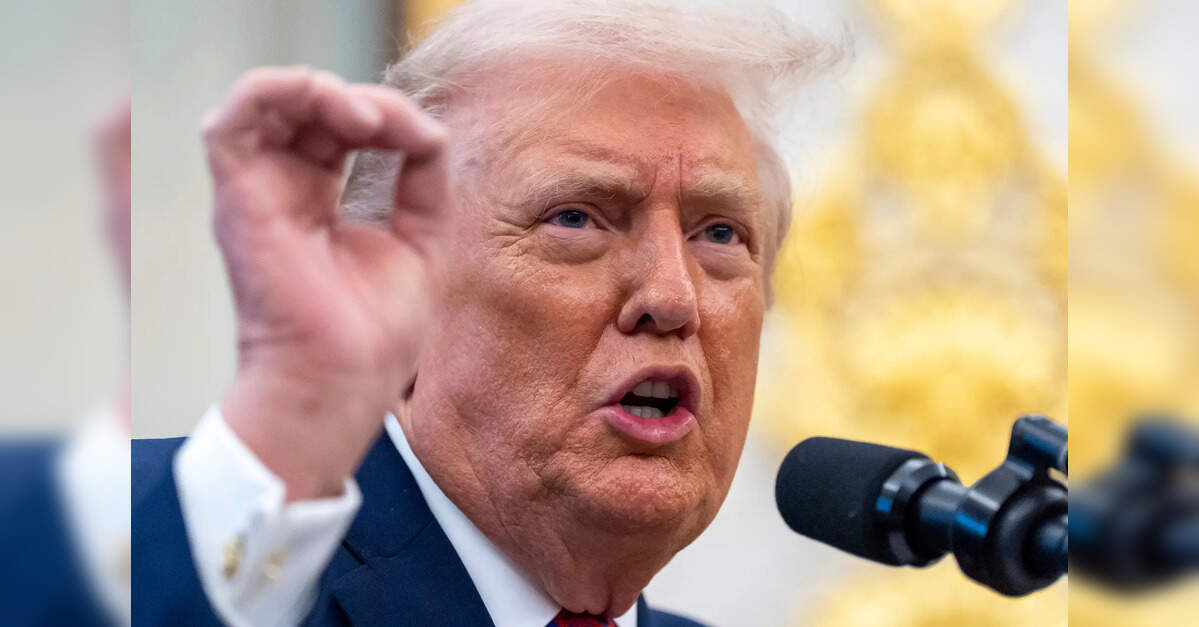
The global oil market is a complex tapestry woven from geopolitical threads, economic indicators, and the ever-present forces of supply and demand. In late 2025, a significant geopolitical maneuver by the Trump administration sent ripples through this intricate system. President Trump’s decree of a “total and complete” blockade on sanctioned oil tankers entering and leaving Venezuela, coupled with the designation of the nation’s rulers as a foreign terrorist organization, served as a potent, albeit temporary, catalyst for crude prices. This action, following the seizure of a Venezuelan oil tanker, underscored how swiftly political decisions can inject supply-side risk premiums into an otherwise bearish market. However, as we stand in April 2026, the market narrative has evolved significantly, demonstrating that while such shocks can generate immediate rallies, the long-term trajectory is shaped by a broader confluence of factors, many of which are currently driving prices downward.
Geopolitical Flashpoints and Immediate Price Reactions
In December 2025, the market witnessed a sharp, albeit contained, reaction to the geopolitical escalation surrounding Venezuela. The blockade order immediately triggered a bullish response, with US crude futures climbing 1.3%, or 72 cents, to settle at $55.99 per barrel. This surge was a direct reflection of the market pricing in reduced Venezuelan oil exports and the heightened risk of supply disruptions. Venezuela, despite its diminished capacity, still represents a potential source of crude, and any action limiting its flow inevitably tightens the global supply picture. It’s crucial to remember that this specific rally occurred against a backdrop where oil prices had previously touched near five-year lows. At that time, optimism surrounding potential Russia-Ukraine peace talks had fueled speculation about eased sanctions on Moscow, threatening to release more supply into a market already grappling with fragile global demand. The Venezuelan blockade, therefore, acted as a counter-narrative, a sharp reminder that geopolitical instability can quickly override fundamental bearish pressures and inject volatility.
Navigating Today’s Volatile Crude Landscape
Fast forward to today, April 18, 2026, and the oil market presents a stark contrast to the short-lived rally spurred by the Venezuela blockade. Our live market data indicates a significant downturn across key benchmarks. Brent crude currently trades at $91.87 per barrel, marking a substantial 7.57% decline from its opening. WTI crude has followed a similar trajectory, dropping 7.86% to $84 per barrel within the day, with both benchmarks experiencing wide trading ranges. This recent bearish momentum extends beyond a single day’s trading; our proprietary data reveals that Brent crude has plummeted from $112.78 on March 30th to its current $91.87, representing a significant 18.5% erosion of value in just over two weeks. Gasoline prices have also felt the pressure, now at $2.95 per gallon, down 4.85% today. This pronounced decline suggests that while geopolitical supply shocks like the Venezuela blockade can create temporary surges, the overarching market sentiment is currently dominated by concerns over demand strength, potential inventory builds, or broader macroeconomic headwinds, underscoring the fragility of the recent price environment.
Anticipating Key Market Catalysts: The Road Ahead
For investors navigating this volatile environment, the next fortnight is packed with critical events that could significantly influence crude price trajectories. The most immediate and impactful is the OPEC+ Full Ministerial Meeting, scheduled for today, April 18th. Given the recent steep decline in crude prices, the market will be scrutinizing every statement and decision from this gathering. Will the alliance maintain its current production cuts, signal a willingness to deepen them to stabilize prices, or hint at a potential easing of restrictions later in the year? The outcome of this meeting will be paramount in shaping near-term supply expectations. Beyond OPEC+, the market will keenly await the weekly API and EIA crude inventory reports, due on April 21st, 22nd, 28th, and 29th. These releases provide crucial granular data on US crude stockpiles, refinery utilization, and product demand, offering vital insights into the current supply-demand balance. Any unexpected builds could intensify bearish sentiment, while significant draws could offer a much-needed boost. Furthermore, the Baker Hughes Rig Count reports on April 24th and May 1st will shed light on North American drilling activity, signaling potential future supply trends from a key non-OPEC producer. Collectively, these upcoming events will act as pivotal market catalysts, potentially redirecting the current price momentum and offering clarity on the immediate future of oil markets.
Addressing Investor Concerns: The 2026 Outlook
Our reader intent data indicates that investors are keenly focused on understanding the long-term trajectory of oil prices, with a recurring question being, “What do you predict the price of oil per barrel will be by the end of 2026?” This forward-looking perspective naturally extends to the operational decisions of major players, as evidenced by inquiries such as, “What are OPEC+ current production quotas?” These questions highlight the market’s need to reconcile short-term volatility with fundamental outlooks. While a geopolitical event like the Venezuela blockade can deliver an immediate, sharp impact, as seen in late 2025, sustained price levels through 2026 will hinge on a more complex interplay. OPEC+ production policy, particularly in response to current price weakness and global demand forecasts, will be a dominant factor. The commitment of key producers to supply discipline, juxtaposed against evolving global economic growth projections and the pace of energy transition, will dictate the market balance. Furthermore, the ongoing potential for other geopolitical flashpoints, though perhaps less dramatic than a full blockade, always looms as a wild card, capable of reintroducing supply-side risk premiums. Investors must integrate these multifaceted considerations, from OPEC+ strategy to macro demand signals and regional geopolitical risks, to construct a robust outlook for crude prices through the remainder of the year.
The oil market’s journey from a December 2025 rally fueled by a Venezuela blockade to today’s significant downturn underscores its inherent sensitivity and complexity. While geopolitical events can trigger immediate, sharp reactions, the broader supply-demand fundamentals and macroeconomic currents ultimately dictate sustained price movements. As investors look ahead, the upcoming OPEC+ meeting and weekly inventory reports will be crucial in shaping sentiment and providing clarity amidst the current volatility. Vigilance and a comprehensive understanding of both macro and micro drivers remain paramount for navigating this dynamic landscape.


