

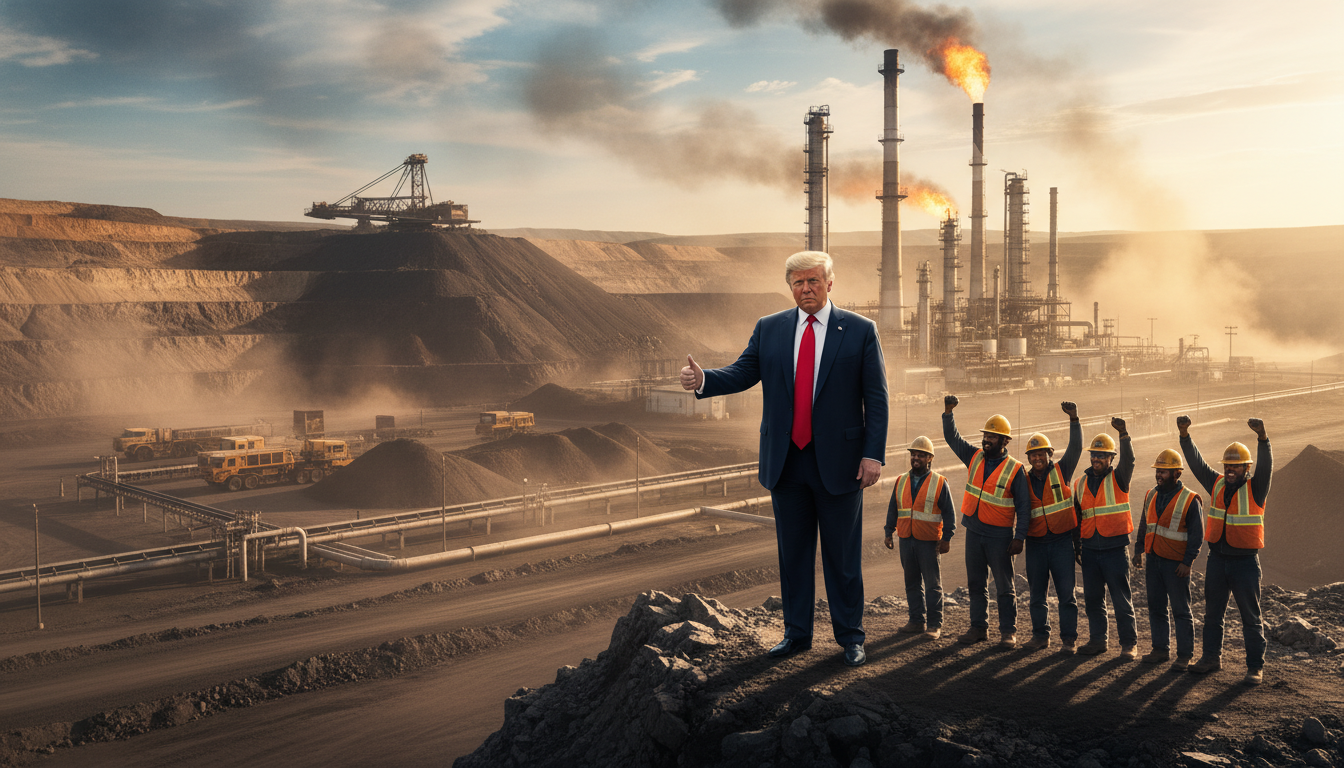
Federal Intervention Reinforces Grid Stability with Coal Plant Lifeline
Washington D.C. witnessed a significant federal directive aimed at fortifying America’s electrical grid, marking a decisive shift in energy policy. U.S. Secretary of Energy Chris Wright recently issued an emergency order mandating the continued operation of Unit 1 at the Craig Station in Craig, Colorado. This intervention directly overrides a previously scheduled decommissioning of the coal-fired generation unit, initially slated for the end of 2025. The Secretary’s directive, first issued on December 30, 2025, compels Tri-State Generation and Transmission Association, alongside co-owners Platte River Power Authority, Salt River Project, PacifiCorp, and Public Service Company of Colorado (Xcel Energy), in coordination with the Western Area Power Administration (WAPA) Rocky Mountain Region and Southwest Power Pool (SPP), to guarantee the unit’s operational availability.
This federal action underscores a renewed emphasis on energy security, affordability, and unwavering grid reliability. The order, which takes effect from March 31, 2026, and extends through June 28, 2026, highlights critical concerns regarding the nation’s capacity to deliver consistent power. For investors eyeing the energy sector, this signals a robust commitment to preserving existing baseload generation, particularly in the face of increasing intermittency risks associated with certain renewable sources.
Policy Pivot Aims to Counter Energy Instability
Secretary Wright articulated the administration’s firm stance, attributing past energy policies to an erosion of national energy security and an elevated risk of widespread blackouts. He emphasized that the current administration is proactively working to prevent the loss of essential generation assets, ensuring that American homes and businesses have access to uninterrupted power, irrespective of weather conditions affecting solar or wind output. This policy reorientation provides a clearer investment signal for traditional energy infrastructure, including natural gas power generation, which often serves as a critical peaker and backup resource when coal plants are decommissioned or when intermittent sources underperform.
The broader implications extend beyond this single Colorado facility. The administration’s leadership in 2025 reportedly preserved over 17 gigawatts (GW) of coal-fired electricity generation nationwide. This trend indicates a potential deceleration, or even reversal, of the rapid retirement of fossil fuel assets that characterized prior years. For investors, this translates into a potentially longer lifespan and sustained revenue streams for conventional power plants, affecting valuations across coal, natural gas, and even related infrastructure sectors like pipelines and transportation.
Optimizing Grid Operations and Mitigating Costs
A key operational directive accompanying the emergency order concerns the Southwest Power Pool (SPP). Effective April 1, once Tri-State and the WAPA Rocky Mountain Region formally integrate into the SPP RTO West expansion, SPP is instructed to implement “economic dispatch” protocols. This mechanism is designed to minimize operational costs for ratepayers by prioritizing the most cost-effective generation resources available within the grid system. For energy market participants, this move emphasizes efficiency and cost-effectiveness as paramount considerations in grid management, which can impact profitability for various power generators. Natural gas, with its flexibility and often competitive pricing, stands to benefit from such dispatch rules, especially when it can outcompete less efficient coal units or fill gaps left by more expensive alternatives.
The imperative behind these actions is further illuminated by stark warnings from energy oversight bodies. The Department of Energy’s Resource Adequacy Report previously projected a potential hundred-fold increase in blackouts by 2030 if the U.S. continued the trajectory of retiring reliable power sources at the rate observed during the prior administration. This alarming forecast directly informs the current administration’s proactive measures to safeguard grid stability. Such reports highlight the systemic risks inherent in an imbalanced energy transition and reinforce the investment case for diversified energy portfolios that include robust, dispatchable generation capacity.
Addressing Systemic Reliability Challenges
The North American Electric Reliability Corporation (NERC) echoed these concerns in its 2025 Long-Term Reliability Assessment. NERC’s assessment specifically cautioned that the ongoing transition in the nation’s resource mix towards weather-dependent generation, coupled with diminishing fuel diversity, escalates the likelihood of supply shortfalls, particularly during critical winter months. This expert analysis provides a strong analytical foundation for the federal government’s intervention at Craig Station and similar efforts to bolster baseload power. Investors should take note of these warnings, as they signal a growing recognition by policymakers and grid operators that grid resilience must be a primary consideration, potentially re-prioritizing firm generation over purely emissions-driven targets in the short to medium term. This environment creates favorable conditions for investments in both existing and new fossil fuel infrastructure that can provide reliable, on-demand power.
The federal government’s decisive action to keep the Craig Station’s Unit 1 operational underscores a critical turning point in U.S. energy strategy. By prioritizing grid reliability and energy security, the administration signals a more pragmatic approach to energy transition, one that acknowledges the indispensable role of conventional power sources. For investors in oil, gas, and broader energy markets, this represents a significant policy tailwind for traditional energy assets. It validates the continued importance of firm, dispatchable power generation in ensuring a stable and affordable electricity supply, offering renewed confidence in the long-term viability and strategic value of existing fossil fuel infrastructure across the nation.
