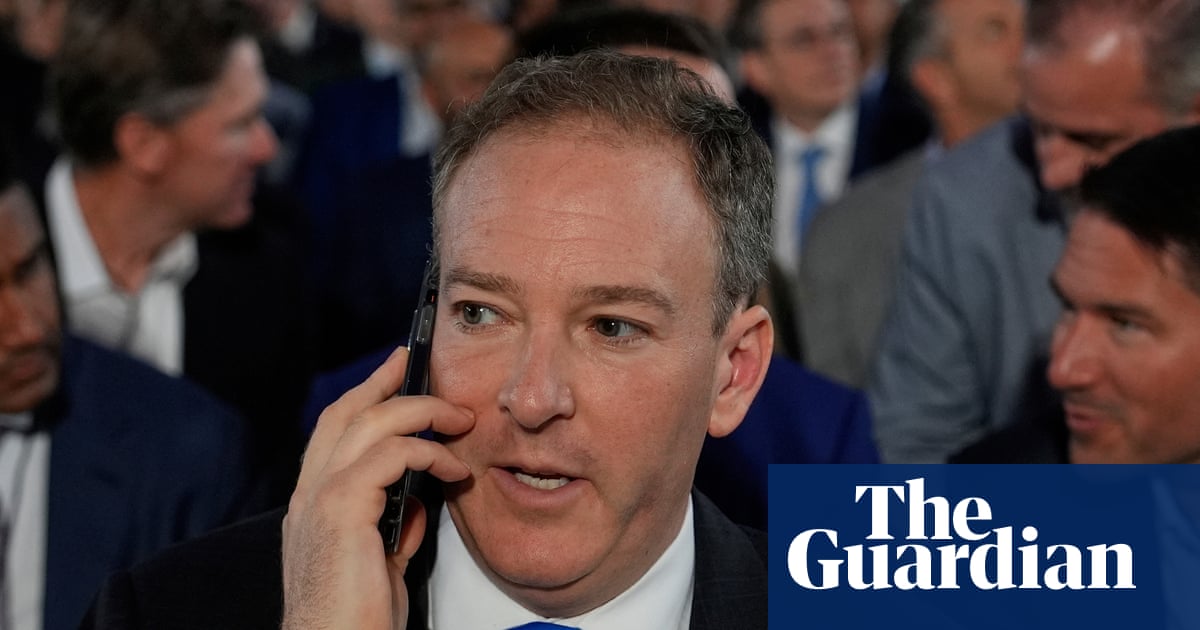
The proposed rescission of the Environmental Protection Agency’s (EPA) 2009 greenhouse gas (GHG) endangerment finding by the Trump administration marks a pivotal moment for the U.S. oil and gas sector and global energy markets. This declaration, which legally underpins a broad spectrum of climate regulations under the Clean Air Act for industries from motor vehicles to power plants, has long shaped the operational landscape for energy producers. EPA administrator Lee Zeldin has championed this move as potentially “the largest deregulatory action in the history of America,” signaling a dramatic shift that could reshape investment strategies and production outlooks across the industry. For investors navigating complex market dynamics, understanding the implications of such a monumental policy pivot, coupled with ongoing market volatility, is paramount.
Regulatory Reversal: Implications for U.S. Energy Production
The core of this proposed regulatory rollback is the annulment of the 2009 finding that carbon dioxide and other GHGs endanger public health and welfare. This finding has historically provided the legal framework for stringent emissions controls, influencing everything from the design of new power plants to the efficiency standards for automobiles. The administration’s plan extends beyond this single finding, targeting a total of 31 key environmental rules, including limits on tailpipe emissions designed to accelerate the adoption of electric vehicles. For the oil and gas industry, this signals a potential loosening of constraints on operations, from exploration and production to refining and transportation. A more permissive regulatory environment could, in theory, reduce compliance costs and streamline project approvals, potentially encouraging increased domestic production and investment in fossil fuel infrastructure. This could be a significant factor for investors considering their long-term positions in U.S.-focused energy companies.
Market Dynamics Amidst Policy Uncertainty: A Snapshot
This significant policy proposal emerges against a backdrop of considerable market volatility. As of today, Brent Crude trades at $90.38 per barrel, representing a sharp 9.07% decline, while WTI Crude mirrors this trend at $82.59, a 9.41% drop within the day’s trading range. This bearish sentiment is not isolated; the 14-day Brent trend shows a notable decline from $112.78 on March 30th to $91.87 by April 17th, a significant drop of $20.91 or 18.5%. Gasoline prices have also felt the pressure, currently at $2.93, down 5.18%. Investors are naturally asking, “What do you predict the price of oil per barrel will be by end of 2026?” While numerous factors contribute to price forecasts, a successful deregulation could theoretically contribute to increased U.S. supply. If domestic production ramps up, it could exert downward pressure on prices, or at least cap upside potential, influencing global supply dynamics even as demand evolves. This adds another layer of complexity to price prediction models, especially for companies whose performance is tied to global energy prices.
Navigating the Legal Landscape and Upcoming Catalysts
Despite the administration’s ambitious push, the path to fully rescinding the endangerment finding is fraught with legal and political challenges. Critics, including former EPA leaders and environmental groups, argue that such a move would be an “uphill task with slim chance of success,” citing a 2007 Supreme Court ruling that affirmed the EPA’s authority to regulate greenhouse gases as air pollutants. This legal battle introduces a significant layer of uncertainty for oil and gas investors. While the proposed changes could theoretically unlock new production opportunities, the protracted legal challenges could delay or even halt implementation, leading to policy instability that often deters long-term capital commitments. Beyond domestic policy, the global energy calendar holds critical upcoming events that will further shape market sentiment. The OPEC+ Joint Ministerial Monitoring Committee (JMMC) meeting tomorrow, April 18th, followed by the Full Ministerial meeting on April 19th, will be closely watched for any shifts in production quotas. Investors are keenly interested in “OPEC+ current production quotas” as these decisions directly impact global supply. Any signals from OPEC+ regarding supply adjustments will interact with the potential for increased U.S. output under a deregulated environment, creating a complex interplay of forces that will define crude price trajectories in the coming weeks.
Forward Outlook: Production, Inventories, and Investor Sentiment
Looking ahead, the interplay between potential deregulation and fundamental market data will be crucial. Should the proposed rule changes gain traction, we could anticipate a renewed focus on expanding U.S. oil and gas production capacity. This would be reflected in key industry indicators like the Baker Hughes Rig Count, scheduled for release on April 24th and May 1st. An uptick in drilling activity would signal industry confidence in a less restrictive operating environment. Concurrently, the API Weekly Crude Inventory (April 21st, April 28th) and the EIA Weekly Petroleum Status Report (April 22nd, April 29th) will offer immediate insights into U.S. supply and demand balances. Larger inventory builds could indicate increased domestic supply or softening demand, factors that a deregulated environment might exacerbate. For investors, particularly those asking about specific company performance or the broader oil price outlook, these data points, combined with the unfolding regulatory saga, provide critical signals. The push for deregulation, if successful, could reinforce the U.S. position as a global energy powerhouse, potentially influencing global benchmarks and investment flows into the sector for the remainder of 2026 and beyond.


