

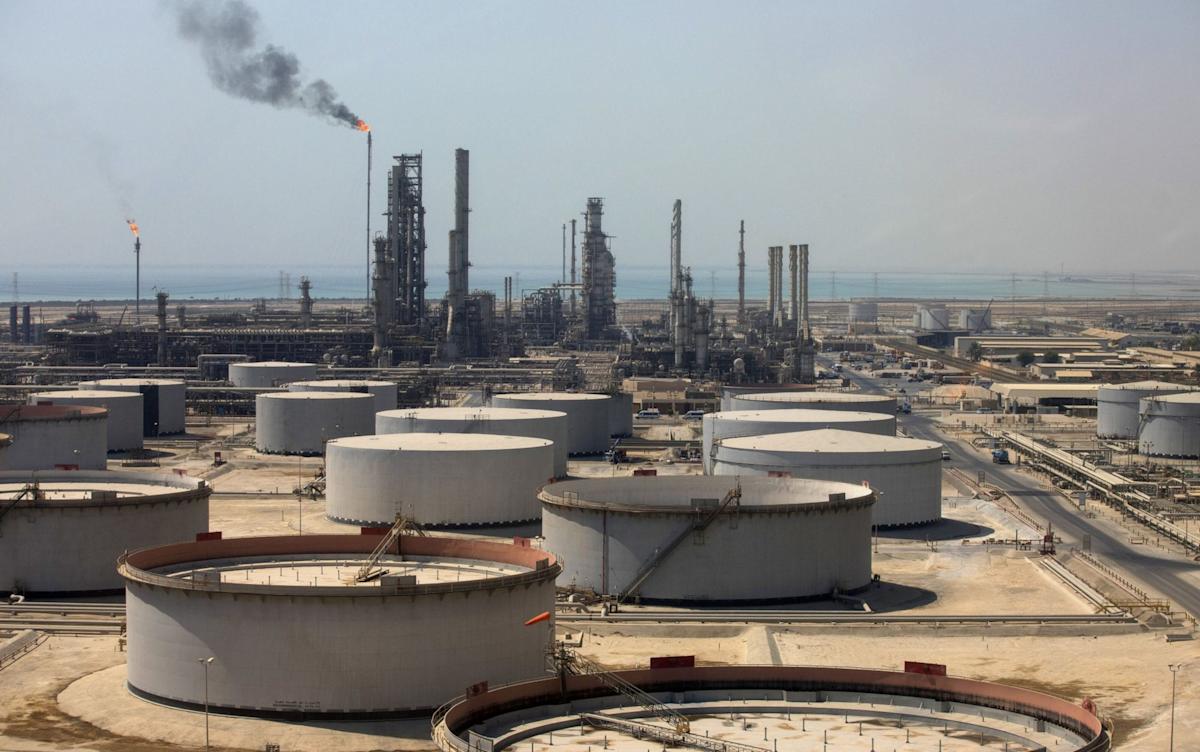
The global energy landscape is currently navigating a tumultuous period, with geopolitical tensions and shifting economic dynamics casting a long shadow over the profitability of even the largest industry players. Saudi Aramco, the world’s leading oil producer, recently reported a 5% decline in its first-quarter profits, settling at $26 billion (£19.5 billion). This downturn arrived amidst escalating concerns over global trade stability, a factor significantly impacting crude oil prices and setting a challenging backdrop for investors in the oil and gas sector.
The profit reduction comes at a particularly sensitive time, preceding a high-stakes visit by former US President Donald Trump to the Middle East, where he aims to forge new investment agreements. The financial results underscore the vulnerability of even integrated energy giants to broader macroeconomic forces, especially as the Kingdom of Saudi Arabia continues its ambitious drive to diversify its economy beyond its traditional hydrocarbon reliance.
Impact of Global Trade Tensions on Oil Markets
The primary catalyst for Aramco’s diminished earnings appears to be the uncertainty unleashed by the then-President Trump’s “Liberation Day” tariffs announcement. These protectionist measures sparked fears of a global economic slowdown, directly dampening demand forecasts and, consequently, crude oil prices. Amin H. Nasser, Saudi Aramco’s chief executive, acknowledged this interplay, stating, “Global trade dynamics affected energy markets in the first quarter of 2025, with economic uncertainty impacting oil prices.”
In addition to the trade war fears, a recent decision by the OPEC cartel to increase production further exacerbated downward pressure on crude valuations. As a result, benchmark crude oil prices have been hovering around the $64 a barrel mark, a stark contrast to the higher figures observed previously. For Aramco, this translated into selling barrels of crude oil at an average price of $76.30 in the first quarter, a noticeable dip from the $83 per barrel achieved during the same period last year. This price differential alone highlights the significant revenue erosion faced by the company.
Aramco’s Financial Metrics Under Scrutiny
Beyond the headline profit figures, a closer look at Aramco’s financial health reveals further indicators of the challenging environment. The company had already preemptively cut its dividend in the final quarter of the previous year, reducing it from a substantial $31 billion to $21.4 billion. This move signals a proactive, albeit painful, adjustment to a more cautious financial outlook, directly impacting shareholder returns for one of the world’s most valuable companies.
Investor sentiment has mirrored these concerns. Shares in Saudi Aramco experienced a decline of more than 3% over the last month, extending a trend that has seen the stock drop by almost 17% over the past year. Such performance reflects broader investor apprehension about the resilience of energy sector earnings in the face of escalating geopolitical risks and persistent global economic headwinds. For those focused on oil and gas investing, these metrics serve as a critical barometer for the health of the industry’s leaders.
Geopolitical Stage: Trump’s Middle East Agenda
The release of these challenging financial results coincides precisely with Donald Trump’s highly anticipated tour of the Middle East, encompassing visits to Saudi Arabia, Qatar, and the United Arab Emirates. The stated objective of this diplomatic offensive is to secure a series of lucrative investment deals, with particular emphasis on convincing Riyadh to commit over $1 trillion to the US economy. This ambitious target underscores the significant economic stakes involved in the relationship between the US and key Middle Eastern energy producers.
Karoline Leavitt, the White House’s press secretary, emphasized the strategic importance of the visit, noting that President Trump was eager to make a “historic return” to the region. She articulated a vision for a “proud, prosperous and successful Middle East,” where collaborative relationships between the United States and regional nations would foster commerce and cultural exchanges, actively working to defeat extremism. Robert Mogielnicki, a senior resident scholar at the Arab Gulf States Institute in Washington, offered an analyst’s perspective, suggesting that the Trump administration viewed this trip as a “big deal,” aiming for “lots of splashy deal announcements and collaborations that can be sold as being good for America.” The interplay between these high-level political negotiations and the underlying economic realities of the energy sector is complex and merits close observation by investors.
Industry-Wide Headwinds and Diversification Imperatives
The financial challenges facing Saudi Aramco are not isolated. The broader energy sector has been grappling with similar pressures. Rival oil giants like Shell and BP have also reported significant profit declines. BP, for instance, posted a substantial 49% drop in its first-quarter profits last month, while Shell’s earnings for the same period fell by almost a third. These parallel downturns across major integrated energy companies highlight a systemic issue, pointing to a global environment where economic uncertainty and fluctuating commodity prices are impacting profitability across the board.
For Saudi Aramco, which is 81.5% owned by the Saudi government, these financial pressures add another layer of urgency to the Kingdom’s ambitious economic diversification program. Dubbed “Vision 2030,” this national strategy seeks to reduce Saudi Arabia’s heavy reliance on oil revenues by fostering growth in non-oil sectors. The current volatility in oil prices and the resulting impact on Aramco’s earnings reinforce the strategic imperative for the Kingdom’s leadership to accelerate these diversification efforts, ensuring long-term economic stability independent of the often-unpredictable fluctuations of the global energy markets. For investors, understanding this strategic shift is crucial when evaluating long-term prospects within the region’s energy complex.
