Trade War Cuts Oil Major Profits
The latest earnings reports from the world’s preeminent oil and gas supermajors have delivered a stark message to investors: the lucrative era of soaring profits that defined the post-2022 energy landscape is now firmly in the rearview mirror. Both Chevron and ExxonMobil, industry bellwethers, recently disclosed first-quarter results that reflect significant earnings contractions. This downturn directly underscores how softening crude oil prices and increasingly constrained refining margins are translating into tangible financial headwinds across the energy sector, a consequence deeply rooted in a pervasive global economic slowdown exacerbated by ongoing international trade tensions.
For discerning investors with significant exposure to energy equities, these figures are more than just quarterly statistics; they illuminate a challenging and uncertain operating environment. The remarkable profitability seen after Russia’s full-scale invasion of Ukraine, which propelled many oil and gas companies to record highs, is visibly receding. This shift compels a critical re-evaluation of the long-term sustainability of shareholder returns, even from the most robust and diversified energy giants.
Chevron’s Profitability Takes a Hit
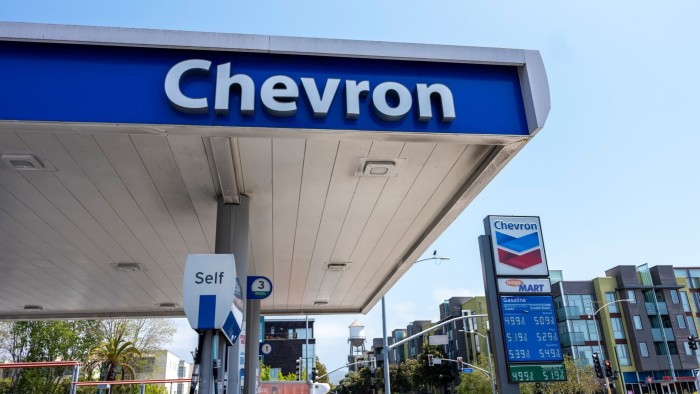
Chevron, a cornerstone of the global energy supply chain, revealed a substantial erosion in its net income for the initial quarter of the year. The company reported a net profit of $3.5 billion, representing a sharp and notable decrease from the $5.5 billion achieved in the corresponding period of the previous year. This constitutes a fall of more than one-third, signaling a significant deceleration in profitability. Adding to investor concerns, this figure also landed marginally below the consensus estimates provided by financial analysts, suggesting a more difficult quarter than even market watchers had anticipated.
Revenue performance mirrored this downward trajectory, with the company recording $47.6 billion, a dip from the $48.7 billion reported a year prior. Despite these financial pressures, Chevron managed to maintain consistent global production volumes, a testament to its operational resilience in the field. In response to the evolving market dynamics and as part of its disciplined capital allocation strategy, Chevron outlined plans to scale back its share buyback program for the second quarter. The company now projects buybacks in the range of $2.5 billion to $3 billion, a noticeable reduction from the robust $3.9 billion executed during the first three months of the year. However, it is crucial for investors to note that Chevron’s overarching annual buyback guidance, which remains firmly set between $10 billion and $20 billion, stands unchanged from the $15.2 billion in shares repurchased throughout the previous year. Chevron’s stock initially reacted negatively to the news, dipping 1.8 percent in pre-market trading in New York, though it later staged a recovery to trade up just over 1 percent at $138.48 by midday, reflecting a degree of investor confidence in its long-term strategy.
ExxonMobil Navigates Turbulent Market Currents
ExxonMobil, recognized as the largest Western oil producer, also experienced a decline in its first-quarter net income, though its performance proved closer to analyst expectations. The energy titan recorded $7.7 billion in profit for the three months concluding in March, a decrease from the $8.2 billion posted in the prior-year period. While its revenue figure of $83.1 billion marked a slight increase compared to 12 months ago, it nonetheless fell short of Wall Street’s collective estimates, indicating that underlying market pressures are indeed impacting even the largest players.
ExxonMobil’s shares saw a modest gain of 0.2 percent immediately following its earnings announcement. This relatively stable investor sentiment, particularly when contrasted with its peer, suggests that the market perceived ExxonMobil’s results as managing expectations effectively within the prevailing challenging environment. CEO Darren Woods conveyed a message of confidence to investors, emphasizing the company’s strategic agility and operational discipline in navigating what he termed an “uncertain market.” This reflects a commitment to focusing on efficiency and high-value projects to sustain shareholder value amidst the global economic deceleration and persistent trade-related headwinds.
Broader Industry Implications and Investor Outlook
These first-quarter results from Chevron and ExxonMobil serve as a powerful barometer for the broader energy industry. The impact of a global economic slowdown, compounded by geopolitical uncertainties and ongoing international trade disputes, is unmistakably dampening demand fundamentals for crude oil and subsequently eroding the margins available from refining operations. For investors, this translates into a scenario where the exceptional free cash flow generation witnessed over the past two years faces significant pressure, challenging the very mechanisms that fueled generous dividend payouts and aggressive share buyback programs.
The “trade war” narrative, specifically, has a multifaceted impact. It disrupts global supply chains, reduces industrial output in key manufacturing hubs, and generally dampens consumer and business confidence. All these factors directly translate into lower energy demand, affecting both crude oil consumption and the demand for refined products like gasoline and diesel. As such, the market is now scrutinizing how effectively these oil majors can adapt their capital expenditure plans, operational efficiencies, and shareholder return policies to an environment where commodity prices are less buoyant and demand growth is more subdued.
Looking ahead, investors will closely monitor several key indicators. The trajectory of global trade relations, particularly between major economic blocs, will heavily influence economic recovery and, by extension, energy demand. Furthermore, the companies’ ability to control costs, integrate new technologies, and continue divesting non-core assets will be crucial for maintaining profitability. Capital allocation strategies, especially regarding balancing growth investments with shareholder distributions, will also remain under intense scrutiny as the industry navigates these turbulent waters. The current environment demands a keen eye on operational excellence and strategic foresight from energy sector leaders to ensure sustained value creation.
In conclusion, while the first quarter brought a clear deceleration in profitability for two of the world’s most significant oil majors, it also highlighted their differing resilience and strategic responses. The overarching message is clear: the energy sector has entered a more challenging phase where macro-economic pressures, intensified by trade tensions, are dictating performance. For investors, this necessitates a more nuanced approach, focusing on companies with robust balance sheets, diversified asset bases, and proven capabilities to adapt to a landscape characterized by uncertainty and moderating returns.