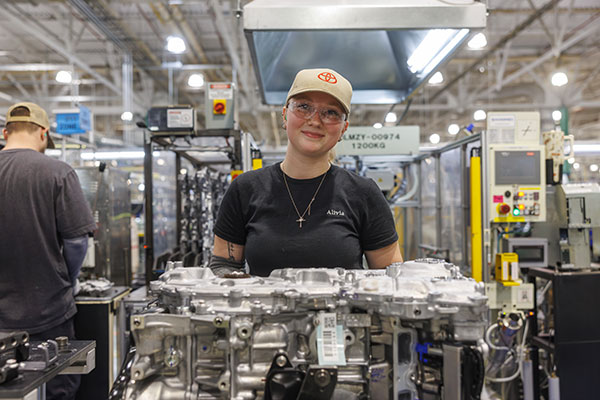
Toyota’s substantial commitment to expanding hybrid vehicle manufacturing in the United States represents a pivotal moment for long-term gasoline demand projections. While the immediate focus of oil and gas investors often centers on geopolitical events, supply disruptions, and inventory reports, this strategic move by one of the world’s largest automakers signals a structural shift that cannot be ignored. The company’s multi-billion-dollar investment underscores a growing consumer embrace of more fuel-efficient options, setting a trajectory that promises to gradually, yet persistently, erode future gasoline consumption and reshape the energy landscape for decades to come.
Toyota’s Hybrid Bet: A Multi-Billion Dollar Footprint Expansion
Toyota has announced a significant $912 million investment across five key U.S. plants, specifically aimed at bolstering hybrid powertrain and vehicle production. This capital injection is designed to meet escalating demand for electrified models and, notably, to introduce hybrid-electric Corollas to the American market for the first time. The allocation is precise: $453 million will boost hybrid engine and transaxle output in West Virginia, Kentucky receives $204.4 million for a new hybrid engine machining line, Mississippi will see $125 million to launch hybrid-electric Corolla production, Tennessee gets $71.4 million to expand casting operations for hybrid components, and Missouri secures $57.1 million for a new cylinder head line. These initiatives are part of a broader commitment by Toyota to invest up to $10 billion in its U.S. operations over the next five years, reflecting a “build where we sell” philosophy and expanding its manufacturing presence across several states. Production from these new hybrid lines is slated to commence as early as 2027, establishing a clear timeline for their market impact.
Current Market Dynamics and the Long-Term Demand Signal
While Toyota lays the groundwork for future gasoline demand pressure, the crude oil market continues its daily dance of volatility. As of today, Brent crude trades at $94.7 per barrel, reflecting a modest decline of 0.82% within a daily range of $93.87 to $95.69. Similarly, WTI crude stands at $86.36, marking a 1.21% decrease, fluctuating between $85.5 and $86.78. This snapshot comes after a more significant downward trend, with Brent having shed nearly 20% over the past two weeks, dropping from $118.35 to $94.86. Gasoline prices, currently at $3.02 per gallon, are also slightly lower today, down 0.33%. These immediate price movements, driven by various supply-demand fundamentals, often capture the lion’s share of investor attention. However, Toyota’s aggressive hybrid expansion serves as a crucial counter-narrative, highlighting a structural shift in automotive technology that will apply persistent downward pressure on gasoline demand, regardless of short-term crude fluctuations. Investors must recognize that while today’s prices reflect immediate supply-demand balances, long-term investments in hydrocarbon production need to factor in this evolving consumption landscape.
Navigating Investor Concerns Amidst Structural Shifts
Our proprietary reader intent data reveals a strong focus among investors on immediate price direction and future price predictions, with common questions like “is wti going up or down” and “what do you predict the price of oil per barrel will be by end of 2026?” This short-term perspective, while understandable, risks overlooking the profound implications of trends like Toyota’s hybrid pivot. Upcoming energy events will undoubtedly fuel further market speculation. For instance, the OPEC+ JMMC Meeting on April 21st, the EIA Weekly Petroleum Status Reports on April 22nd and April 29th, and the Baker Hughes Rig Count reports on April 24th and May 1st will all provide critical short-term data points for supply and inventory. Even the EIA Short-Term Energy Outlook on May 2nd will offer valuable projections, but these outlooks typically focus on a shorter horizon. What these immediate catalysts often don’t fully capture is the compounding effect of millions of new, more fuel-efficient vehicles entering the global fleet over the next decade. Investors seeking to position themselves strategically must look beyond the daily churn of inventory figures and immediate price forecasts, integrating these deeper, structural changes in demand into their long-term models.
The Long Game: Peak Gasoline Demand on the Horizon
Toyota’s latest investment reinforces the growing consensus that global gasoline demand is facing an increasingly strong headwind. While hybrids still consume gasoline, their significantly improved fuel efficiency means each new hybrid sold displaces a greater volume of potential gasoline consumption compared to its conventional counterpart. With production starting in 2027, the cumulative effect of millions of new hybrid vehicles entering the market from Toyota alone, alongside similar initiatives from other automakers and the accelerating adoption of battery electric vehicles, suggests that peak gasoline demand could arrive sooner than many traditional energy models predict. The traditional investment thesis built on an ever-expanding appetite for gasoline is becoming increasingly challenged. For sophisticated investors in the oil and gas sector, this signals a need to de-risk portfolios from pure gasoline exposure and pivot towards segments of the energy value chain that are more resilient to, or even benefit from, the ongoing energy transition. The long game for gasoline is one of managed decline, and Toyota’s strategic expansion is a potent reminder of that reality.