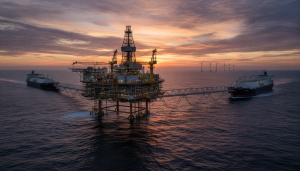
TotalEnergies continues to solidify its strategic position in the Middle East with significant progress on Iraq’s Gas Growth Integrated Project (GGIP). The recent award of a second major contract to Vallourec for tubular solutions underscores the project’s momentum, signaling a long-term commitment to enhancing Iraq’s energy infrastructure while addressing critical environmental concerns. For investors, this development represents more than just an operational milestone; it’s a testament to TotalEnergies’ dual strategy of securing future energy supply and advancing its low-carbon transition objectives within a volatile global market. Our analysis delves into the project’s specifics, its implications for the broader energy landscape, and how it aligns with current investor sentiment and market dynamics.
TotalEnergies Bolsters Iraq’s Energy Future with GGIP Expansion
The Gas Growth Integrated Project (GGIP), a cornerstone of Iraq’s energy strategy, is gaining significant traction with TotalEnergies at the helm, partnered with Basra Oil Company and QatarEnergy. This ambitious initiative is designed to address multiple facets of Iraq’s energy needs, from reducing environmentally harmful gas flaring to boosting domestic energy supply. The project encompasses four integrated components: capturing associated gas from three southern oil fields to fuel power generation, redeveloping the crucial Ratawi oil field, constructing a 1-gigawatt-AC solar power plant, and building a seawater treatment facility vital for oilfield operations. The latest contract award to Vallourec, involving over 30,000 tons of premium tubular solutions for 48 wells under the Associated Gas Upstream Project 2 (AGUP2) phase, is a clear indicator of the project’s accelerated pace. This follows an earlier delivery of approximately 15,000 tons for the first 30 wells, demonstrating a continuous and robust progression. The AGUP2 phase is specifically targeting an increase in production capacity to 210,000 barrels per day of oil and 154 million standard cubic feet per day of gas from the Ratawi field, a substantial uplift that will significantly impact Iraq’s energy output in the coming years.
Navigating Market Volatility: GGIP’s Long-Term Value Proposition
In a global energy market characterized by significant price swings, long-term investments like the GGIP offer a crucial anchor. As of today, Brent Crude trades at $90.38, reflecting a notable decline of 9.07% within the day’s range of $86.08 to $98.97. Similarly, WTI Crude stands at $82.59, down 9.41% from a daily high of $90.34. This downturn is part of a broader trend, with Brent having fallen by nearly 20% from $112.78 on March 30th to its current level. This volatility naturally prompts investors to ask critical questions, such as “what do you predict the price of oil per barrel will be by end of 2026?” TotalEnergies’ commitment to the GGIP in this environment underscores a strategic focus on future supply and energy security rather than reactive short-term plays. The project’s dual objective of increasing hydrocarbon output while simultaneously reducing flaring and integrating renewable energy (the solar plant) positions TotalEnergies to capture value across the energy spectrum. This diversified approach helps mitigate risks associated with commodity price fluctuations and aligns with evolving investor demands for more sustainable energy investments, even as traditional oil and gas remain central to global demand.
Upcoming Events and Future Supply Dynamics
The progression of projects like GGIP will inevitably intersect with broader market forces shaped by key industry events. Investors are keen to understand “what are OPEC+ current production quotas?” and how these might evolve. Over the next two weeks, crucial meetings are scheduled, including the OPEC+ JMMC Meeting on April 19th and the full OPEC+ Ministerial Meeting on April 20th. Decisions made at these gatherings will directly influence global supply strategies and, consequently, the market environment for projects such as TotalEnergies’ GGIP. Additionally, the API Weekly Crude Inventory reports on April 21st and April 28th, alongside the EIA Weekly Petroleum Status Reports on April 22nd and April 29th, will provide critical snapshots of market balances. While GGIP’s full production capacity of 210,000 bpd of oil and 154 MMscf/d of gas is still some time away from full realization, its phased development signals a gradual but significant addition to global supply. For investors looking beyond immediate market headlines, the project represents a future source of production that could influence OPEC+’s considerations for maintaining market equilibrium, particularly as the demand landscape continues to shift. The long-term nature of this integrated project provides a hedge against short-term uncertainties, offering predictable growth in a strategically important region.
ESG Integration and TotalEnergies’ Diversified Portfolio Strategy
TotalEnergies’ investment in the GGIP is not merely about increasing hydrocarbon production; it’s a strategic move that aligns with the global energy transition and addresses growing environmental, social, and governance (ESG) concerns. The project’s core objective of capturing and processing associated gas from southern Iraqi oil fields directly tackles the issue of gas flaring, a significant contributor to greenhouse gas emissions. By converting this otherwise wasted gas into a valuable energy source for domestic power generation, TotalEnergies is actively supporting Iraq’s “low-carbon transition” and improving air quality. Furthermore, the inclusion of a 1-gigawatt-AC solar power plant within the GGIP framework demonstrates a commitment to diversifying the energy mix and investing in renewable solutions. This integrated approach allows TotalEnergies to balance its role as a major oil and gas producer with its aspirations to become a broader multi-energy company. For investors increasingly prioritizing ESG performance, projects like the GGIP showcase TotalEnergies’ proactive stance in developing cleaner energy solutions while simultaneously ensuring energy security, offering a compelling narrative for sustainable long-term value creation.