

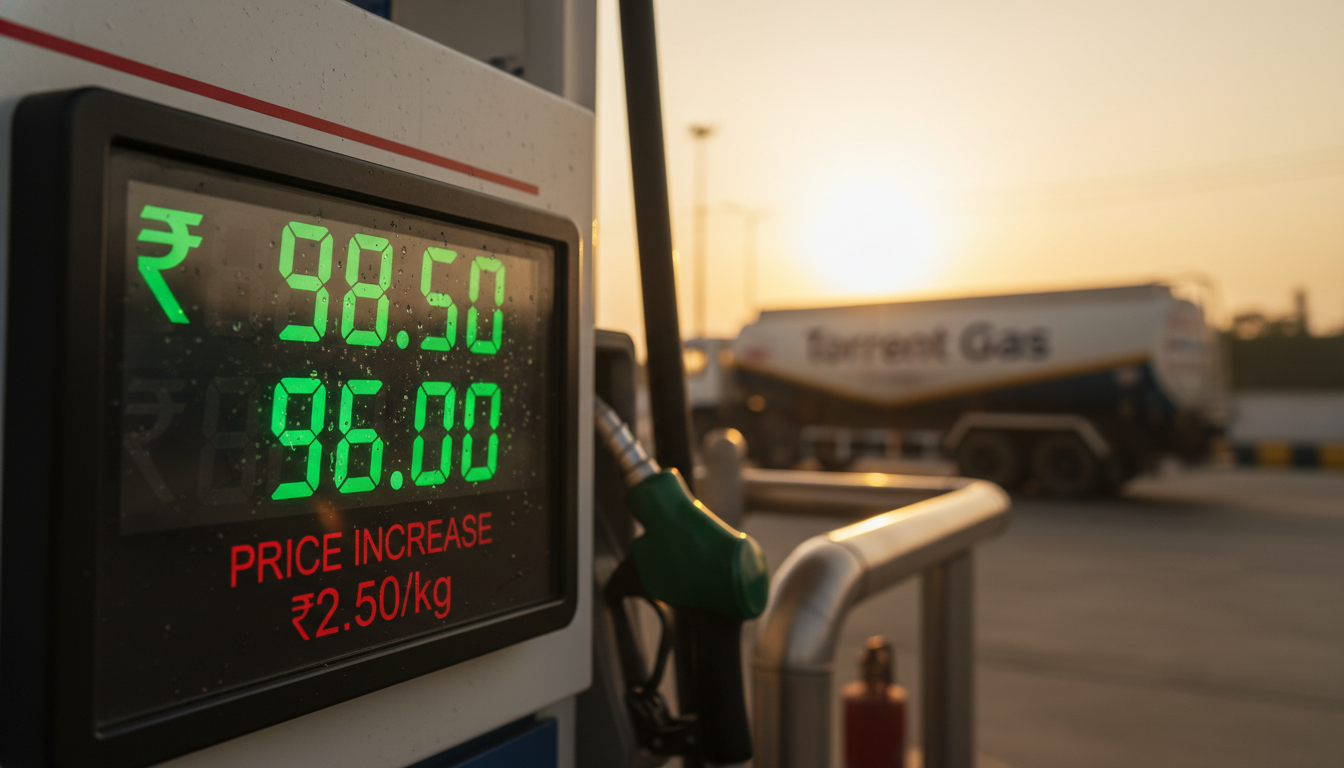
Indian Gas Market Under Pressure: Torrent Gas Hikes CNG Rates Amid Broader Fuel Price Surge
The Indian energy landscape is experiencing significant upward price pressure, with Torrent Gas initiating a ₹2.50 per kilogram increase in compressed natural gas (CNG) prices. This move, reported on Saturday, April 4, 2026, by a leading news agency, underscores a widening trend of rising fuel costs that is beginning to reshape operating expenditures across numerous sectors and impact consumer discretionary spending. For investors, this signals a critical juncture, highlighting the delicate balance between energy security, pricing power for distributors, and the inflationary implications for the broader economy.
CNG Price Adjustment and Local Economic Repercussions
Torrent Gas’s latest price adjustment for CNG will inevitably ripple through local economies, directly impacting the daily budgets of millions of residents and, more acutely, the operational viability of auto-rickshaw drivers. These commercial users, operating on already thin margins, face exacerbated challenges as higher fuel costs erode their profitability and necessitate difficult decisions regarding fare adjustments or reduced earnings. The immediate localized effects serve as a micro-indicator of macro-level fuel cost inflation, prompting a closer look at the upstream pressures influencing gas distribution companies.
The decision to raise CNG prices by ₹2.50 per kg is not an isolated event but rather a response to a complex interplay of input cost increases, likely driven by procurement challenges and elevated global natural gas benchmarks. This action reflects the ongoing struggle for gas distribution companies to maintain profitability in a volatile market while balancing consumer affordability. Investors should view such adjustments as an indicator of pricing flexibility within the regulated city gas distribution (CGD) sector and a barometer for the underlying cost structure of natural gas supply in India.
Wider Energy Market Escalation: LPG and ATF on the Rise
The CNG hike by Torrent Gas arrives concurrently with a broad escalation in other key fuel prices across the nation, signaling a systemic shift in the energy cost environment. Effective April 1, 2026, commercial liquefied petroleum gas (LPG) cylinder rates witnessed a sharp increase. In Delhi, the benchmark 19-kilogram commercial cylinder now commands ₹2,078.50, reflecting a substantial rise of ₹195.50. Smaller 5-kilogram cylinders have also become costlier for businesses, adding further strain to the hospitality, catering, and small-to-medium enterprise (SME) sectors.
Significantly, domestic LPG rates have been shielded from this recent commercial surge, remaining unchanged following an earlier upward adjustment in March. This selective pricing strategy suggests governmental intervention or differential subsidy mechanisms for household consumers, a critical factor for investors to consider when assessing the overall profitability and regulatory risk profile of LPG marketing companies. Simultaneously, aviation turbine fuel (ATF) prices have also climbed, posing increased operational costs for airlines and potentially translating into higher airfares, which could dampen travel demand and impact the broader aviation and tourism industries.
Global Geopolitical Tensions Fueling Domestic Price Hikes
The fundamental drivers behind this concerted uptick in domestic fuel prices are deeply rooted in volatile global energy markets. Intensifying geopolitical tensions across West Asia remain the primary catalyst, introducing a substantial risk premium into international crude oil benchmarks. Concerns over potential disruptions to critical supply routes, most notably the Strait of Hormuz, continue to exert upward pressure on oil prices, directly impacting the cost of crude oil imports for India, which is a significant net importer.
This elevated crude oil pricing environment directly influences the input costs for petroleum product refiners and, indirectly, the pricing of natural gas, given its correlation with crude in many global contracts and the competitive landscape of energy sources. The escalating cost of crude oil feeds into the production of various fuels, including those used to generate the electricity required for gas compression and distribution, creating a cascading effect throughout the energy supply chain. For investors, monitoring these geopolitical flashpoints and their impact on global crude flows is paramount, as they often dictate the trajectory of domestic energy pricing and, consequently, the profitability of Indian oil and gas companies.
Investment Implications and Sectoral Outlook
The aggregate effect of these widespread fuel price increases is palpable across multiple sectors, presenting both challenges and opportunities for discerning investors. The transport sector, heavily reliant on diesel, petrol, and CNG, faces rising operating costs that could compress margins for logistics companies, public transport operators, and ride-sharing platforms. The hospitality industry, grappling with higher commercial LPG and other energy expenses, may be compelled to pass on costs to consumers, potentially impacting demand. Manufacturing and industrial sectors, too, will contend with elevated energy bills, influencing production costs and competitiveness.
For midstream and downstream oil and gas companies, the ability to pass on these increased costs to end-users, as demonstrated by Torrent Gas, is crucial for preserving profitability. Investors should scrutinize the regulatory frameworks governing pricing mechanisms for CGD companies and other fuel marketers. Companies with diversified energy portfolios and robust supply chain management might be better positioned to navigate this volatile environment. Furthermore, the inflationary impulse generated by higher energy prices could impact consumer spending power and broader economic growth, warranting a cautious approach to equity allocations in consumer-facing sectors. As global energy markets remain subject to geopolitical uncertainties and supply-demand imbalances, investors should anticipate continued volatility and the potential for further price adjustments in the Indian fuel market throughout 2026 and beyond.
