October’s Natural Gas Surge and Price Easing in Europe
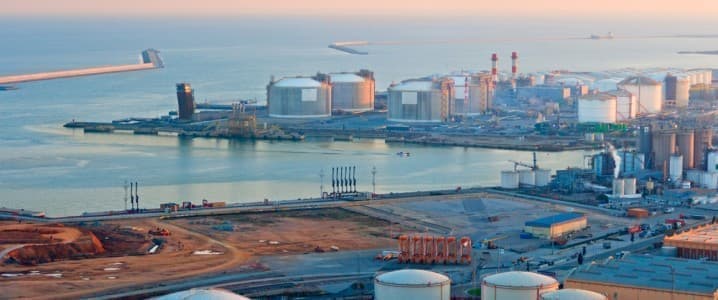
The global natural gas market experienced a significant shift in October, marked by a substantial increase in supply from key exporters just as seasonal demand began its upward trajectory. Data reveals a global gas demand jump of 12 billion cubic meters (bcm) in October compared to September, with the EU and UK alone accounting for a 10.1 bcm increase. This demand rise, driven by falling temperatures in the Northern Hemisphere, was met with robust production increases.
Norway notably ramped up its pipeline gas exports by 2.1 bcm, contributing to a total Norwegian gas export increase of 2.6 bcm when including LNG. Concurrently, Qatar boosted its LNG supply by 0.71 bcm, and the United States saw its LNG exports reach record highs for the month. This synchronized surge in supply provided considerable comfort to the market, leading to a notable easing of European benchmark natural gas prices to their lowest levels in over eighteen months. For investors, this demonstrates the immediate impact of supply-side responsiveness on regional pricing, especially in a demand-sensitive market like Europe.
Navigating the LNG Market’s Dual Horizon: Near-Term Glut vs. Long-Term Scarcity
While October brought supply comfort, the forward-looking natural gas landscape presents a more nuanced picture, characterized by a potential near-term oversupply juxtaposed against warnings of future scarcity. Analysts are currently projecting a well-supplied, even oversupplied, LNG market in the short term. This outlook is primarily driven by two factors: an anticipated ramp-up of new supply projects and a concurrent dip in demand from a major consumer.
The United States, for instance, is projected to export 14.9 billion cubic feet per day (bcf/d) of LNG this year, a substantial 25% increase from the prior year. This figure is expected to climb further to an average of 16.3 bcf/d in 2026 as new facilities come fully online. Simultaneously, China’s LNG imports have been on a downward trend over the past year, as the nation increasingly relies on bolstered domestic production and expanding pipeline imports. This combination of surging supply and moderating demand from a key market creates the conditions for a near-term glut.
However, this short-term view stands in contrast to the longer-term perspective held by top Middle Eastern exporters like Qatar and the UAE. Despite current market dynamics, these producers express strong confidence in enduring global demand and have repeatedly flagged insufficient investment in new supply for the medium to long term. This divergence highlights a critical consideration for energy investors: balancing immediate market signals with the strategic long-term outlook for global energy security and supply.
Broader Energy Market Volatility and Investor Focus
While the natural gas market has found some near-term comfort from robust October supply, the broader energy complex is exhibiting considerable volatility, a key concern for investors. As of today, Brent crude trades at $91.87, representing a significant 7.57% decline from yesterday’s close, oscillating within a day range of $86.08 to $98.97. Similarly, WTI crude is at $84, down 7.86% for the day, having traded between $78.97 and $90.34. This downward pressure on crude prices is not isolated; Brent crude has shed $20.91, or 18.5%, from its March 30th high of $112.78.
These sharp movements naturally lead to pressing questions from investors, with many asking about the trajectory of crude oil prices by the end of 2026. The current volatility underscores the challenge in such predictions, highlighting the complex interplay of supply, geopolitical factors, and demand signals. Another key area of investor inquiry revolves around OPEC+ production quotas, especially pertinent given the upcoming ministerial meeting. This reflects a keen awareness that major producers’ decisions can swiftly alter market fundamentals and price direction. Investors are keenly seeking clarity on how these various forces will shape future earnings and portfolio performance across the energy sector.
Upcoming Catalysts and Strategic Positioning for Investors
The next two weeks are packed with critical events that could significantly influence energy markets and demand agile responses from investors. This Saturday, April 18th, marks a pivotal OPEC+ Ministerial Meeting. Decisions made here regarding production levels will be closely watched, directly impacting crude supply and potentially setting the tone for prices in the near term. Any unexpected shifts in quotas could trigger substantial market reactions, making this a high-stakes event for crude-exposed portfolios.
Following this, we have a series of key data releases providing granular detail on US supply and demand dynamics. The API Weekly Crude Inventory reports are scheduled for April 21st and 28th, with the EIA Weekly Petroleum Status Reports following on April 22nd and 29th. These reports offer vital insights into inventory levels, refinery activity, and product supplied, influencing short-term trading sentiment. Additionally, the Baker Hughes Rig Count on April 24th and May 1st will provide an early indicator of future production capacity, particularly within the crucial US shale basins. Investors should monitor these releases to gauge market direction, assess the implications for their energy holdings, and adjust strategies in anticipation of potential volatility. Understanding these upcoming catalysts is essential for informed decision-making in a dynamic energy investment landscape.


