

On Tuesday, Australia’s second largest city baked through one of its hottest days since modern instrumental records began in 1910. Several Melbourne suburbs topped 45C.
The country’s fifth largest city, Adelaide, reached that temperature on Monday. Its residents then suffered through their hottest night ever, with a minimum of about 34C.
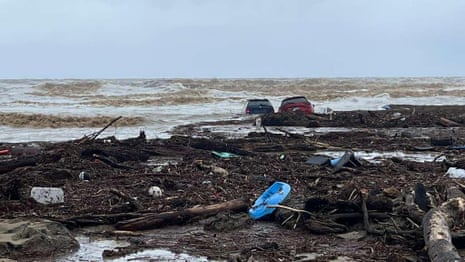
Remote communities were even harder hit. It was was 48.9C in Hopetoun and Walpeup, in Victoria’s north-west, and 49.6C in Renmark, over the South Australian border. An out-of-control bushfire burned in the Otways region, south-west of Melbourne, near areas that just two weeks ago faced flash flooding.
So what, right? Of course, Australian summers can be brutal. We’ve been here many times over. Rinse and repeat.
Well, no. We know there is something bigger going on here.
It is too soon for attribution studies examining the role the climate crisis, caused by rising amounts of greenhouse gas in the atmosphere played in the latest heatwave. But we have a pretty good idea what they will say.
Academics from World Weather Attribution have already published an analysis that found the heatwave that blanketed much of Australia in early January was five times more likely to occur now than before human-caused global heating changed the climate.
This is now a key part of the story of heat across the continent and beyond. It’s remarkable – and a win for fossil fuel companies and climate change denying vested interests – that it is rarely mentioned in daily news of heatwaves and other extreme weather events.
The study found the heat that helped fuel bushfires that have burned more than 400,000 hectares (about 1m acres) and destroyed nearly 900 buildings since January was likely about 1.6C hotter due to the climate crisis.
This more than offset a weak La Niña weather pattern that probably slightly lowered temperatures compared with what they otherwise would have been. The heat would have been even worse if there was no La Niña and likely worse again if there had been a temperature amplifying El Niño.
The fires linked to these heatwaves can be devastating, but the heat itself routinely has an even greater effect.
It upends lives and kills, just more quietly.
The only time Melbourne has been this hot before was on 7 February 2009 – dubbed Black Saturday – when the heat peaked at 46.4C . Then, the warnings in advance – Victorian premier, John Brumby, described it as “just about as bad a day as you can imagine” for fire risk – prompted our family to cancel our oldest son’s first birthday party in a nearby park.
We stayed inside, where the floorboards in our second-storey apartment, in a low-rise brick building in Brunswick, were too hot to walk on without shoes. Outside, Lygon Street in the late afternoon was like a scene from an apocalyptic melodrama. There was little sign of life on the usually busy thoroughfare, and the sky was a swirling bright orange-red tinged with grey. The wind felt something like the blast from opening a fan-forced oven.
It was a few hours before we learned that fires had overrun towns and communities with little warning, causing an unprecedented death toll that eventually reached 173.
What’s sometimes less well remembered is the heatwave that tortured the city for the two weeks before that horrific day and killed twice as many people.
Temperatures topped 43C over three consecutive days in late January, buckling train lines, causing power outages and driving people from their homes in search of air-conditioned respite.
For decades, climate adaptation has been treated as secondary to the need to cut emissions
A peer-reviewed study later linked the heatwave to 374 deaths. Those who died were largely the frail and elderly, who were less able to relocate or withstand heat stress.
That sort of heat was truly extraordinary then, but less so now. The World Weather Attribution study found we should expect heatwaves like that experienced in January roughly every five years.
If a recent Climate Action Tracker analysis that found the world could end up 2.6C hotter than average preindustrial levels under existing policies is correct, they are likely every second year. The norm, in other words.
What to make of this? The obvious starting point is that limiting and responding to the climate crisis should be at the centre of decision-making and national discussion – for politicians, voters, businesses, communities and media – in a way it still isn’t. Preparing the country to cope with and survive inevitable and worsening change should be at the heart of this.
For decades, climate adaptation has been treated as secondary to the need to cut emissions (including by journalists – I have been as guilty of that as anyone). The warning and response systems for bushfires and other extreme weather events are much better than in 2009, but there is a long way to go.
A national climate risk assessment released by the Albanese government last year gave a snapshot of what’s potentially coming, warning of “cascading shocks” to the financial system due to climate-driven extreme events, illustrated the urgency.
This year should see the development of a promised “action agenda” across different tiers of government to turn a national adaptation plan – at the moment, little more than an outline – into something meaningful.
That doesn’t mean cutting climate pollution should take a back seat. The focus in 2026 is increasingly likely to turn to the nation’s huge fossil fuel exports, an area where the government – which declares it is committed to trying to limit global heating to just 1.5C, a goal rapidly fading from view – remains blatantly hypocritical.
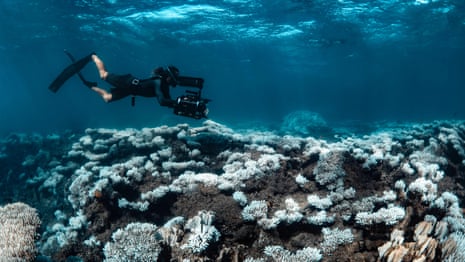
Labor continues to back opening and exploring for new gas fields that could operate for decades, including in the offshore Otway basin, just south of where bushfires are now burning. On Tuesday, a report by researchers at Urgewald ranked Australia at the top of a global list for planned expansion of metallurgical coal used in steel making. Thermal coal expansions still get the greenlight.
Anthony Albanese’s defence of this is that other countries are responsible for the emissions released when they burn Australian fossil fuels.
But this is a constructed argument. It reflects decades-old carbon accounting rules, not an inherent truth. And international rules are, more than in a long time, up for grabs.
I wonder what people in Melbourne and Adelaide this week make of the government’s position. A few more days like Tuesday and it could be interesting to ask.
