Veteran industry voice and Texas Railroad Commissioner Wayne Christian recently delivered a sobering assessment of the escalating threats facing U.S. economic and energy security. His pointed remarks underscore a confluence of macroeconomic and geopolitical headwinds that warrant serious attention from oil and gas investors. Christian highlighted the growing specter of surging federal debt, persistent inflationary pressures, and the volatile geopolitical landscape, particularly concerning critical chokepoints like the Strait of Hormuz, as significant risks to America’s long-term prosperity and energy independence.
The De-Dollarization Threat and Fiscal Headwinds
Christian’s commentary prominently featured concerns over the nation’s ballooning debt and concerted efforts by strategic adversaries to diminish the U.S. dollar’s preeminent status in global oil transactions. Such shifts, if successful, could profoundly reshape America’s financial clout and its enduring influence over international energy markets. “The nation faces an unprecedented financial challenge,” Christian stated, emphasizing how an escalating national debt burdens working families through inflation while foreign rivals actively seek to undermine the dollar’s strength and dilute American economic power.
Investors should keenly observe these trends. The U.S. dollar’s role as the primary currency for global oil trade has historically underpinned its strength and stability. Any significant move away from this paradigm could introduce volatility into commodity markets and impact the valuations of energy assets. Specifically, Christian pointed to the actions of China and Iran, whose collaborative efforts to promote the Chinese yuan in international energy trade pose a direct challenge to the dollar’s dominance. A gradual erosion of the petrodollar system could have far-reaching implications, affecting everything from sovereign debt yields to the cost of imports and exports for energy companies.
Geopolitical Flashpoints and Supply Chain Resilience
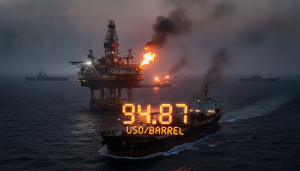
The strategic importance of global energy corridors, most notably the Strait of Hormuz, cannot be overstated. Christian stressed that mounting geopolitical tensions in such vital shipping lanes further illuminate the indispensable role of robust domestic oil and gas production and the continuous development of critical energy infrastructure. For energy investors, the vulnerability of these chokepoints represents a significant risk factor, directly impacting crude oil prices and the reliability of global supply chains.
Disruptions in the Middle East, a region that remains a crucial source of global crude, directly translate into heightened market anxiety and price spikes. The ongoing monitoring of Middle East crude flows, coupled with broader concerns surrounding international energy trade dynamics, inflation, and overall global supply security, paints a picture of inherent market instability. Investing in companies with diversified production bases, strong balance sheets, and resilient operational footprints becomes paramount in such an environment, offering a degree of insulation from regional conflicts that can suddenly tighten global supply.
Texas: The Bulwark of U.S. Energy Sovereignty
Amidst these global uncertainties, the role of U.S. energy production, particularly from the state of Texas, emerges as a critical stabilizing force. Christian explicitly linked robust domestic energy output to broader economic and geopolitical stability. “Reliable energy security is synonymous with both economic security and national security,” he asserted. Texas stands at the epicenter of this security framework, consistently leading the nation as its foremost producer and exporter of oil and natural gas.
The sheer scale of Texas’s energy output provides a vital counterweight to international supply risks. Its production capacity helps to moderate global price volatility, strengthens the U.S.’s bargaining position on the world stage, and fundamentally supports the dollar’s position as the world’s reserve currency. The fact that global energy markets predominantly transact in U.S. dollars remains a cornerstone of the dollar’s strength, and Texas’s central role in supplying a significant portion of that traded energy reinforces this structure. For investors, exposure to resilient, high-volume domestic producers, especially those operating in basins like the Permian, offers a strategic hedge against international political instability and currency fluctuations.
Investor Outlook: Navigating a Complex Energy Landscape
The warnings issued by Commissioner Christian serve as a critical reminder for investors in the oil and gas sector: the industry operates within a deeply interconnected web of economic, financial, and geopolitical forces. The convergence of mounting national debt, persistent inflation, efforts to challenge the dollar’s dominance, and perennial geopolitical flashpoints demands a sophisticated investment strategy.
Astute investors will recognize that while these challenges present risks, they also underscore the enduring strategic value of domestic energy assets. Companies focused on efficient, responsible production within politically stable regions, like the Permian Basin in Texas, are increasingly attractive. Furthermore, investments in energy infrastructure that enhances export capabilities and ensures reliable supply chains will likely see sustained demand. As global oil markets continue to grapple with supply disruptions, inflationary pressures, and shifting economic paradigms, prioritizing energy security and financial resilience will remain key tenets for successful long-term investment in the dynamic world of oil and gas.