

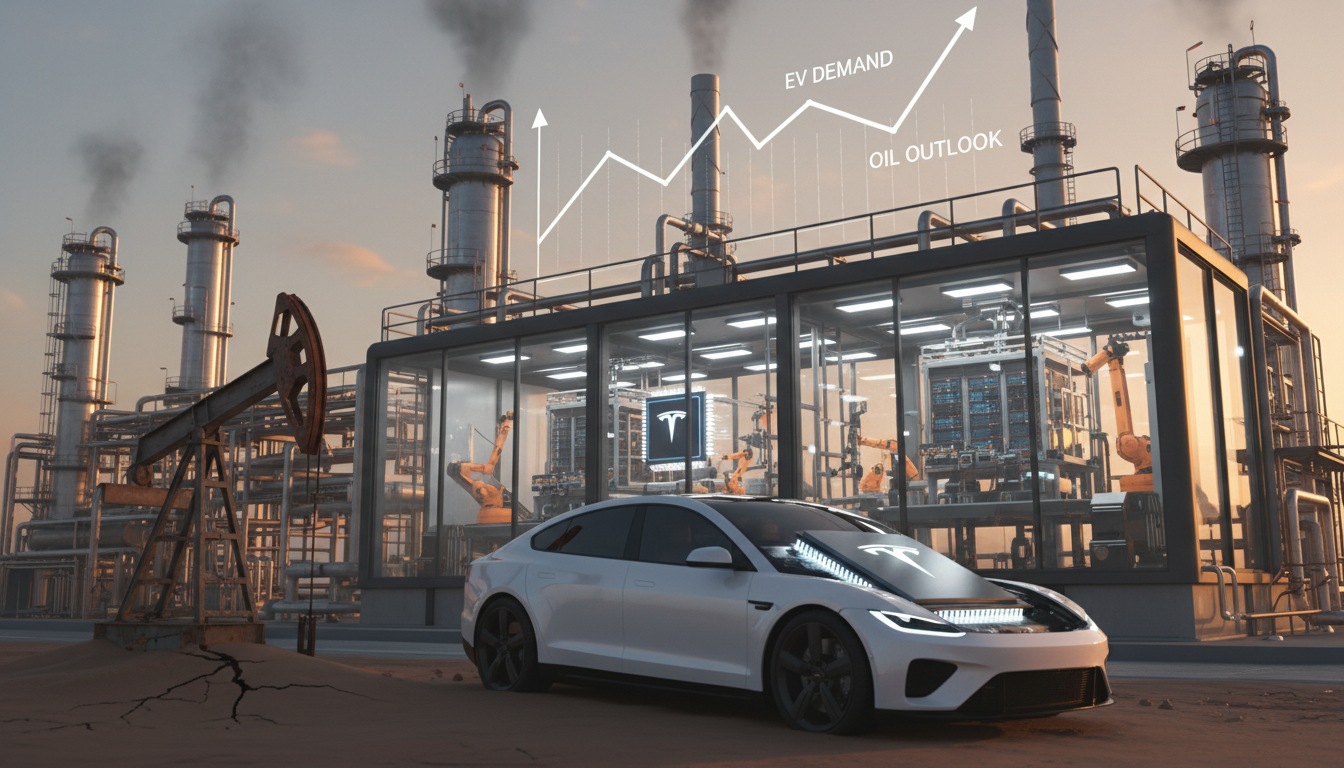
In the dynamic landscape of global industry, where technological breakthroughs consistently reshape economic paradigms, the energy sector must remain acutely attuned to shifts that promise significant future demand. A prime example emerges from the ambitious undertakings of Tesla and SpaceX, spearheaded by Elon Musk, as they aggressively ramp up hiring for a colossal semiconductor manufacturing initiative dubbed ‘Terafab.’ This endeavor, projected to become the largest chip fabrication facility in history, signals not merely a leap in computing power but a monumental new frontier for industrial energy consumption and infrastructure development, presenting both challenges and opportunities for oil and gas investors.
The strategic move by Tesla, with job postings for Terafab engineers in both Palo Alto and Austin, underscores the serious intent behind Musk’s vision for a collaborative chip-making powerhouse with SpaceX. Such a facility, by its sheer scale and technical complexity, guarantees a substantial and sustained draw on energy resources. For those investing in the oil and gas sector, understanding these burgeoning industrial power demands is critical for future market forecasting and investment strategy.
Tesla’s recruitment drive for module process engineers in California, seeking specialized expertise in lithography – the intricate process of etching chip designs onto silicon wafers using ultraviolet light – highlights the advanced nature of this venture. With base salaries ranging from $88,000 to $240,000, dependent on qualifications, and a stringent requirement of over a decade of experience in leading-edge semiconductor development, the company is targeting top-tier talent. These roles also demand an unwavering commitment, with expectations including 24/7 on-call availability to support continuous manufacturing operations and rapid responses to critical production issues. This intense operational environment is characteristic of high-stakes, capital-intensive industries, a trait familiar to many within the demanding oil and gas extraction and processing sectors.
Musk’s revelation that Terafab will involve in-house creation of lithography masks – the foundational templates for chip designs – signifies a radical departure from traditional industry norms. This capability promises unprecedented speed in iterating and refining chip designs, a strategic advantage that Musk asserts “doesn’t exist anywhere in the world” and will involve “very interesting new physics.” This level of vertical integration and technological innovation, aimed at gaining a competitive edge, mirrors the relentless pursuit of efficiency and proprietary technology within the energy sector, from advanced drilling techniques to novel petrochemical processes.
Further strengthening its internal capabilities, Tesla is also seeking process integration engineers to develop advanced logic chips, offering competitive base salaries from $88,000 to $338,280. Musk’s plan to consolidate both logic and memory chip production under one roof at Terafab is highly unconventional within the semiconductor industry, which typically segregates these processes. While Tesla’s base salaries might appear conservative compared to some tech giants, the overall compensation package, including substantial stock grants, aims to attract and retain elite engineering talent. Beyond direct engineering roles, the company is actively recruiting silicon engineers in Austin and a technical program manager to oversee fab design and construction, a role demanding a proven history of managing capital expenditure projects exceeding $100 million. This latter requirement alone speaks volumes about the sheer financial scale and complexity of the Terafab undertaking, echoing the massive capital deployment routinely seen in major oil and gas infrastructure developments.
Terafab’s Insatiable Demand: An Energy Sector Perspective
The audacious goal of constructing one of the world’s largest semiconductor manufacturing facilities from the ground up naturally brings significant challenges, with talent acquisition being paramount. The global semiconductor industry faces a chronic shortage of highly skilled professionals with specialized knowledge, a predicament not unfamiliar to the energy sector, which consistently grapples with securing top engineering and geological expertise for complex exploration and production projects.
Crucially for the energy investment community, the implications of Terafab extend far beyond silicon wafers. SpaceX, a key collaborator, is simultaneously accelerating its semiconductor hiring to support its ambitious plan to deploy up to one million orbital data centers. These centers, powered by AI chips engineered specifically for the harsh conditions of space by Terafab, represent an astronomical future demand for both manufacturing and operational energy. Even if these orbital platforms are solar-powered in space, the ground infrastructure required for their manufacturing, launch support, control, and the processing of their immense data streams will exert colossal pressure on terrestrial power grids.
SpaceX’s Silicon division currently lists approximately 60 open positions, though the direct connection to Terafab is not entirely clear across all roles. These include assembly and packaging engineers for its Starlink factory in Bastrop, Texas, where a substantial $280 million investment was made last year to expand semiconductor research, development, and packaging facilities. Furthermore, positions are open in Washington and California for engineers tasked with developing specialized chips for both terrestrial and space applications. The Bastrop job descriptions explicitly state Starlink’s intent for “vertical integration by bringing integrated circuit packaging and assembly in-house,” a strategic move to secure supply chains and enhance efficiency, a strategy often mirrored in the energy sector’s quest for operational resilience.
For investors focused on oil and gas, Terafab and its associated projects represent a significant inflection point. The construction and operation of such immense, energy-intensive facilities will drive substantial demand for electricity, which will, in turn, influence the markets for natural gas for power generation, grid infrastructure upgrades, and potentially accelerate investment in renewable energy sources to meet corporate sustainability goals. The scale of capital expenditure and the continuous operational energy draw signal sustained opportunities for companies involved in energy production, transmission, and associated services. As these high-tech ventures proliferate, the energy sector must strategically position itself to power the next generation of industrial innovation, ensuring a robust and reliable supply to fuel these burgeoning technological behemoths.
