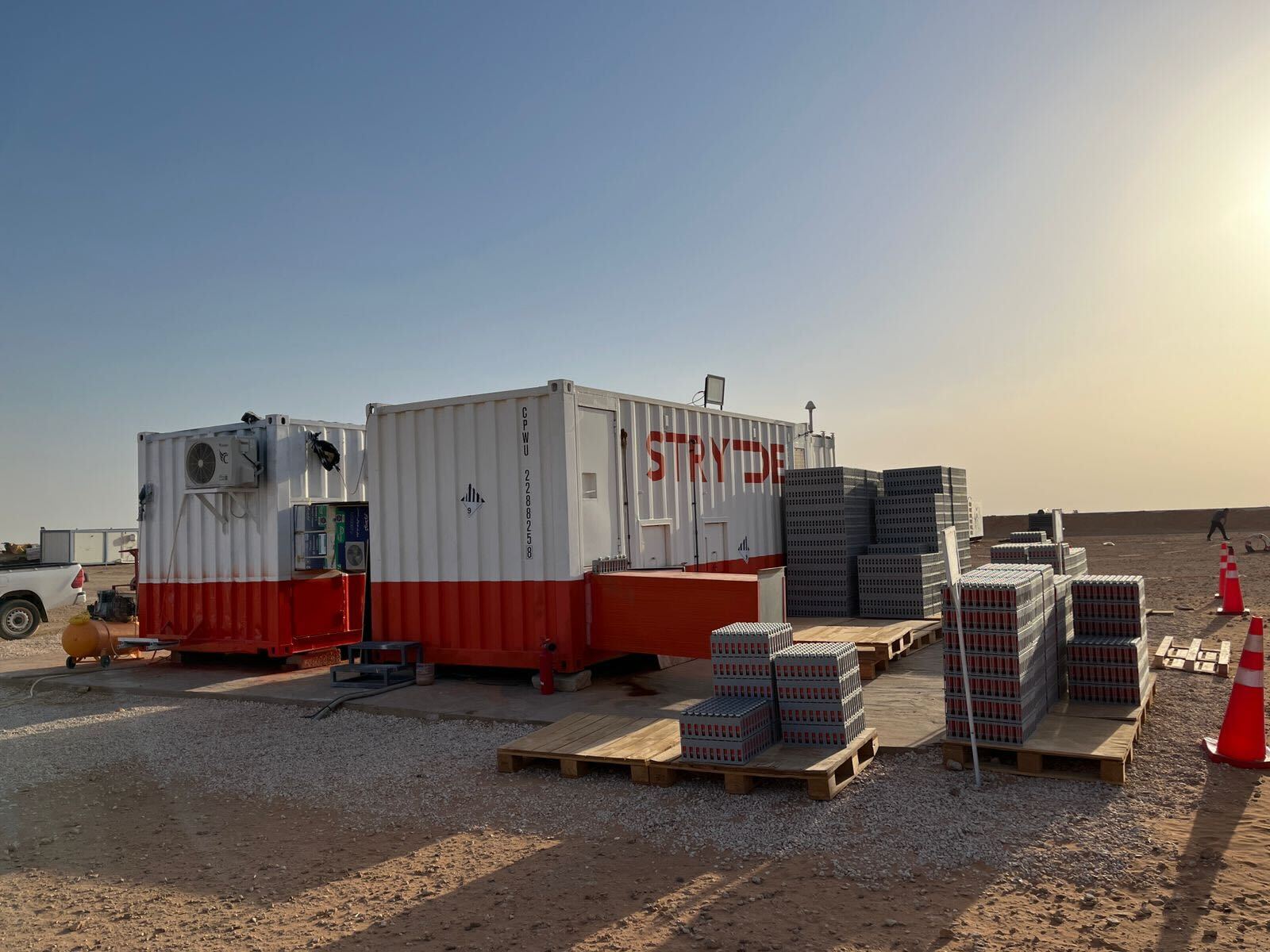
In a move signaling a renewed commitment to unlocking its vast hydrocarbon potential, Libya’s onshore oil and gas sector is embarking on a significant exploration drive. TAY Oil Services and Polaris (TAY Oil – Polaris), under commission from state-owned AGOCO, have initiated a substantial 3D onshore seismic survey in Libya’s Concession 57. This ambitious project, deploying STRYDE’s advanced seismic node technology, represents a critical first step in defining future production strategies and could reshape long-term supply forecasts for a nation eager to reassert its role in global energy markets. For investors navigating today’s volatile crude landscape, this development highlights the enduring importance of upstream investment, even as short-term price movements dominate headlines.
Libya’s Strategic Re-Entry and Resource Potential
The decision by AGOCO to greenlight this large-scale seismic program underscores Libya’s strategic intent to revitalize its onshore exploration and development, an area that has seen limited activity in recent years. As a frontier market with immense, yet largely underexplored, resource potential, the acquisition of high-quality seismic data is paramount. The 1,480 km² 3D survey in Concession 57, set for its debut deployment in early summer 2025, is designed to provide the foundational geological understanding necessary to guide future drilling campaigns. This initiative is not merely about finding new oil; it’s a pivotal step towards supporting Libya’s economic growth and ensuring long-term energy security for the nation. For investors, success in this region could mean access to significant, low-cost barrels, offering a compelling long-term catalyst for associated service providers and future operators.
Leveraging Cutting-Edge Technology for Complex Geologies
The selection of STRYDE’s seismic node technology by TAY Oil-Polaris highlights a strategic embrace of innovation to overcome the inherent challenges of Libya’s geology. The country’s subsurface is characterized by complex formations, including thick carbonate sequences and rugged terrain, which demand superior imaging capabilities. The deployment of 40,000 STRYDE seismic nodes, enabling high-density sensor deployment, is essential for achieving the necessary structural and stratigraphic resolution. This project, poised to become the largest nodal seismic acquisition ever conducted in North Africa, leverages a semi-automated, containerized system. This 20ft shipping container solution dramatically enhances operational efficiency, allowing a single operator to rotate 13,000 nodes within 24 hours. This translates directly into reduced crew sizes, lower HSE (Health, Safety, and Environment) risk exposure, and significantly decreased operational costs – factors that directly impact the economic viability and return on investment for such frontier exploration efforts.
Navigating Market Volatility with a Long-Term Vision
This significant exploration push in Libya arrives amidst a notably volatile period for crude oil prices. As of today, Brent crude trades at $90.38 per barrel, marking a sharp 9.07% decline within the day, with its range fluctuating between $86.08 and $98.97. Similarly, WTI crude is at $82.59, down 9.41%. This downward pressure extends beyond a single trading session; Brent has shed a substantial $22.4, or nearly 20%, over the past two weeks, dropping from $112.78 on March 30th. Investors are keenly watching these price trajectories, with many asking about the trajectory of oil prices by the end of 2026. While short-term market dynamics, influenced by inventory reports and geopolitical shifts, can cause significant swings, Libya’s commitment to unlocking new resources represents a long-term supply-side play. This divergence between immediate market volatility and strategic, multi-year upstream investments is a critical consideration for investors looking beyond daily fluctuations and towards foundational shifts in global supply.
Upcoming Catalysts and Future Supply Implications
The initiation of Libya’s seismic program, while a long-term play, interacts with several near-term market catalysts. The most immediate of these is the OPEC+ Ministerial Meeting scheduled for April 19th. With crude prices experiencing a significant correction, particularly the near 20% drop in Brent over the last two weeks, the market will be scrutinizing OPEC+ decisions on current production quotas. Any adjustments could directly impact global supply and price stability in the short term. Furthermore, upcoming API and EIA weekly inventory reports on April 21st and 22nd, respectively, along with the Baker Hughes Rig Count on April 24th, will provide crucial insights into current supply-demand balances and drilling activity. While these events dictate immediate market sentiment, Libya’s exploration success, if it translates into new discoveries and production, could fundamentally alter future supply dynamics. For investors asking about the future price of oil by the end of 2026, the success of such large-scale exploration projects, alongside OPEC+ policy and global demand trends, will be key determinants. This seismic project in Concession 57 is a significant early indicator of potential new supply sources emerging in the latter half of this decade, offering a powerful counter-narrative to depletion fears and providing an important lens through which to view long-term energy security investments.


