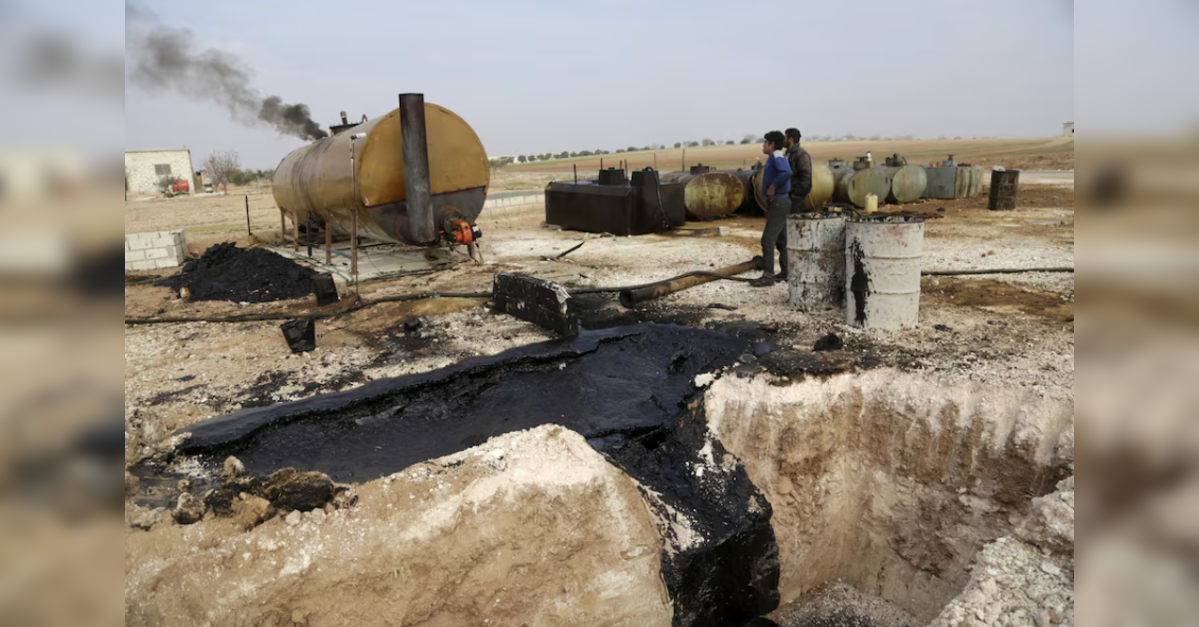
A significant development is unfolding in the Middle East, with US-based firms Baker Hughes, Hunt Energy, and Argent LNG poised to spearhead a comprehensive masterplan for Syria’s energy and power sector. This groundbreaking initiative follows the lifting of stringent US sanctions at the end of June, marking a pivotal moment for American corporate re-engagement in a nation ravaged by 14 years of conflict. The consortium’s aim is ambitious: to revitalize Syria’s shattered energy infrastructure, from exploration and production (E&P) to electricity generation, signaling a multi-billion dollar opportunity for investors tracking long-term growth in the global oil and gas landscape.
Syria’s Energy Rebirth: A Multi-Decade Opportunity
The scale of the energy challenge and the corresponding investment opportunity in Syria is immense. Before 2011, Syria’s electricity sector boasted a generation capacity of 9.5 gigawatts; today, it struggles to produce a mere 1.6 GW. This dramatic decline underscores the critical need for massive capital injection and expertise to rebuild. The masterplan, described by Argent LNG CEO Jonathan Bass, is comprehensive, encompassing the entire energy value chain. It includes efforts to explore and extract oil and gas resources, alongside the development of new power generation facilities, including advanced combined-cycle power plants. This holistic approach aims not just to restore, but to modernize Syria’s energy grid, laying the foundation for economic recovery.
The entry of major US players like Baker Hughes, a global energy services giant, and Hunt Energy, a Texas-based oil and gas firm, alongside Argent LNG, signals a new era for foreign investment in Syria. While other regional entities, such as Qatar’s UCC Holding, have already inked Memoranda of Understanding for significant projects – including a $7 billion deal in May for power generation and a 1,000-MW solar plant – the US consortium’s masterplan represents a strategic, coordinated effort to address the foundational energy needs. Initially, the focus will be on areas west of the Euphrates River, under government control, setting the stage for potential future expansion into the oil-rich eastern regions currently held by the Syrian Democratic Forces.
Navigating Market Headwinds with Long-Term Vision
This long-term investment horizon in Syria emerges against a backdrop of fluctuating global energy markets. As of today, Brent crude trades at $94.51, reflecting a modest 0.44% decline, while WTI sits at $90.62, down 0.73%. This relative stability in daily trading belies recent volatility; Brent crude, for instance, has shed over 12% in the past two weeks, moving from $108.01 on March 26 to $94.58 on April 15. This recent downward trend underscores the constant pressure on supply and demand fundamentals, and the market’s sensitivity to geopolitical developments and inventory data.
For investors, the Syria masterplan offers a unique counter-cyclical or diversification play. While immediate impacts on global oil and gas prices are unlikely, the prospect of new, albeit distant, supply from a re-emerging producer contributes to the broader narrative of future energy security. Investors frequently inquire about the base-case Brent price forecast for the next quarter, and indeed, the consensus 2026 Brent forecast remains a key topic. Projects like Syria, though years away from significant output, influence these long-term outlooks by adding potential future supply to the global equation, a crucial consideration for those building their investment theses.
Strategic Implications and Upcoming Catalysts
The development of a comprehensive energy masterplan is a crucial first step, setting the stage for substantial future contracts and capital deployment. For the involved firms, this represents a potential first-mover advantage in a market with immense rebuilding needs. Argent LNG’s broader strategy, exemplified by its non-binding agreement in January to supply Bangladesh with up to 5 million metric tons of LNG annually, highlights the global reach and strategic importance of diversified energy supply routes and partners.
The potential for new supply, even if years in the making, adds another layer of complexity to the global energy dialogue, especially as we approach key events. The upcoming OPEC+ JMMC meeting on April 18 and the Full Ministerial session on April 20 will undoubtedly focus on immediate supply management and market balancing. While Syria’s future production won’t be on the agenda for these near-term decisions, the long-term potential of re-emerging producers like Syria contributes to the broader supply narrative that influences OPEC+’s strategic thinking. Furthermore, industry watchers will closely monitor the Baker Hughes Rig Count reports on April 17 and April 24, which offer a real-time pulse on drilling activity, contrasting established production trends with the nascent opportunities in challenging frontiers like Syria.
Investor Considerations: Risk, Reward, and Geopolitics
Investing in post-conflict regions like Syria presents a unique blend of high potential reward and significant inherent risks. On the reward side, firms involved in the masterplan stand to secure substantial long-term contracts for E&P services, infrastructure development, and power generation. The sheer scale of rebuilding required, with billions of dollars needed to restore the electricity sector alone, points to a multi-decade revenue stream for successful participants. This also offers a strategic foothold in a geopolitically important region.
However, investors must critically assess the risks. Geopolitical stability remains paramount; the ongoing division of the country, with key oil-producing areas in the east remaining outside government control, poses a significant challenge to comprehensive energy sector rehabilitation. Financing is another major hurdle, as the Syrian state is cash-strapped and will likely rely heavily on private investment or international donors. Regulatory frameworks, security concerns, and the complexities of operating in a post-sanctions environment demand meticulous due diligence. The initial phase of developing a masterplan allows for a measured approach, enabling firms to assess these factors before committing to large-scale execution. For savvy investors, understanding these intertwined political, financial, and operational dynamics will be key to unlocking the long-term value in Syria’s energy renaissance.


