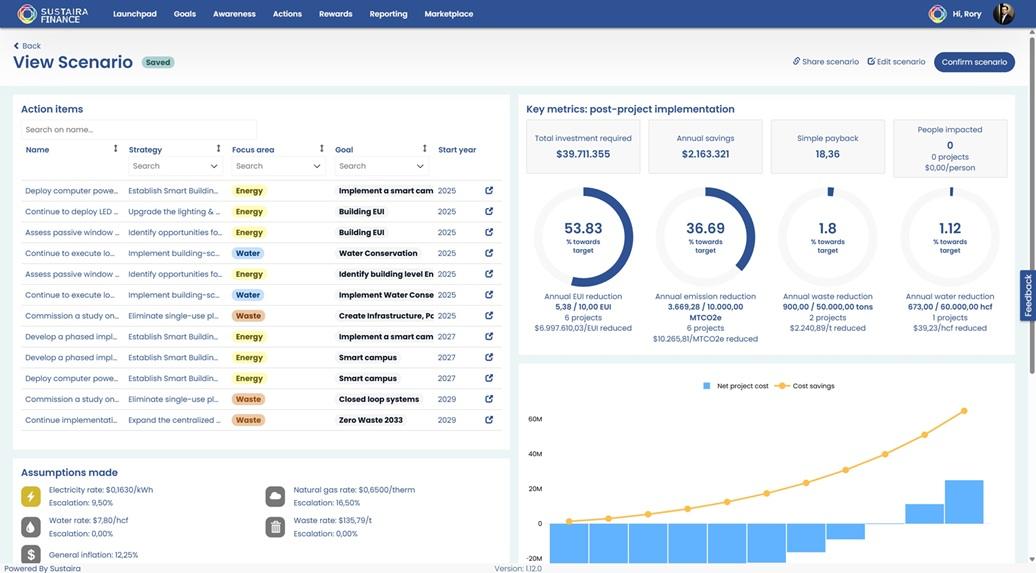
The energy sector finds itself at a critical juncture, navigating persistent market volatility while simultaneously facing escalating demands for robust environmental, social, and governance (ESG) performance. In this dynamic landscape, specialized technology solutions are no longer a luxury but a strategic imperative. The recent launch of Sustaira’s new Industry-Specific Sustainability Suites, particularly their focus on the Energy & Utilities sector, marks a significant development for companies striving to meet decarbonization targets, manage climate risk, and enhance transparent reporting. This analysis delves into how these tailored platforms address core challenges faced by oil and gas investors, leveraging proprietary market insights and forward-looking event analysis to frame the investment thesis.
Market Volatility Reinforces the ESG Imperative for Energy Investors
Current market conditions underscore the ongoing volatility inherent in commodity markets, yet paradoxically, they also amplify the strategic importance of ESG integration for energy companies. As of today, Brent Crude trades at $90.38, reflecting a significant 9.07% downturn in a single day, within a range of $86.08 to $98.97. Similarly, WTI Crude stands at $82.59, marking a 9.41% drop, fluctuating between $78.97 and $90.34. This immediate dip follows a broader trend over the past two weeks, where Brent has seen a substantial decline from $112.78 on March 30th to its current level, representing a nearly 20% contraction. Such price swings, coupled with a gasoline price of $2.93, down 5.18% today, create an environment where operational efficiency and risk mitigation are paramount.
For energy companies, demonstrating strong ESG credentials, facilitated by platforms like Sustaira, can serve as a vital differentiator. In periods of price instability, investors increasingly scrutinize a company’s long-term resilience and ability to attract capital. A clear, verifiable path to decarbonization and effective climate risk management, as enabled by Sustaira’s modular and AI-powered architecture, can lower a company’s cost of capital and broaden its investor base beyond purely commodity-driven funds. This strategic investment in sustainability technology shifts the narrative from merely surviving market fluctuations to thriving through enhanced operational transparency and stakeholder trust.
Navigating Upcoming Events with Enhanced ESG Reporting Capabilities
The energy calendar over the next two weeks is packed with events that, while primarily focused on supply, demand, and inventory, inherently influence the broader regulatory and investor sentiment around the industry’s future. The upcoming OPEC+ JMMC Meeting on April 19th, followed by the OPEC+ Ministerial Meeting on April 20th, will set the tone for global oil supply decisions. These gatherings often spark intense debate about production quotas and market stability, directly impacting pricing and, by extension, the financial health of producers. Further downstream, the API Weekly Crude Inventory report on April 21st and the EIA Weekly Petroleum Status Report on April 22nd, followed by their counterparts on April 28th and 29th, provide crucial snapshots of market fundamentals. The Baker Hughes Rig Count reports on April 24th and May 1st offer insights into drilling activity and future supply trends.
While these events don’t directly discuss ESG software, their outcomes create the underlying pressures and opportunities that make solutions like Sustaira’s invaluable. For instance, any discussions around future supply or demand could be implicitly linked to environmental considerations or energy transition policies. Companies equipped with precise tools for emissions calculations, climate risk modeling, and robust reporting can more effectively respond to evolving regulatory landscapes that often follow such high-profile industry events. As Vincent de la Mar, Sustaira CEO, noted, focusing solely on carbon accounting is insufficient; organizations need domain-specific solutions that address unique operational realities. The Energy & Utilities suite, specifically designed for this sector, enables firms to proactively manage these complex interdependencies, positioning them favorably regardless of short-term market shifts.
Addressing Investor Concerns: Beyond Price Predictions to Sustainable Value Creation
Our proprietary reader intent data reveals a consistent investor focus on market fundamentals, particularly around future oil prices and OPEC+ strategies. Questions such as “what do you predict the price of oil per barrel will be by end of 2026?” and “What are OPEC+ current production quotas?” clearly indicate a primary concern with commodity pricing and supply-side dynamics. While these are crucial, smart investors recognize that sustainable value creation in the energy sector extends beyond mere price speculation. This is where advanced ESG platforms become critical.
The frustration expressed by Rory O’Sullivan, Sustaira’s Global Sustainability Lead, regarding rigid platforms and reliance on error-prone spreadsheets, resonates with investors who demand reliable, verifiable data. Our readers also ask about data sources and APIs for market data, highlighting a general desire for robust, integrated information systems. Sustaira’s modular approach, with its pre-built connectors to industry-leading platforms like IBM Envizi, Workiva, Enablon, and SAP, directly addresses this need for seamless data integration and accuracy in sustainability reporting. For energy companies, demonstrating proficiency in managing and reporting on all aspects of ESG – from decarbonizing heavy industries to tackling Scope 3 emissions – reassures investors that their assets are future-proofed against evolving regulatory pressures and shifting capital preferences. In an environment where future oil prices are uncertain, a strong ESG profile can differentiate an investment, making it more attractive to a broader pool of capital seeking long-term, resilient growth.
Tailored Solutions for the Energy & Utilities Sector
Sustaira’s new Energy & Utilities Sustainability Suite is particularly noteworthy for investors in the oil and gas space, offering a specialized approach that moves beyond generic sustainability tools. The challenge, as articulated by Sustaira, lies in the dichotomy between overly generic off-the-shelf solutions and prohibitively expensive custom builds. The modular, AI-powered architecture of these new suites aims to bridge this gap, providing tools specifically designed to tackle the most pressing sustainability challenges unique to the energy sector.
This includes capabilities for managing the complex process of decarbonizing heavy industries, a critical area for many oil and gas producers. Furthermore, the suite’s focus on mitigating climate risk and effectively addressing Scope 3 emissions in logistics directly tackles some of the most intricate and challenging aspects of an energy company’s environmental footprint. These are not merely compliance exercises; they are fundamental operational shifts that require sophisticated data aggregation, analysis, and reporting. By providing tools that adapt to the unique business model of an energy company, rather than forcing the company to adapt to a rigid platform, Sustaira empowers firms to implement more effective sustainability strategies. This targeted approach is essential for companies looking to not only meet current disclosure requirements but also proactively position themselves for the ongoing energy transition and attract long-term, responsible investment.


