

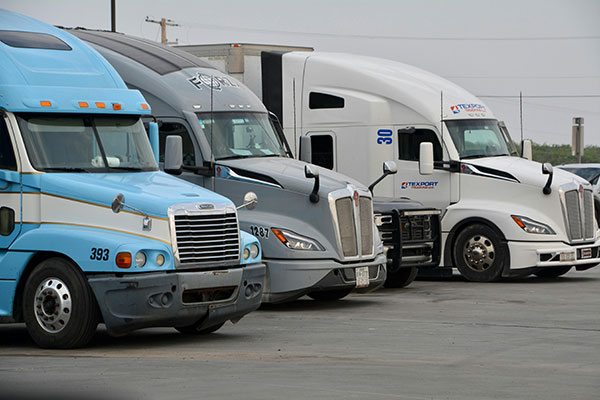
Most companies that ship freight spend time checking carrier safety scores.
They look at DOT numbers, inspection history, insurance coverage, and authority status. If the record looks clean, the carrier gets approved.
But sometimes the company, on paper, is not truly new.
In trucking, there’s a term for carriers that shut down after serious safety problems and then reopen under a different name. They are called chameleon carriers.
What Is a Chameleon Carrier?
A chameleon carrier is a trucking company that has been shut down, fined, or placed out of service, then reappears under a new company name and DOT number.
On paper, the new carrier may look like a startup.
In reality, it can involve the same:
Owners
Equipment
Drivers
Business address
The name changes. The operation often does not.
This matters because most shipper vetting processes rely heavily on what shows up under the current DOT number.
Why This Is a Supply Chain Issue
This is not just a regulatory technicality. It affects freight risk.
If a carrier with a poor safety history resurfaces under a new identity, a shipper or broker could unknowingly:
Put freight on poorly maintained equipment
Increase accident exposure
Face insurance complications
Damage customer relationships
For procurement teams focused on capacity and cost, that creates a blind spot.
Real-World Enforcement Cases
There are documented examples of federal regulators identifying carriers operating under new identities following prior safety actions.
MTI Transportation LLC
In 2012, the Federal Motor Carrier Safety Administration ordered MTI Transportation LLC of Alabama to stop operating.
Investigators found MTI was transporting freight on behalf of two carriers that had already been placed out of service for serious safety violations: BM&L Trucking LLC and IDM Transportation Inc.
Those violations included vehicle maintenance issues and noncompliance with driver drug- and alcohol-testing requirements.
Rather than addressing the safety issues, freight activity had effectively shifted under MTI’s authority. FMCSA shut the company down for operating in violation of federal safety orders.
Kansas “Reincarnated” Carriers
In 2013, FMCSA shut down four Kansas-based carriers: Royal Transport Inc., Nationwide Inc., Freight Inc., and Midwest A Inc.
According to the agency, some of those companies were created after an earlier out-of-service order was issued against Nationwide Inc. Regulators determined the carriers were operating under common control and were structured to avoid the negative compliance history associated with the earlier shutdown.
In other words, new names were being used while the underlying operation remained connected.
These are the types of cases lawmakers and enforcement officials point to when discussing chameleon carriers.
Why It Is Hard to Detect
The federal registration system depends largely on self-reported information.
Unless regulators or third-party data services connect overlapping names, addresses, or management control, a newly registered carrier can appear clean.
For shippers, a simple DOT check is not always sufficient.
What Supply Chain Leaders Should Consider
Most new carriers are legitimate startups. The issue is not that new equals risky.
The issue is that new does not always mean unrelated.
When onboarding carriers, companies can go a step further by:
Checking for linked entities tied to the same principals
Reviewing sudden authority transfers or insurance changes
Looking at shared addresses or management names
Asking additional questions if a carrier’s history appears unusually short
For supply chain leaders focused on resilience, this is another reminder that risk is not just about ports, tariffs, or weather events. Sometimes it is about who is actually hauling the freight.
