

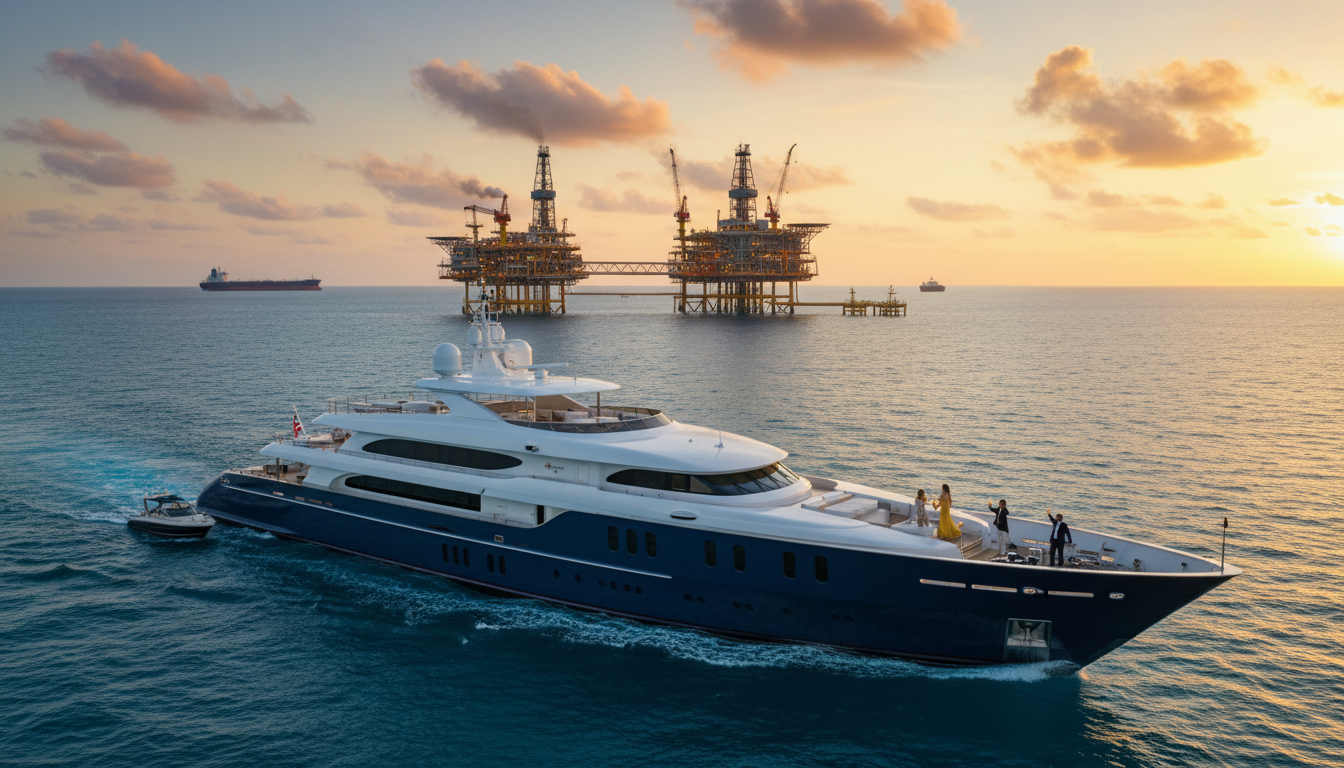
The global economic landscape continues to reshape, yielding unprecedented concentrations of wealth, particularly fueled by surges in stock market valuations and the meteoric rise of artificial intelligence. For the shrewd investor, discerning where this burgeoning capital flows offers critical insights into broader market trends and, intriguingly, into the future of energy demand. A prime indicator of this high-net-worth liquidity, and a symbol of ultimate luxury, is the superyacht market, which is currently experiencing a robust boom with significant implications for the energy sector.
Superyacht Market Signals Robust Wealth Accumulation
Recent data underscores a powerful expansion within the superyacht sector. Sales of pre-owned superyachts, which constitute the dominant portion of the market, surged to an impressive $6.4 billion in 2025 alone. This represents a substantial 36% increase over 2024 figures, signaling a profound appetite for these opulent vessels among the ultra-rich. Concurrently, the acquisition of brand-new superyachts—defined as those exceeding 30 meters in length—also saw a healthy uptick, growing by 6%. This dual growth trajectory for both new and pre-owned assets paints a clear picture of sustained and intensifying demand within this exclusive niche.
This market expansion is not merely quantitative; it’s accompanied by a significant demographic shift among buyers. Traditionally, superyacht ownership was the purview of seasoned retirees or empty nesters. However, the current influx of wealth is attracting a younger demographic, particularly from the dynamic tech industry, often with their families in tow. This new cohort frequently bypasses the conventional progression through smaller yachts, opting instead to directly enter the market with larger vessels. It is increasingly common for individuals in their 40s to make their inaugural superyacht purchase at the 50 or 60-meter mark, signifying a more aggressive entry strategy into this luxury asset class.
Shifting Buyer Priorities and the Quest for Scale
The priorities of these younger, more technologically adept buyers are distinctly different. They exhibit a pronounced preference for scale; the number of newly delivered superyachts exceeding 80 meters in length climbed from 13 to 19 over the past year. Beyond sheer size, there is an overarching demand for seamless integration of their onshore lifestyles onboard. This encompasses advanced technology, ensuring robust connectivity for remote work – the “work from yacht” phenomenon – allowing owners to conduct high-level business meetings from their vessel’s conference room. Furthermore, comprehensive entertainment solutions for families, from elaborate waterslides and wakeboards to on-board cinemas, are now standard expectations.
The Energy Transition Anchors in Luxury: A Glimpse into Future Fuels
Perhaps most compelling for the energy investor are the evolving sustainability demands from these new buyers. There’s a palpable shift towards eco-conscious luxury, with an increasing proportion of owners prioritizing greener operations. This trend is vividly exemplified by the sale of “Breakthrough,” the year’s most expensive superyacht. This 119-meter vessel, with a last asking price of $793 million and charter rates starting at $4 million per week, boasts not only lavish features like a tennis court, helipad, and infinity pool, but also pioneering engineering. Its standout feature is its propulsion system: it is the first superyacht powered by hydrogen fuel cells, enabling entirely emission-free cruising.
The embrace of hydrogen fuel cells in a vessel of “Breakthrough’s” magnitude is a powerful signal. While superyachts represent a fraction of global marine fuel consumption, their adoption of cutting-edge, clean energy technologies serves as a high-profile proof of concept. This move underscores a growing trend where luxury markets act as incubators for advanced sustainable solutions. For oil and gas investors, this signifies a crucial inflection point: the ultra-wealthy are not just demanding luxury, but also sustainable luxury. This could accelerate demand for green hydrogen production, specialized bunkering infrastructure, and other alternative marine fuels, creating new investment avenues and challenges for traditional fossil fuel providers in the maritime sector.
Future Projections and Investment Opportunities
Looking ahead, the demand for superyachts shows no signs of abating. Projections from wealth intelligence firm Altrata indicate that the global ultra-high-net-worth individual (UHNWI) population is poised to expand by a significant 31% between 2025 and 2030. This growth translates to an estimated 166,160 additional individuals who could potentially enter the superyacht market, either as owners or frequent charterers. This swelling pool of potential clients will undoubtedly exert further upward pressure on sales and charter prices, ensuring continued vibrancy in the sector.
The social dynamics of the ultra-wealthy also play a role, with a natural inclination to congregate in exclusive locales, further fueling demand. As superyachts flock to destinations like St. Barts during peak seasons, a positive feedback loop is created within the industry. For energy markets, this sustained growth in the luxury maritime sector, particularly with its lean towards sustainable propulsion, signals a fascinating evolution. It highlights the growing importance of clean energy solutions in niche but high-value segments, compelling energy companies and investors to monitor these trends closely for opportunities in green fuel production, storage, and distribution, ultimately contributing to the broader energy transition narrative.
