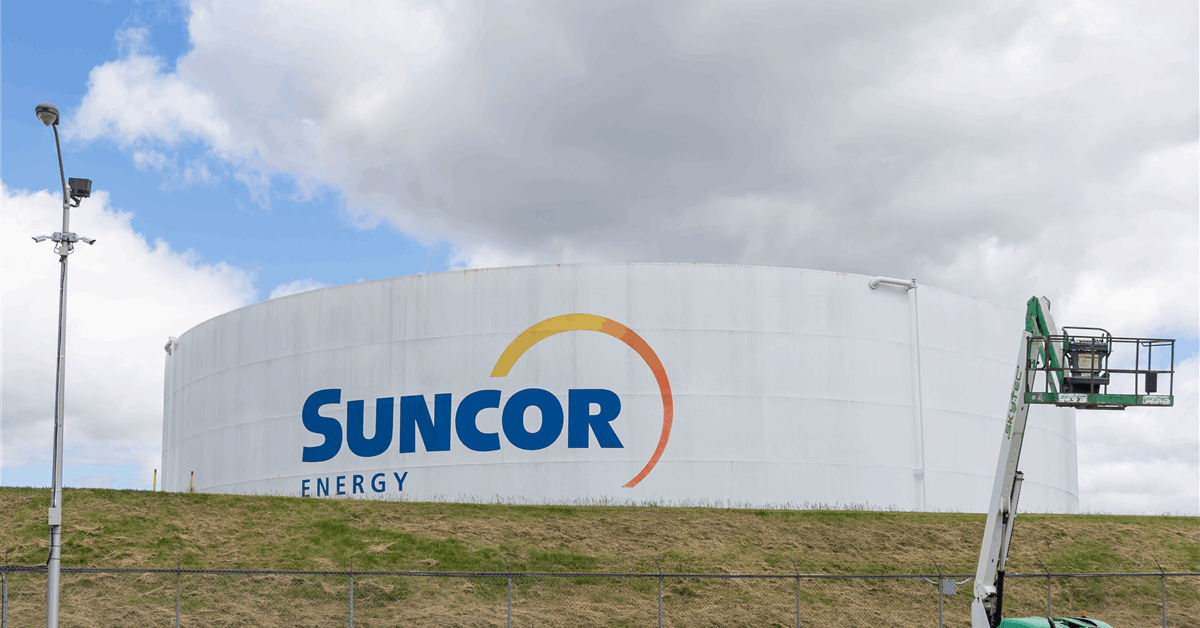
Suncor Energy Inc. delivered a robust first quarter for 2025, demonstrating the inherent strength of its integrated business model amidst a dynamic energy market. The Calgary-based major reported a net profit of CAD 1.69 billion ($1.21 billion), marking a tangible increase from CAD 1.61 billion in the prior year’s period. This performance translated into net income per basic share of CAD 1.36, up from CAD 1.25 in Q1 2024. While the company achieved record upstream output for the January-March quarter, it was Suncor’s refining and marketing segment that truly propelled the bottom line, offsetting some upstream sales volume headwinds and proving the resilience of its diversified asset base for investors seeking stability in an often-volatile sector.
Refining Strength Drives Record Q1 Net Profit
Suncor’s Q1 2025 results underscore the strategic value of its integrated operations, with downstream activities playing a pivotal role in boosting profitability. The company achieved its highest-ever refined product sales for a first quarter, reaching 604,900 barrels per day (bpd), a significant increase from 581,000 bpd in Q1 2024. This was supported by a record volume of processed oil, which climbed to 482,700 bpd from 455,300 bpd year-over-year. This downstream momentum was crucial, as it effectively cushioned the impact of a slight dip in adjusted operating income from the upstream segment, which fell to CAD 1.63 billion in Q1 2025 from CAD 1.82 billion in Q1 2024. Despite achieving record upstream output of 853,200 bpd, up from 835,300 bpd in Q1 2024, upstream sales volumes decreased from 847,400 bpd to 828,400 bpd due to an inventory build. Oil sands production contributed 790,900 bpd, while offshore production saw a healthy boost to 62,300 bpd from 50,300 bpd, largely due to the resumption of production at the White Rose field. While the quarter saw higher oil sands price realizations benefiting from narrower differentials, these gains were mostly counteracted by lower downstream benchmark crack spreads during the period. The weakening Canadian dollar against the U.S. dollar also introduced foreign exchange complexities, causing a loss on working capital items while simultaneously benefiting upstream price realizations.
Navigating Current Market Volatility: An Investor’s Perspective
For integrated oil and gas companies like Suncor, understanding current market dynamics is paramount for investors. As of today, Brent crude trades at $95.27 per barrel, up 0.51% within a day range of $91 to $95.79, while WTI crude sits at $91.19, reflecting a slight decrease of 0.1% within its range of $86.96 to $92.38. These price points contrast sharply with the recent volatility observed over the past two weeks, where Brent crude saw a notable decline of nearly 9%, falling from $102.22 on March 25th to $93.22 on April 14th. This substantial price movement underscores the inherent market instability that Suncor’s integrated model is designed to mitigate. When crude prices soften, refining margins can expand as feedstock costs decrease, potentially offsetting some upstream revenue pressure. Conversely, a robust crude price environment boosts upstream profitability, even if it tightens refining margins. Investors are keenly asking for a base-case Brent price forecast for the next quarter, and this recent dip, followed by a partial recovery, highlights the challenge of predicting short-term movements. Suncor’s ability to generate CAD 1.9 billion in free funds flow and maintain a healthy cash position of CAD 2.77 billion, against a current portion of long-term debt of CAD 997 million, positions it to weather these fluctuations better than pure-play upstream or downstream operators. The current gasoline price of $2.98, up 0.34%, also provides a snapshot of the downstream environment, suggesting continued demand that supports refining operations, though crack spreads remain a key variable to monitor.
Strategic Capital Allocation and Upcoming Market Catalysts
Suncor’s commitment to shareholder returns remained strong in Q1 2025, distributing CAD 1.5 billion through a combination of CAD 705 million in dividends and CAD 750 million in share buybacks. This consistent capital allocation strategy, even as adjusted funds from operations saw a slight decrease to CAD 3.05 billion from CAD 3.17 billion in Q1 2024, signals management’s confidence and focus on long-term value creation. However, the external market environment remains a critical factor influencing future performance and investor sentiment. The upcoming OPEC+ Joint Ministerial Monitoring Committee (JMMC) meeting on April 18th, followed by the Full Ministerial Meeting on April 20th, will be pivotal. Any decisions regarding production quotas could significantly impact global crude supply and price stability, directly affecting Suncor’s upstream realizations and refining feedstock costs. Investors are actively seeking insights into the consensus 2026 Brent forecast, and these OPEC+ meetings are key determinants for such long-term price outlooks. Furthermore, the weekly API and EIA crude inventory reports, scheduled for April 21st/22nd and April 28th/29th, will provide crucial demand and supply signals for North American markets, influencing short-term price movements and refining profitability. These events will shape the operating landscape for Suncor, influencing everything from capital expenditure decisions to hedging strategies. The company’s leadership, under President and CEO Rich Kruger, emphasizes a “laser-focused” approach on “safe, reliable, and cost-effective operations,” a strategy designed to navigate these market complexities and deliver sustained free funds flow.
Operational Resilience and Investor Confidence
Suncor’s Q1 2025 performance reinforces the narrative of an operationally strong company prioritizing efficiency and shareholder value. The CEO’s comments about maintaining momentum from 2024 and focusing on fundamental operational excellence resonate with investors who prioritize stability and consistent returns. The integrated business model itself acts as a natural hedge, mitigating the impact of single-segment market pressures. While upstream sales volumes saw a temporary dip due to inventory build, the record production numbers indicate robust operational capacity. This ability to produce at high levels across both oil sands (790,900 bpd) and offshore (62,300 bpd) segments, coupled with record refining throughput, highlights Suncor’s operational prowess. For investors asking about a base-case Brent price forecast for the next quarter or the consensus 2026 Brent forecast, Suncor’s strategy provides a compelling answer: by excelling across the value chain, the company aims to generate strong free funds flow irrespective of short-term price fluctuations. The foreign exchange dynamics observed in Q1, where a weaker Canadian dollar benefited upstream realizations but led to working capital losses, also underscore the complexity of managing a global business and the importance of a diversified portfolio in buffering against such macroeconomic shifts. Suncor’s strategic positioning and operational discipline make it a compelling consideration for investors seeking exposure to a resilient energy major.


