Energy markets are closely monitoring Central Europe as Hungarian officials signal a significant breakthrough in Russian oil supplies. Incoming Prime Minister Peter Magyar has indicated that crude oil flows via the crucial Druzhba pipeline, which has experienced a months-long disruption, could recommence as early as next week. This potential resumption, confirmed by MOL Group’s CEO Zsolt Hernadi, offers a crucial lifeline for Hungary’s energy security and holds broader implications for regional stability and investment within the European oil and gas sector.
Druzhba: A Critical Artery for Central European Energy
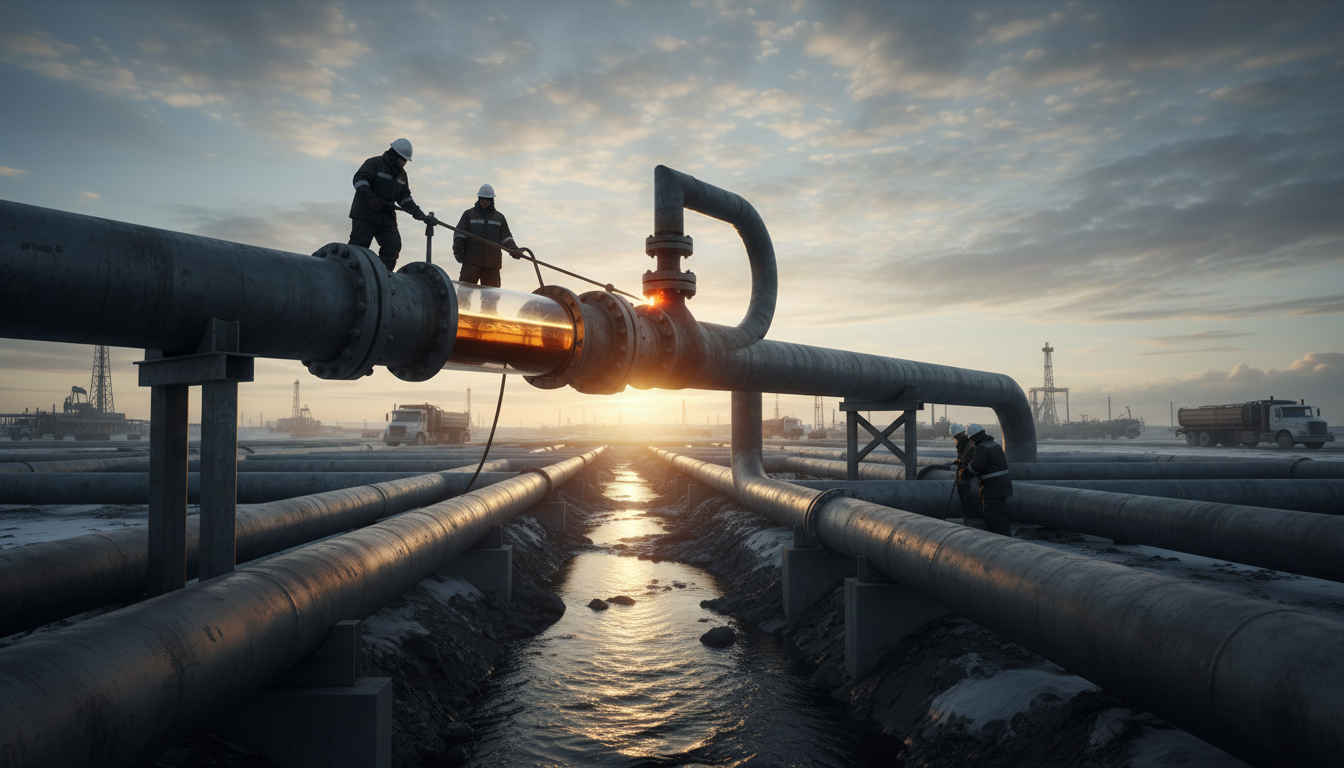
The Druzhba pipeline, meaning “Friendship” in Russian, represents the world’s longest oil pipeline network, delivering Russian crude to multiple European countries. For landlocked Hungary, this conduit is not merely an option but a strategic imperative. Hungarian refiner MOL Group, a cornerstone of the nation’s energy infrastructure, heavily relies on Druzhba’s steady flow of Russian crude for its operations. The pipeline’s disruption since January, attributed to a Russian drone strike in Ukraine, has therefore posed a substantial challenge to Hungary’s energy resilience and MOL’s operational continuity.
The announcement by Magyar, made public on Friday, directly quotes Hernadi, who is slated to travel to Russia next week for discussions concerning future oil supplies. Magyar emphasized the critical distinction: “It’s not enough just to restart Druzhba,” he stated. “It needs to get oil too.” This highlights the nuanced negotiations required not just to repair infrastructure, but to re-establish a reliable supply chain amidst ongoing geopolitical complexities. For investors watching the European energy landscape, the re-establishment of these flows signals a potential easing of supply-side pressures for Hungarian assets, potentially stabilizing MOL’s refining margins and overall financial performance.
Navigating the Geopolitical Maze: Oil, Aid, and Political Leverage
The pipeline’s operational woes transcended mere technical issues, quickly escalating into a heated political dispute during Hungary’s recent election cycle. Outgoing Prime Minister Viktor Orban, a vocal critic of certain EU policies, accused Kyiv of deliberately delaying repairs for political gain—an assertion vehemently denied by Ukrainian President Volodymyr Zelenskiy. This accusation was then leveraged by Orban, who threatened to block a substantial €90 billion ($106 billion) European Union loan package designated for Ukraine until oil supplies through Druzhba were fully restored. Such high-stakes maneuvering underscores the intricate interplay between energy security, foreign aid, and national sovereignty in the region.
Incoming Prime Minister Magyar expressed confidence earlier in the week that Orban would indeed lift his contentious veto once oil flows resumed, suggesting a pragmatic approach to de-escalation. Concurrently, President Zelenskiy had indicated that crude supply could restart by the end of the current month, aligning closely with the new Hungarian government’s projections. This confluence of statements from both Budapest and Kyiv, despite their prior disagreements, suggests a mutual interest in resolving the energy impasse, which could unlock critical financial aid for Ukraine and restore stability to Hungary’s vital energy supplies. Investors should view the resolution of this political deadlock as a positive indicator for regional stability, reducing one layer of geopolitical risk for energy assets in Central Europe.
Investment Implications: Stability and Strategic Considerations
For financial stakeholders and investors, the potential resumption of Druzhba flows carries significant weight. MOL Group, with its dominant position in the Hungarian and regional refining market, stands to benefit directly from a predictable and cost-effective crude supply. A stable intake of Russian crude through the pipeline allows MOL to optimize its refinery operations, minimize logistical costs associated with alternative supply routes, and maintain competitive pricing for its refined products. This operational stability translates directly into improved financial forecasts and a more attractive investment profile for the company.
Furthermore, the broader European energy market will absorb the implications of this development. While many EU nations have diversified away from Russian crude, Hungary secured an exemption from EU sanctions due to its unique geographical and infrastructural constraints. The consistent operation of Druzhba reinforces the reality that, for certain member states, Russian energy remains indispensable in the short to medium term. This situation creates a complex dynamic for investors, balancing the long-term European ambition for energy independence against the immediate realities of existing infrastructure and economic dependencies. Those investing in diversified European energy portfolios must weigh these regional disparities carefully.
Looking Ahead: Sustaining Supply and Mitigating Risk
While the immediate prospect of resumed flows is positive, investors must remain cognizant of the inherent vulnerabilities. The fact that a single drone strike could incapacitate such a critical piece of infrastructure underscores the elevated geopolitical risks associated with energy transit in the current environment. The long-term investment horizon for oil and gas assets in this corridor must therefore account for these persistent threats. Hungarian and other Central European nations are actively exploring diversification strategies, including enhancing import capacities via alternative pipelines and terminals, but these are often capital-intensive and time-consuming endeavors.
The impending visit by MOL’s CEO to Russia is crucial; it goes beyond mere technical repair, aiming to solidify future supply commitments and potentially negotiate terms under a volatile global market. The success of these discussions will directly influence the sustained viability of Russian oil deliveries to Hungary and, by extension, the stability of the entire region’s energy market. For investors, this moment offers a snapshot of the delicate balance between energy security, political leverage, and economic necessity in a rapidly evolving geopolitical landscape. Monitoring these developments closely will be paramount for understanding the future trajectory of oil and gas investments in Central and Eastern Europe.