

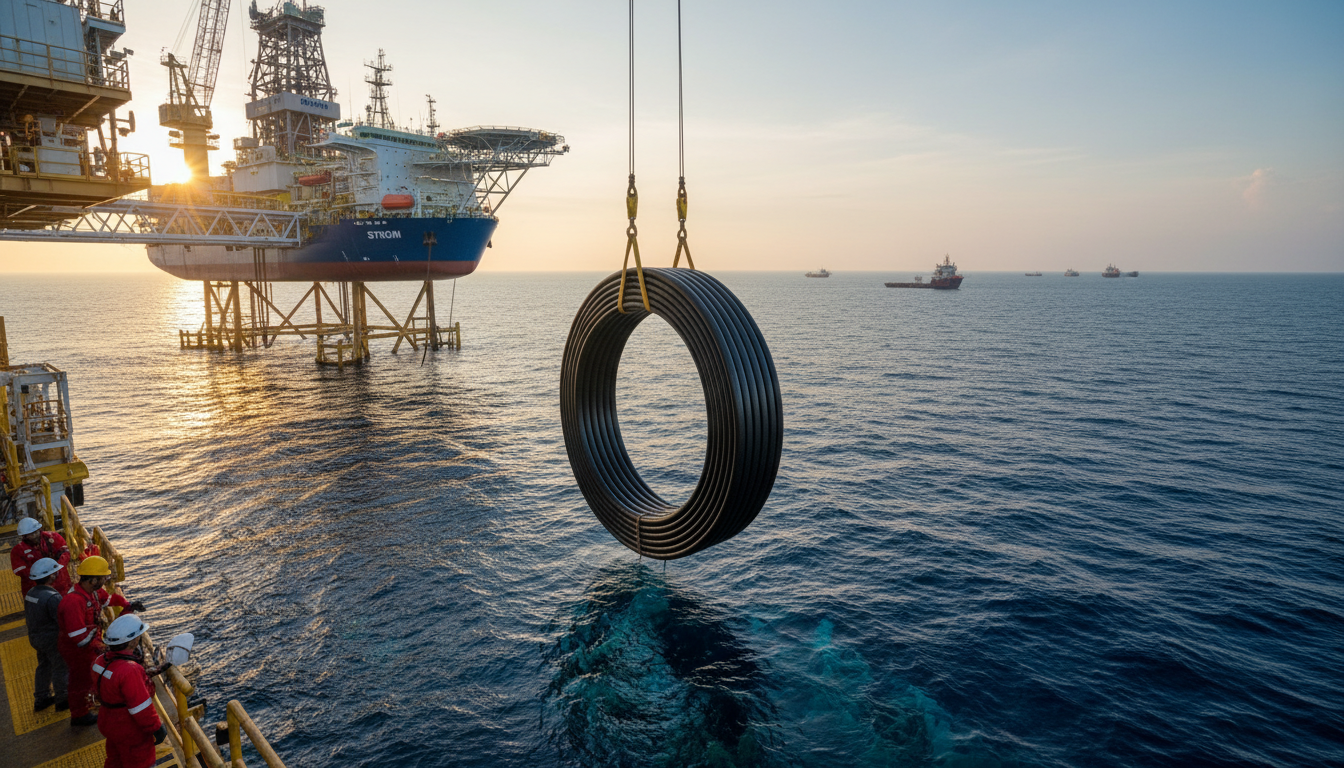
Strohm, a leader in advanced subsea technology, has recently secured a significant contract to furnish insulated thermoplastic composite pipe (TCP) production jumpers for a crucial deepwater field extension project located offshore Sabah, Malaysia. This agreement represents a pivotal moment, underscoring the growing influence of non-metallic solutions in the demanding deepwater energy sector and highlighting a strategic shift towards more resilient and cost-effective subsea infrastructure.
The comprehensive scope of work for this award details the supply of two 7-inch internal diameter (ID) production jumpers. These critical components will be meticulously manufactured from carbon fiber-reinforced PA12 (CF/PA12), a high-performance composite material engineered for extreme conditions. Designed for deployment at an impressive water depth of approximately 1,350 meters, these jumpers are integral to the field extension’s operational success. The delivery of this advanced equipment is strategically planned to precede the anticipated installation phase in 2027, demonstrating the extensive lead times and precise coordination required for complex deepwater endeavors. Dynamic Ocean Sdn Bhd, the firm executing the broader engineering, procurement, construction, and installation (EPCI) contract for this project, will be the recipient of Strohm’s cutting-edge composite pipes.
Technological Edge: TCP’s Market Ascendance
For investors closely monitoring the evolution of the oil and gas industry, the accelerating adoption of Thermoplastic Composite Pipe (TCP) technology signals a compelling market trend. TCP stands out in the subsea domain due to its inherent superior properties compared to traditional metallic piping. Its exceptional resistance to corrosion, a persistent challenge in marine environments, dramatically extends asset lifespan and reduces integrity management costs. Coupled with outstanding fatigue performance, TCP offers enhanced reliability under the constant dynamic stresses encountered in deepwater operations.
Furthermore, the reduced weight of composite pipes translates directly into logistical and installation advantages. This lightweight characteristic is a game-changer for subsea applications, simplifying handling and deployment. TCP’s versatility makes it an ideal choice for various subsea elements, including jumpers, flowlines, and risers. Its robust construction ensures reliable performance not only in standard oil and gas service but also in highly aggressive and sour environments, broadening its applicability across diverse project types.
Driving Economic and Operational Efficiencies
The economic and operational benefits offered by non-metallic composite pipe deployment are substantial, presenting attractive value propositions for operators and, by extension, for investors. TCP systems are engineered to be delivered in long, continuous, and spoolable lengths. This capability facilitates installation using smaller, multi-purpose vessels, a significant departure from the specialized and often more expensive heavy-lift equipment typically required for installing conventional metallic pipes. This streamlined installation process can yield considerable cost savings, with industry estimates suggesting a reduction of up to 30% in installation expenses compared to traditional steel solutions.
Beyond the initial capital expenditure (CAPEX) advantages, TCP technology delivers compelling lifecycle benefits that positively impact operational expenditure (OPEX). The material’s durability and resistance to degradation translate into reduced maintenance requirements over the operational life of the asset. This improvement in reliability minimizes downtime, ensures consistent production, and ultimately enhances the overall economic viability of deepwater projects. These efficiencies are critical for operators seeking to optimize returns in a capital-intensive industry.
Ensuring Flow Assurance in Deepwater Environments
A critical consideration in deepwater hydrocarbon production is maintaining optimal flow assurance. The innovative insulated configuration of the TCP jumpers supplied by Strohm addresses this challenge directly. By maintaining the temperature of the produced fluids as they travel from the wellhead, these insulated pipes prevent issues such as hydrate formation or wax deposition. These phenomena, often triggered by the cold temperatures encountered at significant water depths, can lead to costly blockages, reduced flow rates, and potential production shutdowns. The integration of advanced insulation technology within the TCP design is therefore paramount for sustaining efficient and uninterrupted production in deepwater developments, safeguarding asset performance and revenue streams.
Southeast Asia: A Hotbed for Deepwater Investment
This contract award is not merely an isolated commercial success but a clear indicator of broader, strategic trends within Southeast Asia’s dynamic offshore energy sector. The region is poised for substantial investment and growth, particularly driven by new deepwater field developments and an increasing focus on gas projects over the coming years. As energy companies globally strive to balance the critical imperatives of performance optimization, rigorous cost control, and burgeoning environmental considerations, composite pipe technologies are increasingly emerging as a preferred and viable alternative to conventional steel infrastructure in complex subsea systems.
This shift reflects an industry-wide commitment to embracing more resilient, efficient, and environmentally responsible solutions. The market for innovative subsea infrastructure is set for significant expansion, offering compelling opportunities for companies at the forefront of material science and engineering. Investors should closely monitor the adoption rates and technological advancements in this space, as they represent a key differentiator for companies seeking sustainable growth in the evolving global energy landscape.
