
Close Menu
  • Home
  • Market News
    • Crude Oil Prices
    • Brent vs WTI
    • Futures & Trading
    • OPEC Announcements
  • Company & Corporate
    • Mergers & Acquisitions
    • Earnings Reports
    • Executive Moves
    • ESG & Sustainability
  • Geopolitical & Global
    • Middle East
    • North America
    • Europe & Russia
    • Asia & China
    • Latin America
  • Supply & Disruption
    • Pipeline Disruptions
    • Refinery Outages
    • Weather Events (hurricanes, floods)
    • Labor Strikes & Protest Movements
  • Policy & Regulation
    • U.S. Energy Policy
    • EU Carbon Targets
    • Emissions Regulations
    • International Trade & Sanctions
  • Tech
    • Energy Transition
    • Hydrogen & LNG
    • Carbon Capture
    • Battery / Storage Tech
  • ESG
    • Climate Commitments
    • Greenwashing News
    • Net-Zero Tracking
    • Institutional Divestments
  • Financial
    • Interest Rates Impact on Oil
    • Inflation + Demand
    • Oil & Stock Correlation
    • Investor Sentiment

Subscribe to Updates

Subscribe to our newsletter and never miss our latest news

Subscribe my Newsletter for New Posts & tips Let's stay updated!

What's Hot

Oil prices soar amid Strait of Hormuz fears as Iran war intensifies

March 2, 2026

Analysts See $100 Oil on Strait of Hormuz Disruption

March 2, 2026

Mideast oil output may need to stop if Hormuz closed for 25 days, ETEnergyworld

March 2, 2026
Facebook X (Twitter) Instagram Threads
Oil Market Cap – Global Oil & Energy News, Data & Analysis
  • Home
  • Market News
    • Crude Oil Prices
    • Brent vs WTI
    • Futures & Trading
    • OPEC Announcements
  • Company & Corporate
    • Mergers & Acquisitions
    • Earnings Reports
    • Executive Moves
    • ESG & Sustainability
  • Geopolitical & Global
    • Middle East
    • North America
    • Europe & Russia
    • Asia & China
    • Latin America
  • Supply & Disruption
    • Pipeline Disruptions
    • Refinery Outages
    • Weather Events (hurricanes, floods)
    • Labor Strikes & Protest Movements
  • Policy & Regulation
    • U.S. Energy Policy
    • EU Carbon Targets
    • Emissions Regulations
    • International Trade & Sanctions
  • Tech
    • Energy Transition
    • Hydrogen & LNG
    • Carbon Capture
    • Battery / Storage Tech
  • ESG
    • Climate Commitments
    • Greenwashing News
    • Net-Zero Tracking
    • Institutional Divestments
  • Financial
    • Interest Rates Impact on Oil
    • Inflation + Demand
    • Oil & Stock Correlation
    • Investor Sentiment
Oil Market Cap – Global Oil & Energy News, Data & Analysis
Home » Strait of Hormuz must not be allowed to shut down: Indian-American maritime executive, ETEnergyworld
Oil & Stock Correlation

Strait of Hormuz must not be allowed to shut down: Indian-American maritime executive, ETEnergyworld

omc_adminBy omc_adminMarch 2, 2026No Comments5 Mins Read
Share
Facebook Twitter Pinterest Threads Bluesky Copy Link


<p>An Indian-American maritime executive has warned that rising tensions in West Asia after US-Israel strikes on Iran could disrupt shipping through the Strait of Hormuz and push up global oil prices. </p>
An Indian-American maritime executive has warned that rising tensions in West Asia after US-Israel strikes on Iran could disrupt shipping through the Strait of Hormuz and push up global oil prices.

Amid escalating tensions in West Asia in the wake of US-Israel strikes against Iran, a leading Indian-American maritime executive has voiced concern over the impact on the crucial oil artery of the Strait of Hormuz and implications for global oil prices.

“Shipping is the hardest-hit industry in any such turbulence in the geopolitical situation,” Chairman of maritime company Safesea Group Dr S.V. Anchan told PTI.

“The Strait of Hormuz must not be allowed to be shut down,” Anchan said, calling for urgent action to ensure safe passage of vessels in the area.

Anchan said oil prices are expected to rise on Monday in the wake of the geopolitical developments in the region, but added that prolonged high oil prices will be bad for the economy.

“It’s in no one’s interest globally, including the US,” he said, adding that “blocking the Hormuz is no less than choking the people at large of the region, at a time when even the airspaces are also closed.”

There are estimates that already 150 tankers dropped anchor outside the Strait of Hormuz and are not going in, he said.

“It’s in the economic interest as well as in the interest of people of the Arabian Gulf Nations to continue the vessels’ operations at ports and offer a safe passage to vessels to trade in and out of the Strait of Hormuz, if need be, with the support from Navy vessels,” Anchan said.

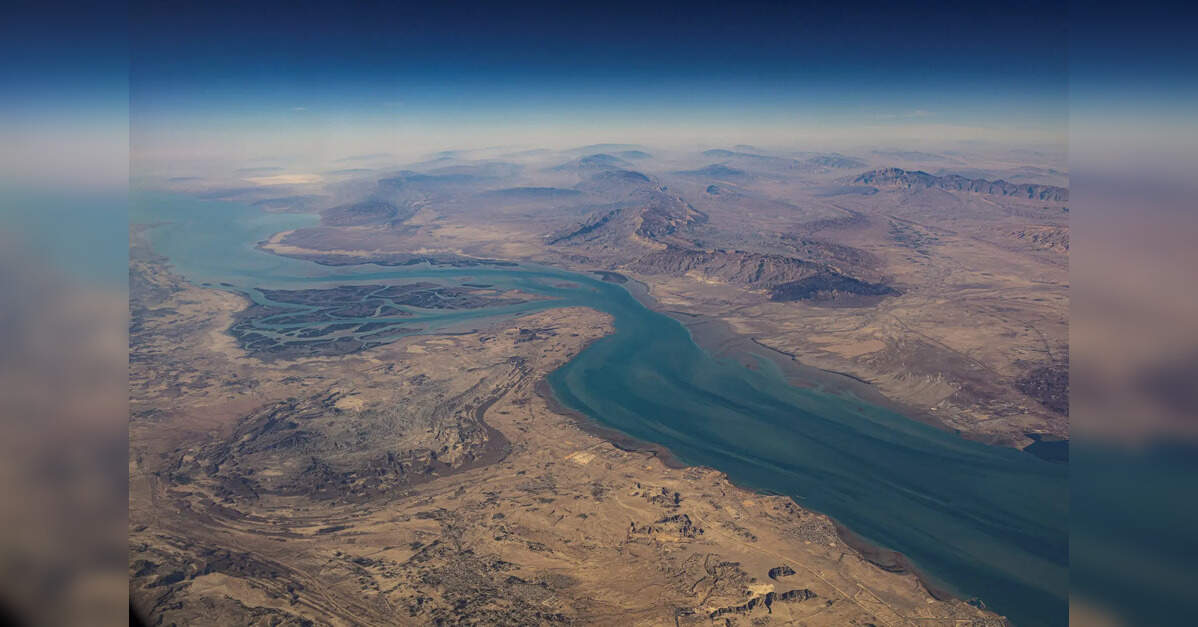
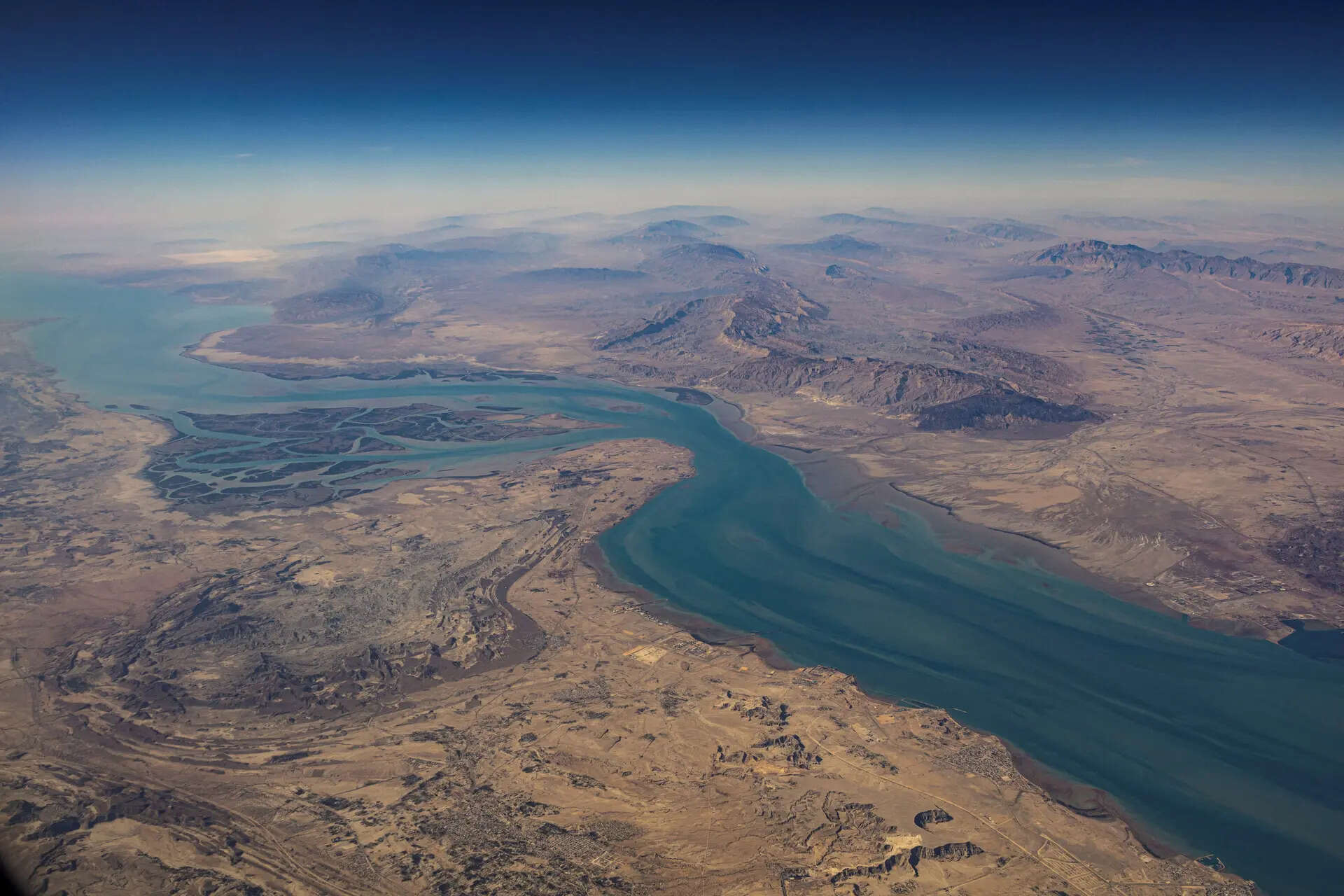
The Strait of Hormuz is located between Oman and Iran and connects the Persian Gulf with the Gulf of Oman and the Arabian Sea. It is one of the world’s most important oil chokepoints.

The US Energy Information Administration has said that “very few alternative options” exist to move oil out of the strait if it is closed. In 2024, oil flow through the strait averaged 20 million barrels per day or the equivalent of about 20% of global petroleum liquids consumption, it said.

Anchan said the maritime industry is always the first in line to bear the impact of wars and conflicts, especially in a confined region like the Arabian Gulf.

“Having seen many regional wars and cold wars in the past, this war makes it different due to the direct involvement of the US and Israel against Iran, while Iran also unleashed attacks on neighbouring countries,” he said.

The military strikes by the US and Israel against Iran and Tehran’s retaliation on the early morning of February 28 have added several unknown factors for the maritime industry in the current scenario.

“Especially, in the recent past, for USA-owned ships, where anyway to trade in the region was a task due to uncertainties on the AWR (Additional War Risk) insurance coverage,” Anchan said.

Anchan noted that many ship owners have taken a call to avoid the Middle East area and traders are also avoiding chartering vessels until “unknown factors are clear.”

He added that if export of Iranian oil is legalised like Venezuela, the “tanker market will be bullish, which will have a positive effect on bulk ships too.”

Noting that around 94 per cent of the world’s trade takes place across oceans through international shipping, Anchan voiced concern that shipping efforts are hardly being recognised.

“Despite the highly capital-intensive nature of the business, few governments are around to extend a helping hand when this industry is in distress,” he said.

“There is a strange disparity in the treatment shown towards the shipping industry. UN member nations and sovereign countries announce sanctions at the blink of an eye. Such announcements are done without considering the investment an industry has done specially by shipping,” he said, adding that the industry has often been directly targeted by specific maritime sanctions imposed, given its close affiliation to the energy sector.

“As one of the core sectors of international trade, it is forced to navigate carefully through the shoals of multiple international economic and trade transactions,” Anchan said.

Highlighting the complexities involved, he said oil is extracted in one place, refined in another, shipowners who transport are often based and operate from a third location, while banks and financial institutions are located somewhere else, and vessel insurers in yet other places.

Oil tankers then travel through many ports across diverse routes, and the responsible ship owner will have to comply with numerous overlapping maritime checks imposed by multiple jurisdictions.

“Any breach in sanctions regimes can have huge consequences that include legal disputes/liabilities, controversies, reputational risks, delays and huge fines as well as vessel detainment. Also, most insurance policies now contain sanctions-related exclusion clauses that protect them but impugn ship owners,” he said.

Anchan called for governments and bodies like the UN to take into account the views of sections of the business community that are likely to suffer consequences of sanctions as “collateral damage” through no fault of theirs.

“For this, some form of recognised business body should be formed either as part of the Global Business Compact or any other dispensation and allowed to provide their input to the UN, or even be part of the sanctions panel. If businesses are compensated for their losses due to sanctions, then such sanctions can become more watertight. Sanctions should be unbiased and not have differentiated and unjustified effects on third parties,” he said.

Published On Mar 2, 2026 at 11:00 AM IST

Join the community of 2M+ industry professionals.

Subscribe to Newsletter to get latest insights & analysis in your inbox.

All about ETEnergyworld industry right on your smartphone!


Source link

Share. Facebook Twitter Pinterest Bluesky Threads Tumblr Telegram Email
omc_admin
  • Website

Related Posts

Mideast oil output may need to stop if Hormuz closed for 25 days, ETEnergyworld

March 2, 2026

No escape for the rupee also, it could slip below 91.50/$, ETEnergyworld

March 2, 2026

India Boosts LPG Output as Strait of Hormuz Disruptions Threaten Global Energy Supplies, ETEnergyworld

March 2, 2026
Add A Comment
Leave A Reply Cancel Reply

Top Posts

Federal Reserve cuts key rate for first time this year

September 17, 202513 Views

Inflation or jobs: Federal Reserve officials are divided over competing concerns

August 14, 20259 Views

Oil tanker rates to stay strong into 2026 as sanctions remove ships for hire – Oil & Gas 360

December 16, 20258 Views
Don't Miss

Global oil prices may spike in next few days but calm down in longer term

By omc_adminMarch 2, 2026

Kurt Abraham, Editor-in-Chief, World Oil Well, just when you thought that the global oil market…

Global oil prices may spike in next few days but calm down in longer term

March 2, 2026

Oil tankers attacked near Strait of Hormuz as Iran conflict disrupts shipping

March 1, 2026

OPEC+ to boost oil production 206,000 bpd as Iran conflict threatens supply

March 1, 2026
Top Trending

ESG Today: Week in Review

By omc_adminMarch 1, 2026

Winter getting shorter in 80% of major US cities, new data shows | US weather

By omc_adminFebruary 27, 2026

Trump officials move to kill system that protects US from chemical disasters | US Environmental Protection Agency

By omc_adminFebruary 27, 2026
Most Popular

The 5 Best 65-Inch TVs of 2025

July 3, 202515 Views

AI’s Next Bottleneck Isn’t Just Chips — It’s the Power Grid: Goldman

November 14, 202514 Views

The Layoffs List of 2025: Meta, Microsoft, Block, and More

May 9, 202510 Views
Our Picks

PDVSA, African Energy Chamber sign MoU to boost oil and gas investment

March 1, 2026

Talos Losses Deepen | Rigzone

March 1, 2026

Tankers Halt Near Hormuz After Attacks

February 28, 2026

Subscribe to Updates

Subscribe to our newsletter and never miss our latest news

Subscribe my Newsletter for New Posts & tips Let's stay updated!

Facebook X (Twitter) Instagram Pinterest
  • Home
  • About Us
  • Advertise With Us
  • Contact Us
  • DMCA
  • Privacy Policy
  • Terms & Conditions
© 2026 oilmarketcap. Designed by oilmarketcap.

Type above and press Enter to search. Press Esc to cancel.