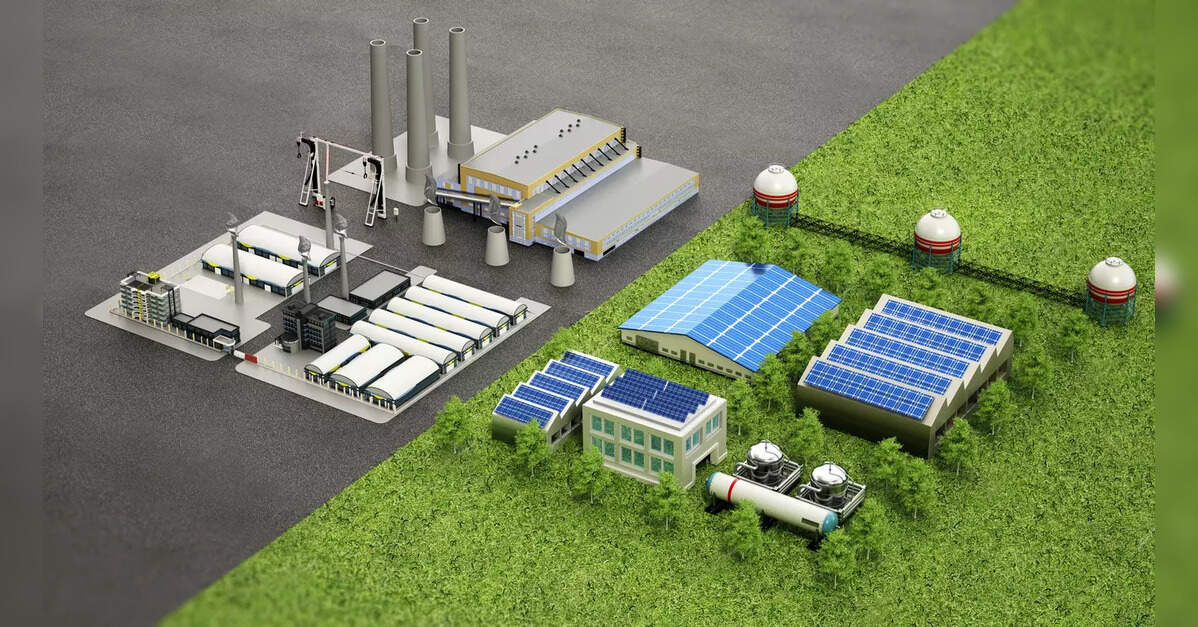
In a significant move underscoring the accelerating pace of industrial decarbonization, Sterlite Technologies Ltd. (STL) has embarked on a pioneering collaboration with Hygenco to establish Maharashtra’s first green hydrogen and green oxygen production facility dedicated to optical fiber manufacturing. This initiative, centered in Chhatrapati Sambhaji Nagar, positions STL to become one of the globe’s inaugural optical fiber producers to integrate 100% green hydrogen into its core processes, aligning with an ambitious Net Zero target by 2030. For oil and gas investors, this development is more than just an environmental headline; it represents a tangible shift in industrial energy consumption, signaling where long-term capital is being deployed and the evolving landscape of energy demand.
The Strategic Imperative: Green Hydrogen for Cost Efficiency and Decarbonization
STL’s commitment to leveraging 100% green hydrogen for its glass preform facility highlights a growing trend among industrial players to secure sustainable and potentially more stable energy inputs. By partnering with Hygenco, which will build, own, and operate the facility for two decades, STL is not just pursuing environmental goals but also aiming for operational excellence and long-term cost predictability. The transition is projected to slash STL’s annual carbon emissions by approximately 30%, a substantial step towards its Net Zero by 2030 objective. This strategic pivot provides a competitive edge in a global market increasingly valuing sustainable manufacturing practices. For investors evaluating industrial giants, the ability to de-risk energy supply chains from volatile fossil fuel markets and achieve significant decarbonization milestones is becoming a critical differentiator, influencing long-term valuation and market positioning.
Navigating Current Market Volatility Amidst the Green Transition
While STL makes strides in green manufacturing, the broader energy market continues its intricate dance of supply and demand. As of today, Brent Crude trades at $94.66, reflecting a marginal daily dip of 0.28%, with its range confined between $94.59 and $94.91. This stability, however, comes after a more significant retreat, with Brent having declined nearly 9% over the past 14 days, falling from $102.22 on March 25, 2026, to $93.22 by April 14, 2026. WTI Crude similarly registers at $90.77, down 0.57% today, indicating a broad softening in crude benchmarks. Gasoline prices also reflect this trend, trading around $2.99. This current market snapshot provides crucial context: even as traditional fossil fuel markets experience price fluctuations and investor inquiries regarding a base-case Brent price forecast for the next quarter or consensus 2026 outlooks remain paramount, the capital flow into green energy projects like STL’s signals a long-term structural shift. Investors must weigh the immediate impacts of crude dynamics against the strategic implications of industrial decarbonization for future energy demand profiles.
India’s Green Hydrogen Ambition: A Catalyst for Investment
The collaboration between STL and Hygenco is a microcosm of India’s larger national ambition in green hydrogen. Hygenco’s impressive commitment to invest $2.5 billion over the next three years, targeting the commissioning of 10 GW of green hydrogen and ammonia assets by 2030, underscores the significant investment flowing into this sector. This scale of investment is not merely about environmental stewardship; it’s about establishing a new energy economy, creating new supply chains, and positioning India as a leader in green industrial processes. For investors, this creates opportunities not only in the companies directly involved in green hydrogen production and consumption but also in the ancillary industries that support this massive build-out – from renewable energy generation to electrolyzer manufacturing and specialized logistics. The long-term engagement between Hygenco and STL, spanning two decades, provides a blueprint for how large-scale industrial consumers can de-risk their energy transition through strategic partnerships.
Upcoming Events and the Shifting Investor Focus
The immediate horizon for oil and gas investors is marked by critical events that will undoubtedly shape short-term market sentiment. The upcoming Baker Hughes Rig Count reports on April 17th and 24th will offer insights into drilling activity, while the OPEC+ Joint Ministerial Monitoring Committee (JMMC) meeting on April 18th, followed by the full Ministerial Meeting on April 20th, will be closely watched for any shifts in production policy. Furthermore, the API and EIA weekly crude inventory reports on April 21st/22nd and April 28th/29th will provide vital data on U.S. supply and demand. These events are crucial for investors seeking to build a base-case Brent price forecast for the next quarter or understand the consensus 2026 Brent outlook, which are among the top questions our readers are asking. However, while these traditional indicators dominate short-term headlines, the strategic capital allocation into projects like STL’s green hydrogen facility represents a powerful undercurrent. Investors are increasingly evaluating how such decarbonization efforts will reshape global energy demand over the medium to long term, influencing everything from future refinery utilization – a question often posed regarding Chinese teapot refineries – to the overall trajectory of fossil fuel consumption. The long-term investment narrative is clearly moving towards energy diversification and sustainability, even as the traditional oil market grapples with its ongoing dynamics.


