Major Capital Infusion Ignites Europe’s Green Steel Revolution
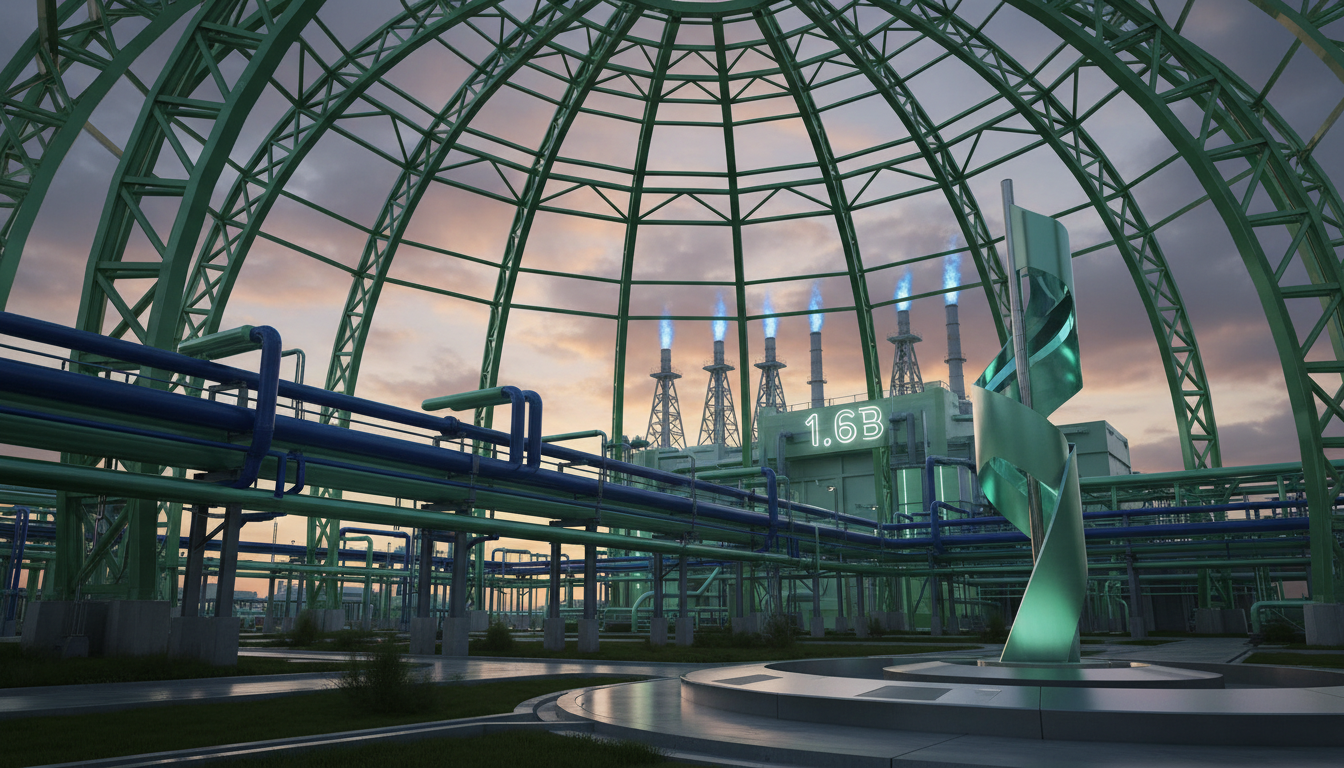
In a landmark transaction signaling profound investor confidence in the energy transition, Stegra has secured €1.4 billion ($1.6 billion) in fresh capital. This substantial financing, spearheaded by a consortium led by Wallenberg Investments, propels one of Europe’s most ambitious industrial decarbonization projects forward: Stegra’s pioneering green steel plant in Boden, northern Sweden. This pivotal funding not only guarantees the completion of the large-scale facility but also strongly reinforces Sweden’s strategic industrial ambitions, positioning hydrogen-based steel production as a viable, scalable, low-carbon alternative for global heavy industry.
The capital raise demonstrates a powerful convergence of long-term industrial vision and climate-centric investment. The Wallenberg Investments-led consortium includes major players like Temasek and IMAS, alongside robust follow-on support from existing shareholders such as Altor, Hy24, and Just Climate. Crucially, both senior and junior lenders have committed to backing the transaction, contingent on final credit approvals. This comprehensive financial backing provides Stegra with a fully funded pathway to finalize construction and commission its state-of-the-art facility, marking a critical milestone in the global shift towards sustainable manufacturing.
Strategic Funding Bolsters Resilience in Challenging Markets
This significant €1.4 billion capital injection fundamentally strengthens Stegra’s financial position during a crucial phase of its development. The funds are earmarked to cover all remaining construction costs, finance previously announced scope expansions, and facilitate the insourcing of selected infrastructure components. Critically, a substantial financial buffer has been established to mitigate potential cost volatility, a vital consideration in the current unpredictable macroeconomic climate.
Post-closing, the enhanced equity ratio will significantly improve Stegra’s financial resilience. This move is particularly strategic given the prevailing headwinds large-scale industrial projects face globally, including persistent inflationary pressures, ongoing supply chain disruptions, and a tightening capital market environment. For astute investors, this deal represents a calculated strategic play: a firm belief in the commercial viability and competitiveness of hydrogen-based steel production against traditional blast furnace methods. This conviction deepens as Europe’s carbon pricing mechanisms become increasingly stringent, creating a compelling economic incentive for low-carbon alternatives.
Henrik Henriksson, Stegra’s CEO, underscored the significance of the achievement, stating, “This financing reflects the strong conviction in Stegra’s business model among new and existing investors, as well as lenders. It has been achieved in a very challenging macro-environment and reflects significant efforts by everyone involved, including of course investors and banks, but also the team in Stegra and the extended family of suppliers, customers and other close partners in Boden.” His comments highlight the collective dedication and belief in the project’s long-term potential, despite prevailing market complexities.
Anchoring an Industrial Future: Governance and Vision
Beyond the financial mechanics, this financing round introduces strategic governance enhancements designed to align Stegra with Sweden’s broader industrial ecosystem for the long haul. Investors plan to nominate Leif Johansson, a highly respected figure, as the new Chair of the Board. He will succeed Shaun Kingsbury, who adeptly steered the company through its critical funding phase and is expected to remain a valuable board member. Further proposed board appointments include Håkan Buskhe of Wallenberg Investments and Paal Weberg, Managing Partner at Altor, both of whom have already joined the board as observers, demonstrating immediate engagement.
This intentional governance reshuffle signifies a pivotal transition from a startup execution model to an industrial-scale delivery paradigm. The renewed emphasis falls squarely on operational discipline, robust stakeholder alignment, and securing long-term competitiveness. Leif Johansson, adviser to the Wallenberg-led consortium, articulated this vision, stating, “We are convinced of the competitiveness of Stegra and the commercial attractiveness of green steel in addition to the climate benefits, while remaining clear-eyed about the challenges that lie ahead. We also consider the project to be of great importance to Sweden’s position as an industrial nation.” This underscores the dual focus on financial returns and national industrial strategic value.
Stegra’s CEO, Henriksson, further commented on the strategic advantage, noting, “The investors will bring additional significant industrial expertise, and their investment reinforces Stegra’s position and the project’s Swedish anchoring. They represent values aligned with both Stegra’s purpose and team.” This infusion of industrial acumen, coupled with deep financial backing, is set to solidify Stegra’s leadership in the burgeoning green steel sector.
Accelerating Construction Amidst Evolving Project Dynamics
Following a period of calibrated activity during the intensive fundraising process, Stegra is now poised to significantly accelerate construction efforts at its Boden site. While the overall project timeline remains under careful review, updated milestones and an accelerated schedule are anticipated once the financing formally closes. The agreement is currently proceeding through final documentation, lender approvals, and essential regulatory clearances. Principal agreements are expected to be signed by the close of April, with the financial close targeted for June 2026.
This latest capital infusion complements approximately €6 billion previously secured by the company through a mix of loans, equity, and other financing instruments. However, an increase in project costs and evolving scope requirements necessitated this additional capital. This comprehensive funding package ensures the successful completion of the plant, demonstrating a commitment to adaptability and resilience in large-scale industrial project development.
Implications for Investors and the Future of Industry
For investors and industry executives monitoring the shifting landscape of global energy and materials, this transaction offers several critical insights into the evolving phase of industrial decarbonization:
Firstly, the deal emphatically proves that substantial capital remains readily available for large-scale climate infrastructure projects. This holds true even within a constrained macroeconomic environment, provided that projects demonstrate credible pathways to profitability, clear technological viability, and strong alignment with prevailing policy frameworks.
Secondly, the transaction highlights the growing importance of seasoned governance and profound industrial expertise in cultivating investor confidence. The active involvement of established industrial heavyweights signals a fundamental transition from innovation driven purely by venture capital to execution at an unprecedented industrial scale. This indicates a maturing market for energy transition investments.
Thirdly, green steel is rapidly emerging as a powerful strategic lever within national industrial policies. Sweden’s robust backing of pioneering projects like Stegra positions it at the vanguard of low-carbon manufacturing. This leadership will have significant implications for trade competitiveness, especially as carbon border adjustment mechanisms and other climate-focused trade policies continue to expand globally.
The Stegra plant in Boden is slated to play a transformative role in reshaping supply chains across critical sectors, including automotive, construction, and heavy industry. As these industries increasingly seek to reduce their embedded emissions, the availability of low-carbon steel will be paramount. With financing now secured and construction poised for acceleration, Stegra’s trajectory will serve as a crucial test case, demonstrating whether hydrogen-based steel production can successfully transition from ambitious pilot to industrial-scale reality, profoundly impacting the global energy investment landscape.