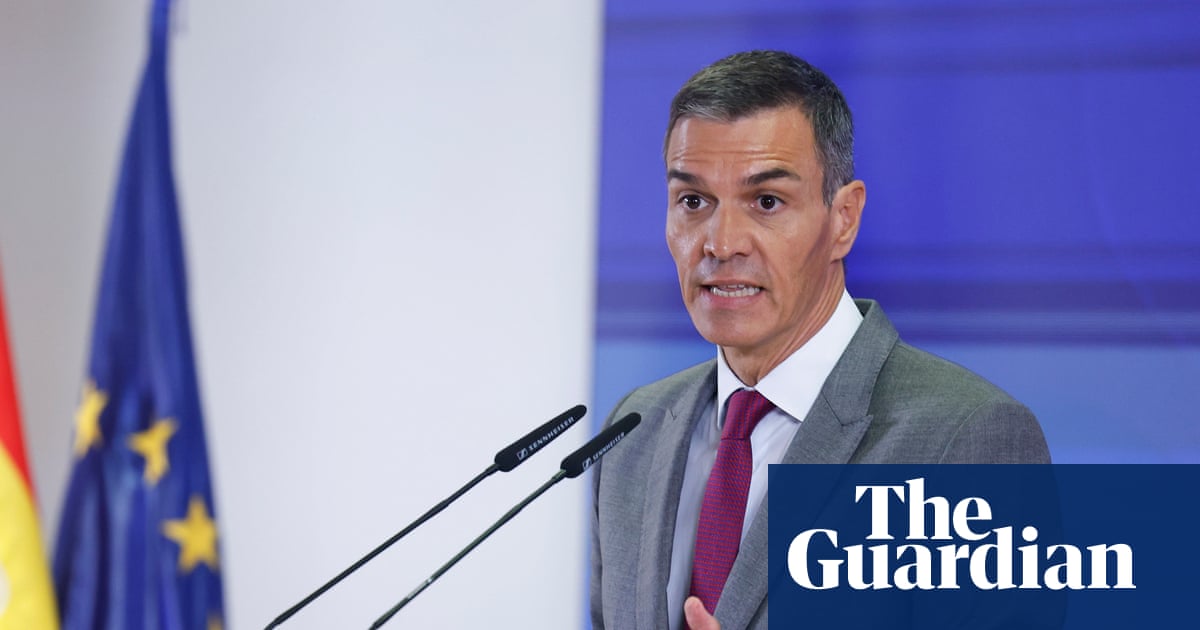
Spain’s Prime Minister, Pedro Sánchez, has unveiled a comprehensive 10-point plan designed to fortify the nation against escalating climate emergencies. This ambitious agenda, framed as essential to prevent a future “grey from fire and flames, or brown from floods,” signals a deepening commitment to the green transition across the Iberian Peninsula. For oil and gas investors, this isn’t merely a national policy; it’s a potent indicator of the accelerating regulatory and societal pressures facing fossil fuels across Europe. The explicit acknowledgment of the climate crisis’s deadly impact – attributing over 20,000 deaths and €32 billion in material losses over the past five years to its effects – underscores the urgency driving these measures. This proactive stance, set to be approved in cabinet soon, demands careful consideration, as it will inevitably reshape the investment landscape for energy companies with significant exposure to Spain and, by extension, the broader European Union.
Spain’s Climate Emergency Plan: A Precedent for Europe?
The core of Sánchez’s initiative is a robust, multi-faceted strategy aimed at both mitigating and adapting to the climate crisis. Driven by the devastating August wildfires, which scorched an area six times the size of Ibiza and necessitated Spain’s largest-ever human and technical deployment, the plan emphasizes immediate and systemic action. Key measures include establishing a state civil protection agency to coordinate crisis responses, creating a national network of climate refuges, and fundamentally rethinking forest management and land use. Furthermore, the plan allocates funds for preparing for and rebuilding after climate-related disasters, enhancing firefighting capabilities, and increasing water resilience in the face of increasingly frequent floods and droughts. Initiatives to combat rural depopulation, which helps keep land clear of combustible material, and to promote extensive agriculture, careful grazing, and efficient irrigation, demonstrate a holistic approach. Ultimately, the plan aims to foster a “civic culture of prevention and reaction” and, crucially, to accelerate the green transition. This comprehensive framework serves as a powerful signal, suggesting that other European nations may soon adopt similarly aggressive climate policies, raising the stakes for traditional energy infrastructure across the continent.
Investor Outlook: Repsol and the Iberian Energy Transition
For investors keenly observing the European energy sector, a pressing question arises: what are the implications for companies like Spain’s own Repsol? Our proprietary reader-intent data shows a significant focus on “How well do you think Repsol will end in April 2026,” reflecting direct investor concern. Spain’s intensified climate agenda presents both formidable challenges and potential opportunities for domestic energy majors. The increased regulatory pressure, stringent environmental targets, and potential for higher compliance costs could impact traditional upstream and refining operations. Furthermore, the accelerating green transition could lead to a faster depreciation of fossil fuel assets or even the stranding of certain investments if the shift to renewables outpaces expectations. However, companies like Repsol, which have already embarked on strategic pivots towards cleaner energy, could also capitalize on this momentum. Investing in renewable energy projects, developing green hydrogen infrastructure, and advancing sustainable aviation fuels align directly with the government’s push. The success of these companies will increasingly hinge on their agility in transitioning their portfolios and leveraging innovation to meet evolving national and EU climate goals. This scenario for Repsol is a microcosm of the broader challenge faced by European energy giants navigating an increasingly green-focused policy landscape.
Crude Volatility: Climate Policy Meets Geopolitical Supply Dynamics
The intensifying climate agenda in Europe adds another layer of complexity to an already volatile global oil market. As of today, Brent Crude trades at $90.38, reflecting a significant 9.07% daily decline, while WTI Crude mirrors this trend at $82.59, down 9.41%. These sharp movements occurred within day ranges of $86.08-$98.97 for Brent and $78.97-$90.34 for WTI, underscoring extreme market sensitivity. This sharp downturn follows a broader retreat, with Brent having fallen by $20.91, or 18.5%, from $112.78 on March 30th to $91.87 yesterday. Such pronounced shifts highlight the market’s struggle to balance immediate supply-demand fundamentals with longer-term structural narratives. While geopolitical tensions and production decisions continue to drive short-term price action, ambitious climate policies like Spain’s contribute significantly to the demand-side uncertainty. Investors are actively questioning “what do you predict the price of oil per barrel will be by end of 2026?” The answer is increasingly nuanced, reflecting a tug-of-war between supply management efforts by major producers and the accelerating pace of energy transition, which aims to structurally reduce fossil fuel demand. Policies promoting extensive agriculture and fighting rural depopulation, while seemingly localized, collectively contribute to this long-term demand erosion by reducing land for traditional industrial use and promoting sustainable practices.
Navigating the Immediate Horizon: OPEC+ and Inventory Insights
While Spain’s climate plan provides a crucial long-term signal for energy investors, the immediate market outlook remains heavily influenced by supply-side dynamics and upcoming industry events. Our proprietary event calendar highlights critical gatherings this weekend, with the OPEC+ Joint Ministerial Monitoring Committee (JMMC) meeting scheduled for tomorrow, April 18th, followed by the Full Ministerial Meeting on Sunday, April 19th. These meetings are paramount, as they will determine the near-term production strategy for the world’s leading oil producers. Investor interest is high, with many asking about “OPEC+ current production quotas,” underscoring the market’s focus on supply stability. Any shifts in these quotas will have an immediate impact on crude prices, potentially counteracting or exacerbating the demand-side pressures from green policies. Beyond OPEC+, investors should closely monitor the API Weekly Crude Inventory reports on April 21st and 28th, as well as the EIA Weekly Petroleum Status Reports on April 22nd and 29th. These weekly data releases offer vital insights into inventory levels and overall market rebalancing efforts in the US. Furthermore, the Baker Hughes Rig Count on April 24th and May 1st will provide a snapshot of drilling activity, indicating future supply trajectories. Navigating this complex landscape requires a keen eye on both the evolving macro policy environment and the granular details of immediate supply and demand indicators.


