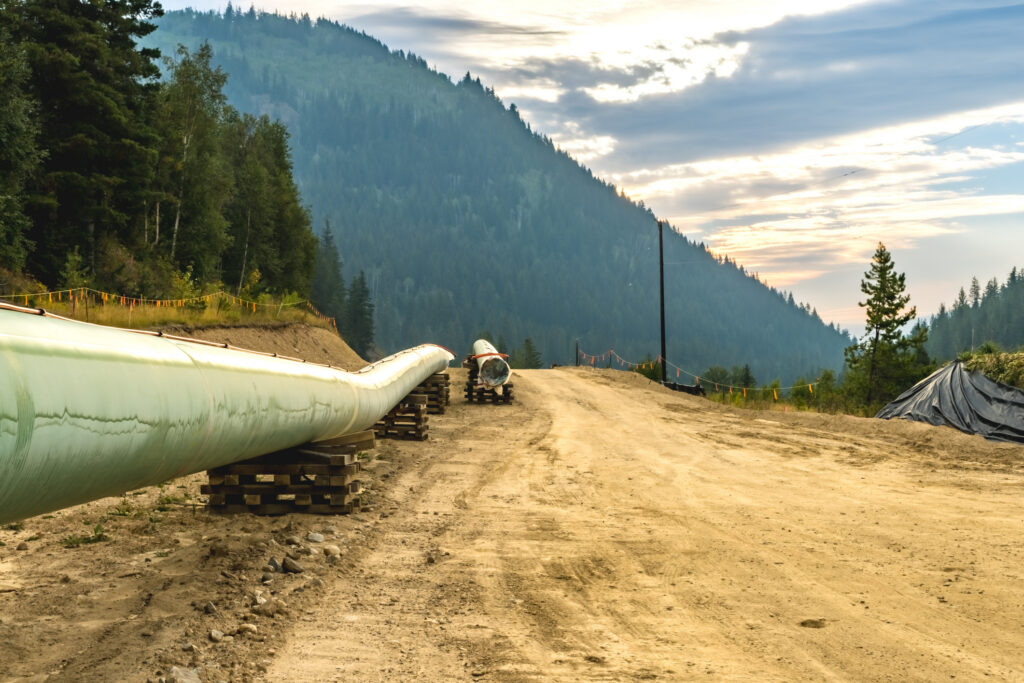
A Political Pipeline: South Bow’s KXL Revival Hinges on Trump’s Green Light
The energy investment landscape is currently grappling with a fascinating convergence of geopolitics, infrastructure, and market fundamentals, exemplified by Canadian firm South Bow’s audacious proposal to resurrect segments of the previously canceled Keystone XL pipeline. This initiative, spun out of TC Energy’s oil pipeline business in 2024, aims to significantly bolster Canada’s crude export capacity to the United States – potentially by over 12%. However, the project’s fate is inextricably linked to the political currents south of the border, specifically requiring the approval of former U.S. President Donald Trump, should he secure the upcoming election. For investors monitoring North American energy security and supply dynamics, understanding the intricate web of this proposal, its market implications, and the significant political hurdle is paramount.
The Ambitious Plan: Capacity Expansion and Infrastructure Leveraging
South Bow’s vision for boosting Canadian crude exports centers on a strategic, multi-phase approach. The initial phase leverages approximately 150 kilometers of the Keystone XL pipeline that was already constructed in Alberta, holding all necessary Canadian permits but sitting idle since the project’s 2021 cancellation. The critical U.S. component involves a potential partnership with Bridger Pipeline, which has filed a proposal with Montana regulators for a new 645-mile (1,038-km) pipeline. This line would originate near the U.S.-Canada border in Phillips County, Montana, and extend to Guernsey, Wyoming, boasting a substantial capacity of up to 550,000 barrels per day. This segment is particularly notable for its design, proposing construction alongside existing pipeline infrastructure, a strategy that could streamline the permitting process and mitigate some of the environmental opposition that plagued the original KXL project.
However, the journey to U.S. refining hubs doesn’t end in Guernsey. Analysts, including Matthew Lewis of Plainview Energy Analytics, highlight that Guernsey is not an end-market for crude. Further links would be essential to deliver crude to key refining centers such as Cushing, Oklahoma; Patoka and Wood River, Illinois; and the U.S. Gulf Coast. The most viable pathway identified involves a new, roughly 425-mile pipeline connecting Guernsey to Steele City, Nebraska. From Steele City, the crude could then flow into the existing Keystone mainline system, tapping into underutilized capacity in pipelines extending towards these crucial refining hubs. While this configuration maximizes existing assets, the challenge of permitting and potential litigation for this new segment remains a significant concern, casting a shadow over the project’s full realization.
Market Realities, Political Hurdles, and Investor Sentiment
The timing of this proposal coincides with a dynamic period in global energy markets. As of today, Brent crude trades at $93.93 per barrel, marking a modest 0.74% gain within a day range of $93.52 to $94.21. Similarly, WTI crude stands at $90.35, up 0.76%, moving between $89.71 and $90.70. This current stability, however, follows a period of significant volatility; Brent, for instance, experienced a nearly 20% decline over the past three weeks, dropping from $118.35 on March 31st to $94.86 just yesterday. Such price swings underscore the persistent demand for reliable supply, a fundamental driver behind the South Bow proposal.
Our proprietary intent data reveals that investors are keenly focused on price direction, with questions like “is WTI going up or down?” and “what do you predict the price of oil per barrel will be by end of 2026?” dominating queries. These questions highlight the market’s sensitivity to supply stability and future price trajectories. The revival of a project that could increase Canadian exports by over 550,000 bpd would undeniably impact supply-side dynamics. However, the immediate challenge remains political. Canadian Prime Minister Mark Carney has already engaged with Donald Trump regarding the pipeline’s revival, positioning it as potential leverage in upcoming negotiations for renewing the U.S.-Mexico-Canada (USMCA) trade agreement. Trump, who has consistently advocated for lower oil prices and whose past tariff policies strained U.S.-Canada relations, faces a choice: embrace a project that promises increased supply to U.S. refiners, which currently rely on approximately 4.4 million barrels per day of Canadian exports, or let environmental and political opposition once again stifle a major infrastructure initiative. This political calculus is the primary risk factor for investors considering the long-term viability of South Bow’s plan.
Forward-Looking Catalysts and Strategic Outlook for Energy Investors
The coming weeks present several key catalysts that could influence investor sentiment and oil price trajectories, indirectly impacting the perceived value and viability of projects like South Bow’s. Tomorrow, April 22nd, investors will closely watch the EIA Weekly Petroleum Status Report for crucial insights into U.S. crude inventories and demand. Another EIA report follows on April 29th, with the comprehensive EIA Short-Term Energy Outlook slated for May 2nd. These reports, alongside the OPEC+ JMMC Meeting scheduled for April 21st, will provide vital context on global supply, demand, and inventory levels. Strong demand signals or tightening supply could increase the strategic urgency for projects like the KXL revival, making it more appealing to a future U.S. administration focused on energy security and price stability.
For strategic investors, the South Bow proposal represents a significant long-term play on North American energy integration and supply resilience. While the immediate hurdle is political endorsement, particularly from a potential Trump presidency, the underlying economics of increasing access to heavy Canadian crude for U.S. refiners remain compelling. The project’s success would not only benefit Canadian producers by providing enhanced market access but also offer U.S. refiners a diversified and reliable source of feedstock. However, the path forward is fraught with permitting complexities and the high probability of environmental litigation for the new U.S. segments, particularly the proposed Guernsey-to-Steele City link. Investors must therefore weigh the substantial export potential against the enduring political and environmental risks, monitoring both electoral outcomes and the evolving market fundamentals illuminated by upcoming industry reports and OPEC decisions.