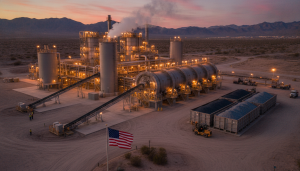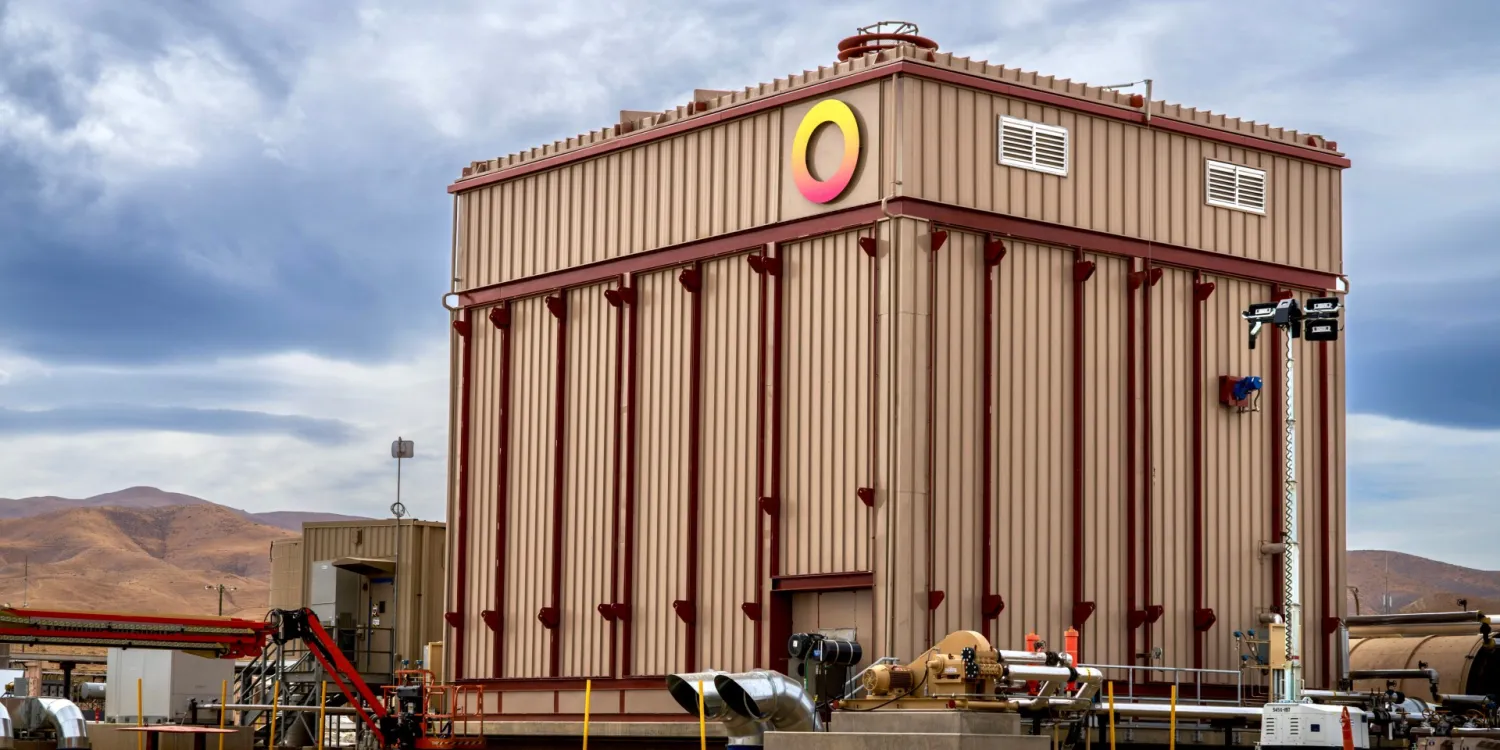
The energy landscape is in constant flux, but rarely do we witness developments that promise to fundamentally reshape a quarter of global energy consumption. The recent operational launch of Rondo Energy’s 100 MWh industrial heat battery at a Holmes Western Oil facility in California represents just such a moment. Powered entirely by an onsite solar array, this system is now delivering constant high-pressure steam and heat, proving that renewable energy can directly and reliably power heavy industry. This isn’t merely a pilot project; it’s a commercial-scale deployment that challenges the long-held reliance on fossil fuels for industrial processes, compelling oil and gas investors to reassess their long-term strategies and demand outlook.
Industrial Heat Decarbonization Meets Market Volatility
The successful deployment of Rondo’s industrial heat battery marks a significant milestone in the energy transition, particularly for sectors like cement, chemicals, and refining that are notoriously difficult to decarbonize. The system’s impressive operational metrics – including over 97% round-trip efficiency and sustained temperatures above 1,000 °C (1,832 °F) – demonstrate its technical viability. Crucially, it operates seamlessly alongside existing gas-fired boilers, requiring no retrofits to deliver steam at pressures exceeding 100 bar (1,450+ psi). This ability to integrate directly into existing infrastructure, while running on intermittent solar power by storing energy in simple, readily available materials like brick and wire, positions it as a highly attractive alternative to traditional natural gas combustion.
The timing of this innovation is particularly pertinent given the current instability in global energy markets. As of today, Brent Crude trades at $96.28, down 3.13% within a daily range of $95.59 to $98.97, while WTI Crude stands at $87.82, marking a 3.67% decline with a daily range of $87.02 to $90.34. This volatility is not an isolated event; our proprietary data shows Brent crude has tumbled from $112.57 just a month ago on March 27th to $98.57 yesterday, representing a significant $14 or 12.4% drop. Such swings underscore the inherent risk of relying solely on fossil fuels. For industrial operators, technologies like the Rondo heat battery offer a potent hedge against energy price swings, along with reduced exposure to carbon markets and evolving regulatory pressures. This de-risking capability, coupled with zero emissions and simplified permitting, makes a compelling financial and operational case.
Strategic Shifts and Investor Questions
For oil and gas investors, the emergence of commercially proven industrial heat batteries necessitates a re-evaluation of demand forecasts, particularly for natural gas. Industrial heat accounts for approximately 25% of global energy use, making it a colossal market segment. The Rondo system, backed by prominent investors like Bill Gates-founded Breakthrough Energy Ventures and Energy Impact Partners, charges using only the six cheapest hours of electricity each day – whether from off-grid solar or low-cost grid power. This flexibility further enhances its economic appeal over continuous natural gas consumption.
Our investor insights reveal a keen interest in market fundamentals and price stability. Questions such as “What are OPEC+ current production quotas?” and “What is the current Brent crude price?” frequently surface, highlighting a pervasive concern about supply-side dynamics and their impact on commodity prices. While these questions typically focus on upstream supply, the Rondo development shifts the spotlight to demand-side disruption. If industrial players can increasingly switch from natural gas to renewable-powered heat batteries, the long-term demand curve for natural gas, especially in regions with strong solar resources and carbon pricing mechanisms, could be structurally altered. This presents both a challenge to traditional energy producers and an opportunity for integrated firms to diversify their portfolios into energy transition infrastructure.
Navigating Future Market Dynamics with Upcoming Events
The broader energy market remains highly sensitive to geopolitical developments and supply-side management. Investors are keenly watching a series of upcoming events that could introduce further volatility or stability. The OPEC+ Joint Ministerial Monitoring Committee (JMMC) meeting tomorrow, April 17th, followed by the full Ministerial meeting on April 18th, will provide critical insights into future production policies. Any decisions regarding current production quotas will undoubtedly impact crude prices, influencing the economic calculus for industrial energy consumers considering alternatives to fossil fuels.
Beyond OPEC+, weekly data releases from the API and EIA, specifically the API Weekly Crude Inventory on April 21st and 28th, and the EIA Weekly Petroleum Status Report on April 22nd and 29th, will offer snapshots of supply and demand dynamics in key markets. These reports, alongside the Baker Hughes Rig Count on April 24th and May 1st, help paint a picture of upstream activity and potential future supply. While these events directly pertain to traditional oil and gas markets, their outcomes will indirectly shape the competitive landscape for solutions like industrial heat batteries. Higher sustained fossil fuel prices, driven by supply cuts or strong demand signals, will only accelerate the adoption curve for economically competitive decarbonization technologies, making the case for industrial process electrification even stronger.
Investment Outlook and Strategic Diversification
The commercialization of large-scale solar heat batteries signals a maturation of renewable energy applications beyond electricity generation. This is not merely an incremental improvement; it’s a foundational shift in how heavy industry can meet its energy needs. For oil and gas investors, this signifies an evolving risk profile for assets tied to industrial natural gas demand. Companies that are heavily reliant on this segment may face increasing pressure as industrial customers seek greater energy independence and carbon reduction.
Conversely, this disruption presents a compelling investment thesis for companies that are embracing the energy transition. Strategic diversification into industrial decarbonization solutions, or even partnerships with innovators like Rondo Energy, could unlock new revenue streams and future-proof portfolios. The simplicity of Rondo’s “bricks and wires” technology, avoiding scarce minerals, fire risk, or toxic leaks, along with its rapid scalability across four continents and five industries, suggests a swift market penetration potential. As the world pushes towards net-zero, technologies that offer proven, cost-effective pathways to decarbonize significant portions of global energy use will attract substantial capital, reshaping the investment landscape for decades to come.