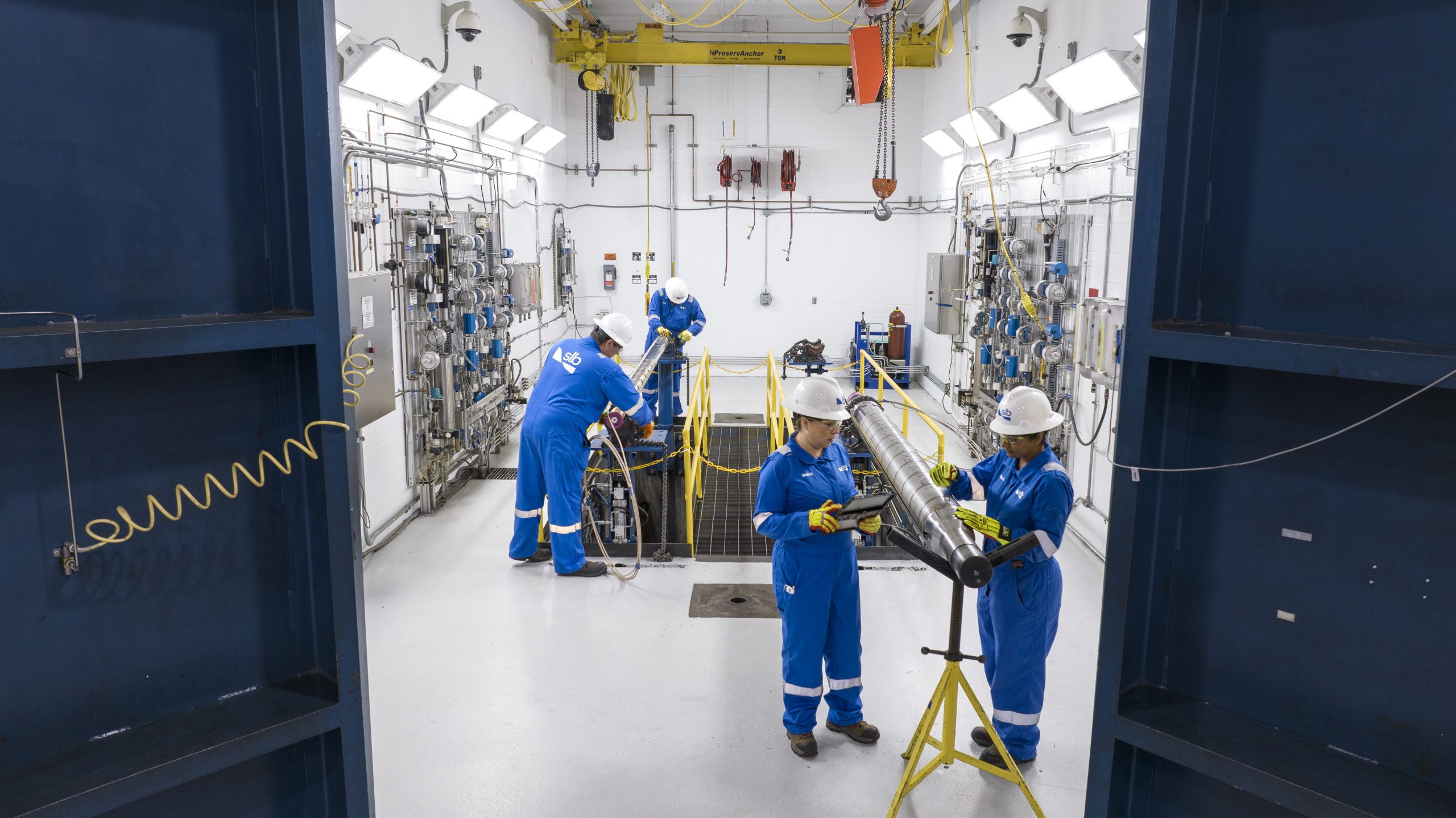
SLB has secured a pivotal contract with Brazil’s state-controlled oil major, Petrobras, a move set to significantly bolster its future revenue streams and solidify its position in the critical ultra-deepwater sector. This multi-year agreement, focused on the prolific Santos basin, underscores the increasing demand for advanced technological solutions to unlock complex, high-value hydrocarbon resources. For investors, this deal provides valuable insight into the strategic direction of major energy players and the long-term demand drivers for specialized oilfield services, particularly as global energy markets navigate current volatilities and future uncertainties.
SLB’s Strategic Win in Brazil’s Pre-Salt Frontier
The newly awarded contract positions SLB at the heart of Petrobras’s second development phase for the strategic Atapu and Sépia fields. This substantial undertaking involves providing services and cutting-edge technology for up to 35 ultra-deepwater wells, targeting massive oil and gas reservoirs situated up to 2,000 meters beneath the ocean’s surface, deep within Brazil’s challenging pre-salt layers. SLB’s scope of work is expansive, deploying advanced electric completions technologies and sophisticated digital solutions designed to deliver precise, real-time production intelligence. This integration promises enhanced reservoir management, driving greater reliability and system uptime, ultimately boosting production performance in these geologically complex fields. Paul Sims, president of Production Systems at SLB, highlighted the project’s alignment with Brazil’s broader energy security and economic growth ambitions, emphasizing the critical role of innovative technology in optimizing these hard-to-access resources. The completions work is slated to commence in mid-2026 and will feature flagship offerings from SLB’s portfolio, including Electris™ high-flow-rate interval control valves, engineered to maximize production control and recovery from high-flow-rate wells. This latest win follows a 2024 contract awarded to the SLB OneSubsea™ joint venture for standardized subsea production systems in the same Atapu and Sépia fields, demonstrating a sustained, strategic partnership forged through competitive tender processes.
Navigating Market Volatility: Impact on SLB and Petrobras
Against a backdrop of recent market flux, this long-term contract offers a degree of stability for SLB. Today, Brent Crude trades at $90.38 per barrel, experiencing a sharp decline of 9.07% from yesterday’s close, within a daily range of $86.08 to $98.97. Similarly, WTI Crude has seen a significant drop, settling at $82.59, down 9.41%. This immediate downturn follows a broader trend over the past two weeks, where Brent prices have fallen by over 18.5%, from $112.78 on March 30th to $91.87 yesterday. Such pronounced volatility naturally prompts investor concern, with our proprietary reader intent data indicating a strong focus on future price predictions; “What do you predict the price of oil per barrel will be by end of 2026?” is a frequently asked question. For an oilfield services giant like SLB, securing multi-year contracts like the Petrobras deal provides crucial revenue visibility, partially insulating the company from the immediate impacts of fluctuating commodity prices. This allows SLB to plan resource allocation and technology development with greater certainty. For Petrobras, investing in such a significant project amidst price swings signals a firm long-term commitment to unlocking its vast pre-salt reserves, underscoring its confidence in the sustained demand for hydrocarbons well into the future, irrespective of short-term market noise.
Upcoming Energy Events and Forward-Looking Strategy
The timing of this significant SLB-Petrobras deal, with completions work starting in mid-2026, aligns with a forward-looking strategy that will be shaped by several key upcoming market catalysts. Investors are keenly watching global supply dynamics, with our internal data showing “What are OPEC+ current production quotas?” as a top query this week. This question is particularly pertinent as the Joint Ministerial Monitoring Committee (JMMC) and the full OPEC+ Ministerial Meeting are scheduled for this weekend, April 18th and 19th respectively. Decisions from these meetings on production levels will directly influence crude oil price stability and the broader investment climate for projects of this scale. Further insights into market fundamentals will arrive with the API Weekly Crude Inventory report on April 21st and the EIA Weekly Petroleum Status Report on April 22nd, followed by the Baker Hughes Rig Count on April 24th. These regular data points provide critical indicators of demand, supply, and drilling activity, which in turn inform the operational environment for both E&P companies like Petrobras and service providers like SLB. The consistent flow of these reports, continuing with API and EIA updates on April 28th and 29th, and another Baker Hughes Rig Count on May 1st, will paint a clearer picture of the market conditions SLB will be operating under as it gears up for the 2026 project commencement. These events emphasize the dynamic nature of the energy sector and the importance of strategic, long-term investments that can withstand evolving market conditions.
Implications for Investors in Oilfield Services and E&P
This substantial contract between SLB and Petrobras holds significant implications for investors monitoring both the oilfield services sector and upstream exploration and production (E&P) companies. For SLB, the deal reinforces its competitive edge, particularly in the highly specialized and technologically demanding ultra-deepwater segment. The deployment of advanced electric completions and digital solutions showcases SLB’s capacity to deliver integrated, high-value services that optimize production and enhance recovery from challenging reservoirs. This not only provides SLB with a robust revenue stream but also solidifies its reputation as a preferred partner for complex, large-scale projects, which is crucial for long-term growth in a maturing oil and gas landscape. For Petrobras, the investment in these Atapu and Sépia fields underscores its unwavering commitment to harnessing Brazil’s immense pre-salt potential, vital for sustaining and growing its production profile. It signals to the market that despite global energy transition narratives, major national oil companies are actively pursuing conventional hydrocarbon development where significant reserves justify the capital expenditure. Investors in oilfield services should view this as a positive indicator of continued demand for advanced technology and expertise, especially in regions with substantial undeveloped deepwater resources. Companies demonstrating integrated capabilities and technological leadership, much like SLB, are best positioned to capture a larger share of future capital spending from E&P operators focused on efficiency and maximum recovery.