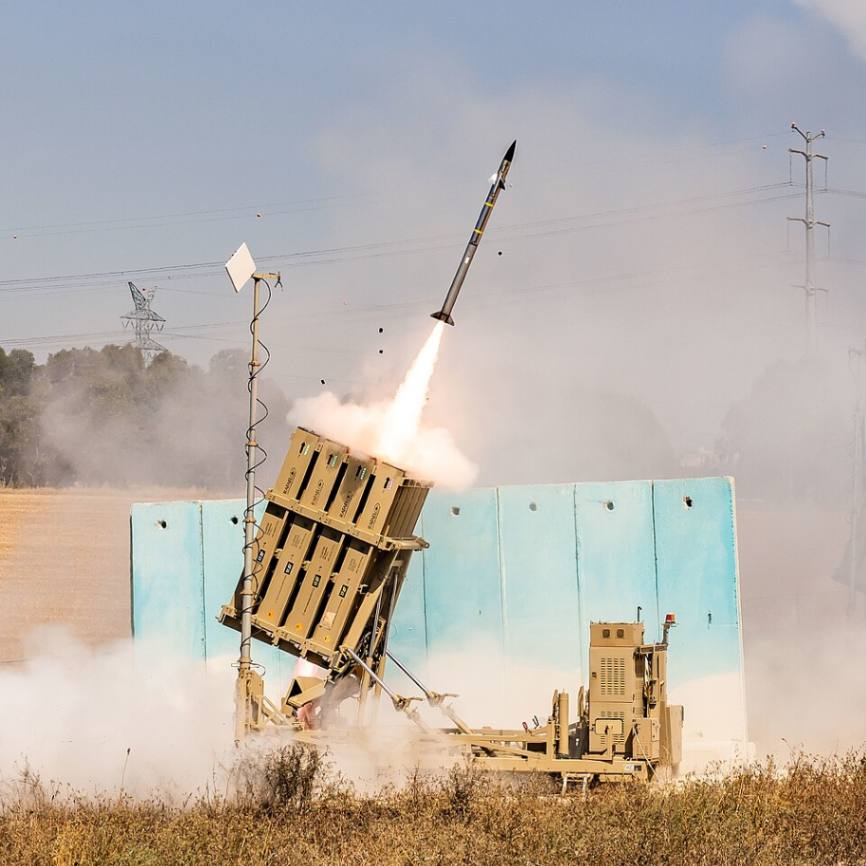
The geopolitical landscape of global energy markets is perpetually reshaped by unfolding events, and the mid-2025 missile and drone barrages launched by Iran against Israel serve as a stark reminder of this enduring volatility. While the initial fear was of widespread catastrophe, the remarkably limited civilian casualties—just 24 in the initial waves of attack—highlighted the effectiveness of Israel’s advanced, integrated air defense systems. For investors in the oil and gas sector, this outcome is more than a headline; it’s a critical data point that underscores evolving regional risks, defense spending paradigms, and their profound implications for energy security and supply chains, particularly in other vulnerable regions like East Asia.
The Geopolitical Ripple Effect: Lessons from June 2025
The successful defense mounted by Israel in June 2025 against an unprecedented assault, involving an estimated 350 ballistic missiles, offers crucial insights into the evolving nature of modern conflict and its market reverberations. While a direct, uncontained conflict in the Middle East typically sends crude prices soaring, the relative containment of the 2025 event, largely due to sophisticated defenses like Arrow-3, Arrow-2, David’s Sling, and the ubiquitous Iron Dome, showcased a different kind of stability. These systems, working in a unified command-and-control network, demonstrated how layered defense can mitigate the immediate, catastrophic impacts that often fuel extreme price spikes.
However, this perceived containment does not eliminate the underlying tension. As of today, Brent Crude trades at $90.38, reflecting a significant daily decline of 9.07%, with WTI Crude similarly down 9.41% at $82.59. This sharp intraday correction, following a period where Brent had already fallen by 18.5% from $112.78 on March 30th to $91.87 on April 17th, illustrates market sensitivity to a multitude of factors, including global demand concerns and fluctuating geopolitical risk premiums. While the immediate aftermath of the June 2025 events might have seen some easing, the long-term implications for defense strategies and regional stability continue to exert upward pressure on investor risk assessments, suggesting that the recent price dips may represent a temporary re-evaluation rather than a fundamental shift in the risk outlook.
South Korea’s Energy Security Imperative in a Volatile Asia
The lessons from the Middle East are particularly pertinent for nations facing analogous threats, none more so than South Korea. Positioned just 30 miles from North Korea’s formidable and rapidly advancing missile arsenal, including ballistic missiles, maneuvering reentry vehicles (MaRVs), cruise missiles, and AI-guided loitering drones, Seoul – a metropolis of nearly 10 million – sits within artillery range. The comparison with Israel’s integrated defense architecture, which proved so effective in June 2025, reveals a critical vulnerability for South Korea, whose own missile defense structure is reportedly fragmented, with responsibilities divided across different branches of its military.
For energy investors, this situation translates into a heightened risk premium for operations and investments in Northeast Asia. South Korea, a major energy importer, relies heavily on stable supply routes and regional security. A perceived gap in its defensive capabilities against a nuclear-armed and increasingly aggressive neighbor could significantly impact investor confidence, affecting everything from direct foreign investment to the cost of insuring shipping routes. The imperative for Seoul to rapidly modernize and integrate its defense systems, learning directly from Israel’s 2025 experience, is clear. This strategic shift will not only bolster national security but also contribute to regional stability, a crucial factor for the uninterrupted flow of global energy supplies.
Defense Spending Surge: A New Demand Vector for the Industry
The implications of the June 2025 events extend beyond immediate geopolitical risk; they point towards a sustained increase in global defense spending. Nations like South Korea, recognizing the efficacy of integrated defense architectures, are likely to embark on significant procurement drives. This translates into substantial demand for advanced materials, sophisticated electronics, and heavy manufacturing—all energy-intensive industries. The construction and deployment of systems comparable to Israel’s Iron Dome or Arrow series require significant industrial output, creating a new, albeit indirect, demand vector for energy.
Many of our readers are keenly focused on the trajectory of crude prices, with questions such as “what do you predict the price of oil per barrel will be by end of 2026?” frequently surfacing. While numerous factors influence future prices, the global pivot towards enhanced defense capabilities following critical events like those in June 2025 cannot be underestimated. Increased defense spending fuels industrial activity and resource consumption, providing a structural tailwind for energy demand. Even as we observe short-term price fluctuations, this underlying demand pressure, coupled with persistent geopolitical instability, suggests a robust floor for crude prices in the medium to long term, challenging purely bearish outlooks.
Navigating Market Volatility: Upcoming Events and Investor Focus
The confluence of enduring geopolitical tensions, evolving defense strategies, and fluctuating supply-demand dynamics necessitates a vigilant approach for energy investors. The market’s immediate focus remains on key catalysts that can shift sentiment and pricing. In the coming days, the OPEC+ Joint Ministerial Monitoring Committee (JMMC) meeting on April 18th, followed by the Full Ministerial meeting on April 19th, will be paramount. These gatherings are critical for setting production quotas and influencing global supply, directly addressing investor concerns such as “What are OPEC+ current production quotas?” The decisions made here will be heavily informed by global demand forecasts, which in turn are sensitive to economic stability and geopolitical risk.
Further insights into market fundamentals will come from the API Weekly Crude Inventory reports on April 21st and 28th, and the EIA Weekly Petroleum Status Reports on April 22nd and 29th. These data points provide a granular view of U.S. supply and demand, impacting short-term price movements. Additionally, the Baker Hughes Rig Count on April 24th and May 1st will offer an indication of future production trends. Investors must recognize that these scheduled events, while fundamental, operate within a broader context of elevated geopolitical risk, significantly influenced by lessons learned from conflicts like the June 2025 Middle East barrages. The interplay of these factors demands a dynamic investment strategy, prepared for both fundamental shifts and sudden, event-driven volatility.