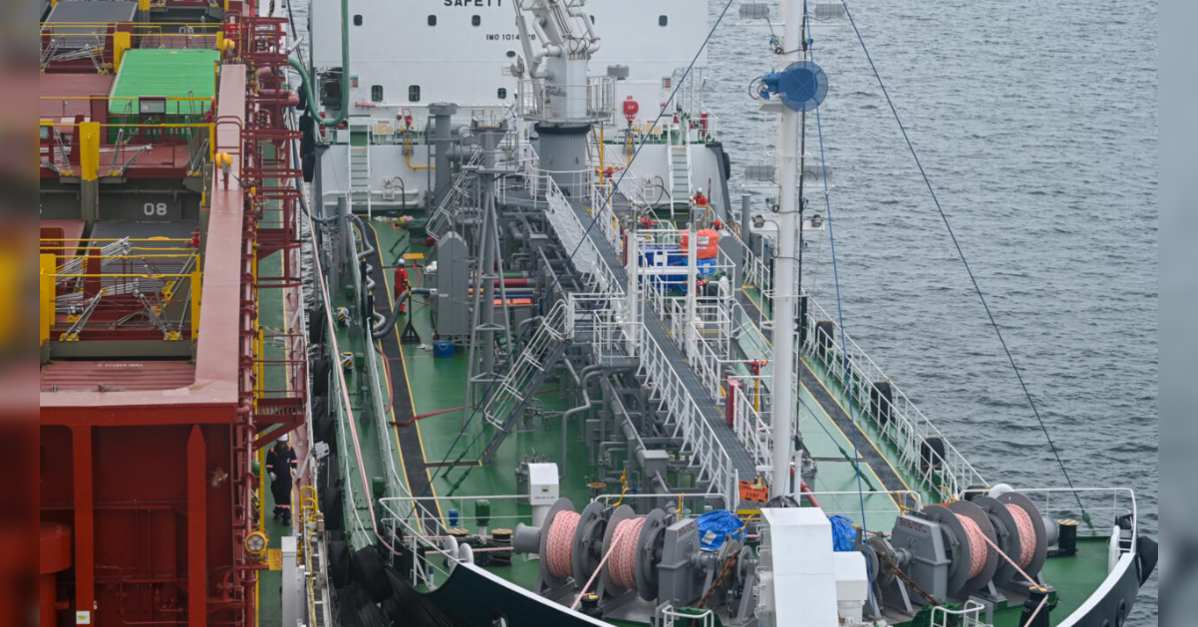
Singapore’s recent announcement to commence issuing methanol bunkering licenses from January 1, 2027, marks a pivotal moment in the global shipping industry’s decarbonization journey. As the world’s leading bunkering hub, Singapore’s strategic move not only underscores the growing imperative for sustainable marine fuels but also signals a significant new investment frontier within the broader energy sector. This development, rooted in the tangible need to cut carbon emissions by up to 65% compared to conventional fuels, presents a compelling case for investors to re-evaluate their portfolios, balancing traditional energy plays with emerging green opportunities.
Singapore’s Strategic Bet on Green Bunkering Leadership
Singapore’s decision to proactively establish methanol bunkering at scale is a calculated maneuver to maintain its dominance as a global maritime gateway. Given its unparalleled infrastructure along the Strait of Malacca and access to sophisticated refineries, the port is uniquely positioned to lead this transition. The selection of Global Energy Trading Pte Ltd, Golden Island Pte Ltd, and PetroChina International (Singapore) Pte Ltd from a competitive field of 13 applicants highlights the rigorous vetting process for supply chain reliability, operational readiness, and sustainability certification. These five-year licenses are designed to provide the necessary runway for these pioneering companies to build robust capabilities and anchor initial investments as the market for green methanol matures. This strategic commitment by a key maritime player signals a clear long-term direction, reinforcing the investment case for companies positioned to capitalize on the burgeoning green marine fuel market.
Navigating Volatility: Green Fuels Amidst Shifting Crude Prices
The backdrop for this green fuel push is a dynamic and often volatile traditional energy market. As of today, Brent Crude trades at $94.55, reflecting a -0.97% dip, while WTI Crude stands at $86.33, down -1.25%. This daily fluctuation is part of a broader trend; our proprietary data reveals Brent crude has dropped significantly by nearly 20% over the last 14 days, from $118.35 on March 31 to $94.86 yesterday. Gasoline prices similarly show slight daily declines, currently at $3.02. Investors frequently ask about the short-term trajectory, with questions like “is WTI going up or down?” dominating sentiment. While these price movements undeniably influence operational costs for shipping companies and the economic viability of immediate fuel choices, it’s crucial for investors to differentiate between short-term market noise and long-term structural shifts. The investment in green methanol, despite current crude price volatility, is driven by an irreversible regulatory and environmental mandate, rather than transient commodity cycles. This dichotomy suggests that while traditional oil and gas companies must navigate price swings, those investing in transition fuels are banking on a more predictable, policy-driven growth trajectory.
Forward Outlook: Regulatory Imperatives and Calendar Catalysts
Looking ahead, the commitment to green fuels is underpinned by stringent international regulations that will increasingly shape the energy landscape. The International Maritime Organization’s (IMO) guidelines, targeting a minimum 40% reduction in shipping emissions by 2030 and net-zero by around 2050, are non-negotiable drivers. These targets directly translate into an accelerated demand for low-carbon alternatives like green methanol, which is produced from waste CO2 and green hydrogen. While the coming weeks will see crucial updates impacting traditional crude markets, such as the OPEC+ JMMC Meeting on April 21 and the EIA Weekly Petroleum Status Reports on April 22 and April 29, these events primarily offer insights into short-term supply and demand dynamics. For the long-term investor, the EIA Short-Term Energy Outlook on May 2 will be more telling, potentially offering revised forecasts for crude demand that factor in the accelerating energy transition. However, the regulatory pressure from bodies like the IMO provides a powerful and independent catalyst for green fuel adoption, creating a predictable demand curve for sustainable solutions that will continue irrespective of immediate crude price fluctuations. This dual-track approach—monitoring traditional market signals while investing in compliance-driven growth—is essential.
Investment Implications: Beyond the Barrel, Towards Transition Plays
The profound shift towards green marine fuels opens new avenues for strategic investment, moving beyond the conventional focus on upstream oil and gas production. Investors asking about the “price of oil per barrel by end of 2026” or individual company performance like “how well do you think Repsol will end in April 2026” need to broaden their perspective to include companies at the forefront of the energy transition. The selection of Global Energy Trading, Golden Island, and PetroChina International in Singapore immediately puts these entities in a strong position to capture early market share in methanol bunkering, creating potential for significant growth. Beyond direct bunkering operations, opportunities exist across the value chain: in green hydrogen production, carbon capture technologies for CO2 feedstock, and specialized vessel construction capable of running on methanol. Integrated energy companies like Repsol, which have already begun diversifying into renewables and lower-carbon fuels, stand to benefit from their strategic positioning. As the shipping sector, responsible for approximately three percent of global greenhouse gas emissions, accelerates its decarbonization efforts, the companies providing the infrastructure, supply, and technology for green methanol will see sustained demand. Savvy investors will identify and back these critical enablers of the energy transition, recognizing that while crude oil will remain vital for years, the most compelling growth stories are increasingly found in the solutions driving towards a net-zero future.


