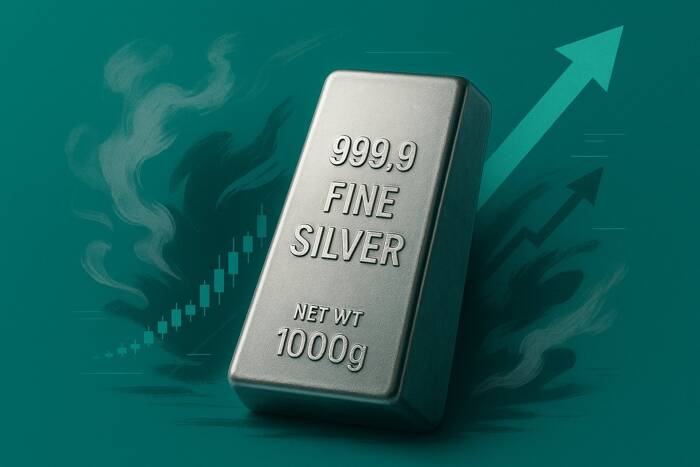
The recent remarkable surge in silver prices, driven by robust industrial demand and evolving strategic classifications, offers more than just a fleeting headline for precious metals enthusiasts. For oil and gas investors, this rally serves as a crucial macro signal, highlighting powerful underlying themes of energy transition, supply chain vulnerabilities, and the potential for a broader commodity supercycle. While crude oil navigates its own unique headwinds, the fundamental forces propelling silver’s ascent provide a valuable lens through which to assess long-term investment strategies in the energy sector. Understanding these dynamics is paramount for positioning portfolios effectively in an interconnected global economy.
Industrial Demand Powers Silver, Echoes Energy Transition Imperatives
Silver’s impressive upward trajectory is not merely speculative; it is firmly rooted in a widening supply-demand imbalance. The metal is on track for its fifth consecutive year of supply deficits, a testament to burgeoning industrial consumption. This demand surge is particularly concentrated in sectors critical to the energy transition and advanced technology: solar panels, electric vehicles (EVs), semiconductors, and increasingly, AI-driven data centers. Silver’s unparalleled electrical conductivity makes it indispensable in these applications, establishing a structural shift in its long-term value proposition.
This structural demand shift for silver provides a potent parallel for the oil and gas sector. As the global economy electrifies and digitalizes, the demand for foundational materials like silver intensifies. For oil investors, this trend underscores the importance of identifying companies positioned to benefit from or adapt to the energy transition. Firms involved in producing critical minerals, developing next-generation energy storage, or even providing essential infrastructure for data centers (which consume vast amounts of energy) may find themselves riding similar waves of sustained demand. The narrative of industrial deficits meeting a generational demand boom, often applied to silver, suggests that the broader infrastructure build-out for a greener, more connected future will require massive material inputs, impacting commodity markets far beyond just precious metals.
Strategic Mineral Reclassification: A Blueprint for Energy Security?
A significant policy development further bolsters silver’s outlook: the U.S. Geological Survey’s proposed inclusion of silver in its 2025 draft list of critical minerals, alongside familiar names like cobalt, lithium, and rare earth elements. Should this reclassification be finalized, it could unlock a cascade of government incentives, potential stockpiling initiatives, and tax breaks, fundamentally altering the metal’s market dynamics. This strategic pivot is driven, in part, by national security concerns, given that over 70% of U.S. silver imports rely on foreign refining capacity, with China dominating global processing.
For oil and gas investors, this development is highly instructive. It highlights a growing global emphasis on securing critical raw material supply chains, a concern long central to the energy sector. The discussions around energy independence, geopolitical stability, and the resilience of supply networks for crude oil and natural gas mirror the discourse now surrounding silver. As policymakers identify essential inputs for the future economy, whether it’s lithium for batteries or silver for solar, the potential for government intervention to secure domestic supplies or diversify sourcing becomes a powerful bullish catalyst. This suggests that investments in domestic energy production, advanced refining capabilities, or strategic energy infrastructure could see enhanced policy support, similar to what silver might experience.
Navigating Oil’s Volatility Amidst Broader Commodity Strength
While silver’s trajectory points towards robust industrial demand and policy tailwinds, the oil market presents a more complex picture. As of today, Brent crude trades at $90.38 per barrel, marking a significant daily decline of 9.07% and representing a nearly 20% pullback from its highs recorded on March 30th ($112.78). Similarly, WTI crude is at $82.59, down 9.41% on the day, and gasoline prices stand at $2.93, a 5.18% decrease. This recent volatility has naturally led many of our investors to inquire about the near-term and long-term outlook for crude, with a frequent question being: “What do you predict the price of oil per barrel will be by the end of 2026?”
The disconnect between silver’s bullish momentum and oil’s recent retrenchment highlights differing immediate catalysts, yet both are influenced by global macroeconomic conditions. While concerns over global growth and interest rate trajectories weigh on oil demand sentiment, silver’s industrial applications offer a more direct link to the accelerating build-out of the new energy economy. Analysts project silver could breach key resistance levels at $48, paving the way towards $50, and potentially reaching $65 or even $100 per ounce in a sustained supercycle. This optimistic outlook for silver suggests that underlying industrial demand, particularly from the energy transition, remains exceptionally strong, which could eventually provide a floor for broader commodity prices, including crude, as the global economy adjusts.
Upcoming Catalysts and Investor Outlook for Crude
The immediate future for crude oil investors is punctuated by several critical events that could shape price action and address concerns like “What are OPEC+ current production quotas?”. The highly anticipated OPEC+ Ministerial Meeting on April 19th is front and center. Decisions from this gathering regarding production levels will be pivotal in determining crude supply stability and investor sentiment for the coming months. Any deviation from expected quotas or a surprise shift in strategy could trigger significant market reactions. Following this, the market will closely monitor the API Weekly Crude Inventory report on April 21st and the EIA Weekly Petroleum Status Report on April 22nd, both of which offer crucial insights into U.S. supply and demand dynamics, influencing short-term trading decisions.
Further out, the Baker Hughes Rig Count reports on April 24th and May 1st will provide a gauge of drilling activity, indicating future supply potential. While oil faces its own unique supply-demand balancing act, silver’s long-term forecast — with some analysts suggesting that silver at $50 could soon be considered inexpensive, potentially leading to the most profitable supercycle in a generation — provides a macro context. It implies that the underlying industrial engine driving commodity demand is robust. For oil investors, this suggests that despite current price pressures, the broader commodity complex may be entering a sustained period of strength driven by global infrastructure development and energy transition requirements. Prudent investors will watch for signs of this underlying strength translating into renewed demand for crude, especially as global economic policies potentially shift towards easing later in the year.


