

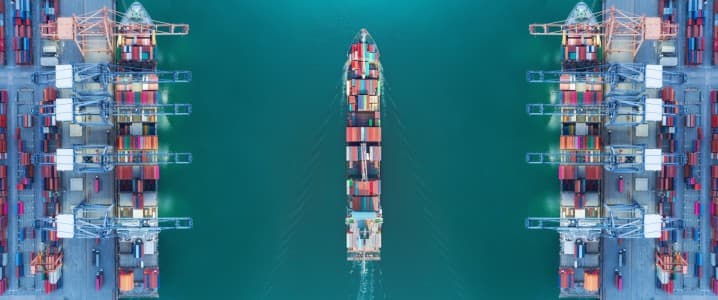
Shipping giant A.P. Moller-Maersk completed on Friday the first transit of a container ship via the Red Sea and Bab el-Mandeb Strait in almost two years, after having stopped voyages through the Suez Canal following Houthi attacks on vessels in the region.
Since December 2023, global shipping traffic has been upended by intensified attacks from the Iran-aligned Houthis in Yemen on commercial vessels transiting the Red Sea before and after entering or exiting the Suez Canal.
The Houthi attacks forced many tanker and container ship operators, including Maersk, to reroute voyages via Africa. The longer voyages have increased travel times, delayed goods delivery, disrupted supply chains, and raised shipping costs.
In a first in nearly two years, Maersk said on Friday that on December 18-19, 2025, the Singapore-flagged vessel Maersk Sebarok transited the Bab el-Mandeb Strait and Red Sea, with the highest possible safety measures applied during transit.
However, Maersk warned that “Whilst this is a significant step forward, it does not mean that we are at a point where we are considering a wider East-West network change back to the trans-Suez corridor.”
“Assuming that security thresholds continue to be met, we are considering continuing our stepwise approach towards gradually resuming navigation along the East-West corridor via the Suez Canal and the Red Sea,” Maersk said, but noted that there are no planned sailings currently.
Apart from upending trade routes and shipping costs, the major shift in ocean vessel traffic has also boosted global demand for fuel oil to multi-year highs.
Contrary to earlier expectations, global demand fuel oil demand has jumped the most since 2019 as longer routes to avoid the Houthi threat around the Red Sea and the surge in shadow fleet numbers have contributed to higher fuel oil use in the shipping industry, analysts told Reuters in October.
By Tsvetana Paraskova for Oilprice.com
More Top Reads From Oilprice.com
