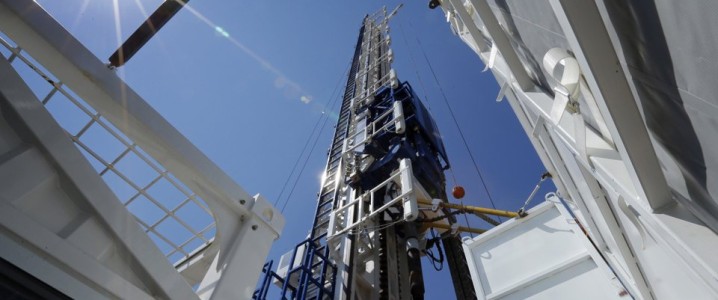
Shell’s recent agreement with Kazakhstan to expand oil and gas exploration in the Zhanaturmys block marks a significant, yet complex, strategic move for the energy major. This new commitment, extending through 2032, involves extensive seismic exploration and technical assessment across 1,377 square kilometers in a region touted as one of Kazakhstan’s most promising hydrocarbon basins. For investors, this signals Shell’s continued long-term conviction in frontier exploration, even as the company navigates a challenging legal landscape within the very same resource-rich nation. Understanding the nuances of this expansion requires a deep dive into both the geological potential and the substantial geopolitical risks involved.
Shell’s Long-Term Bet on Zhanaturmys: A Strategic Resource Play
The signing of the Zhanaturmys block agreement, formalized by Kazakhstan’s Deputy Energy Minister Yerlan Akbarov and Shell Kazakhstan’s Senior Vice President Suzanne Coogan, underscores Shell’s commitment to replenishing its long-term resource base. This isn’t a short-term development; the contract’s duration until 2032 reflects the considerable scale and technical complexity inherent in evaluating a block of this size and potential. For a supermajor like Shell, securing access to prospective acreage like Zhanaturmys is critical for future production growth and maintaining a robust portfolio. The block’s location within a highly prospective basin suggests a calculated geological risk, aiming to unlock significant new hydrocarbon reserves that could underpin Shell’s regional operations for decades to come. This investment decision highlights the ongoing importance of traditional oil and gas exploration in Shell’s broader energy transition strategy, demonstrating that resource replacement remains a core imperative for global energy security and shareholder returns.
Navigating the Kazakh Legal Labyrinth: A Calculated Risk?
Shell’s expansion into Zhanaturmys comes against a backdrop of significant legal contention with Kazakhstan, presenting a complex risk-reward profile for investors. The energy major, along with other international consortium members, is currently embroiled in arbitration processes over a massive $5 billion fine related to alleged sulfur storage violations at the giant Kashagan oilfield. Furthermore, Kazakhstan has outstanding claims totaling as much as $166 billion against majors operating in the country, largely stemming from revenue losses due to Kashagan project delays. Shell’s CEO Wael Sawan recently articulated this delicate balance during a Q4 earnings call, stating the company would “hold until we have better line of sight to where things end up” regarding the lawsuits, while still acknowledging “a lot of potential investment opportunities.” The Zhanaturmys agreement, therefore, can be interpreted in several ways: a strategic goodwill gesture to smooth ongoing disputes, a confident move based on behind-the-scenes progress, or a calculated long-term bet that the geological potential outweighs the known jurisdictional risks. Investors must weigh Shell’s explicit desire for clarity on existing legal issues against its concurrent willingness to deepen its exploratory footprint in the region.
Current Market Realities and the Economics of Frontier Exploration
The decision to embark on a multi-year exploration project like Zhanaturmys is heavily influenced by the prevailing global crude oil prices, even if the payback horizon is distant. As of today, Brent Crude trades at $93.04 per barrel, reflecting a marginal -0.21% dip, while WTI Crude stands at $89.43, down -0.27%. This stability around the mid-$90s, despite a roughly 7% decline in Brent from $101.16 at the beginning of April, provides a relatively healthy environment for long-term exploration. Sustained prices above $80-$85 generally support the economics of developing new, technically challenging projects, compensating for higher operating and capital expenditures. However, the volatility seen in the last two weeks underscores the unpredictable nature of the market. Shell’s investment in Zhanaturmys is a bet that global demand will remain robust and crude prices will stay elevated enough to justify the substantial upfront costs and risks associated with discovering and developing new resources through 2032 and beyond. Such long-cycle investments require confidence not just in today’s prices, but in the long-term supply-demand balance and geopolitical stability.
Investor Questions and Forward-Looking Catalysts
Our proprietary reader intent data shows that investors are keenly focused on the future direction of oil prices, with questions like “what do you predict the price of oil per barrel will be by end of 2026?” dominating sentiment. Shell’s move into Zhanaturmys directly addresses this long-term perspective. This exploration commitment is a clear signal that Shell anticipates a future where new oil and gas supplies will be needed, justifying significant capital allocation today for potential production far into the next decade. While short-term market movements are influenced by upcoming events such as the EIA Weekly Petroleum Status Report (scheduled for this Wednesday, April 22nd, and again on April 29th) and the Baker Hughes Rig Count (due this Friday, April 24th, and May 1st), these primarily offer tactical trading insights. Shell’s Zhanaturmys play is a strategic, structural bet on global energy demand, transcending immediate inventory shifts or drilling activity. Investors should monitor the EIA’s Short-Term Energy Outlook, expected on May 2nd, for broader macro trends that might further inform the long-term viability and profitability of such ambitious exploration projects, shaping the future value proposition of energy majors like Shell.


