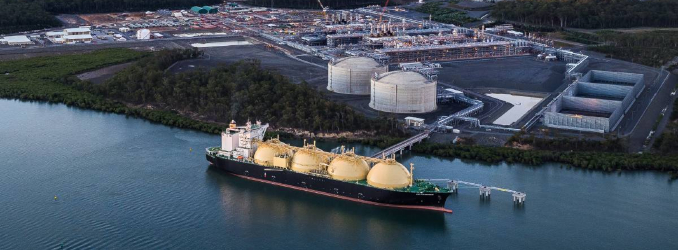
Shell Plc is reportedly exploring the divestment of its significant 16.67% interest in Australia’s colossal North West Shelf liquefied natural gas (LNG) export facility. This potential transaction, valued at over $3 billion, signals a strategic pivot for the energy giant within its global LNG portfolio. While Shell has publicly committed to expanding its LNG footprint, seeing robust demand growth in the coming decades, this specific move highlights a nuanced approach to asset allocation, focusing on alignment with core operational models and long-term strategic objectives.
Shell’s Strategic Recalibration in a Shifting LNG Landscape
The reported reason behind Shell’s consideration to exit the North West Shelf project centers on the facility’s impending transition. The plant is expected to evolve into a third-party tolling facility, a model where clients pay a fee to liquefy their gas. This operational structure, according to sources familiar with Shell’s strategy, does not align with the company’s broader portfolio and preferred operational framework. This isn’t an isolated incident; Shell previously divested its stake in the Browse LNG development in 2023, which was intended to supply gas to the North West Shelf, extending its operational lifespan. These actions collectively suggest a disciplined approach to capital allocation, favoring assets that offer direct integration into their value chain rather than purely fee-based services. For investors, this signals a focus on high-margin, strategically controlled assets, even if it means offloading stakes in established ventures.
Navigating Current Market Headwinds for a Multi-Billion-Dollar Deal
Timing a multi-billion-dollar asset divestment always involves careful consideration of market conditions. As of today, Brent crude futures are trading at $98.34, reflecting a 1.06% daily dip from their range between $97.92 and $98.40. Similarly, WTI crude is at $90.02, down 1.26%, fluctuating between $89.57 and $90.09. This softness in the daily crude market follows a more significant trend; our proprietary market data indicates Brent crude has shed 12.4% of its value over the past two weeks, declining from $108.01 on March 26th to $94.58 by April 15th. While LNG prices operate on their own dynamics, often linked to regional gas hubs or long-term contracts, sustained pressure on crude prices can dampen overall energy market sentiment and influence buyer appetite for large-scale energy assets. A potential buyer for Shell’s 16.67% stake in the A$34 billion ($22 billion) facility would undoubtedly factor in these broader commodity trends, seeking favorable valuation amidst a slightly softer price environment than observed just weeks prior.
Investor Focus: OPEC+ Quotas and the Future of Energy Supply
Our proprietary reader intent data reveals a keen interest among investors in understanding current Brent crude prices and the underlying models that drive them, as well as the specifics of OPEC+ production quotas. This acute focus underscores the critical role of supply-side management and global benchmarks in shaping investment decisions across the energy sector. Shell’s divestment comes at a time when the broader energy landscape is under constant scrutiny. While Shell reaffirms its commitment to LNG globally, viewing gas as a crucial transition fuel, the strategic exit from North West Shelf indicates a preference for assets that directly align with its integrated gas strategy. For investors tracking the sector, this highlights the ongoing portfolio optimization by majors, often driven by evolving market structures, regional energy policies, and the quest for greater capital efficiency.
Upcoming Events and Portfolio Shaping Implications
The timing of this potential divestment also coincides with several key upcoming calendar events that could influence the broader energy market. Investors will be closely watching the OPEC+ Joint Ministerial Monitoring Committee (JMMC) meeting on April 18th, followed by the full OPEC+ Ministerial Meeting on April 20th. These gatherings are crucial for setting production policies and can significantly impact crude price trajectories, which, in turn, can ripple through investor sentiment for all energy assets, including LNG. Furthermore, the regular updates from the API Weekly Crude Inventory (April 21st, April 28th) and the EIA Weekly Petroleum Status Report (April 22nd, April 29th) will provide fresh insights into global supply and demand dynamics. For a major like Shell, making a multi-billion-dollar portfolio adjustment ahead of such significant market-moving events suggests a calculated move to optimize its asset base and potentially lock in value before any major shifts in the market’s perception of energy commodity prices or long-term supply outlooks. This strategic agility is a hallmark of successful energy majors adapting to a dynamic global energy transition.