

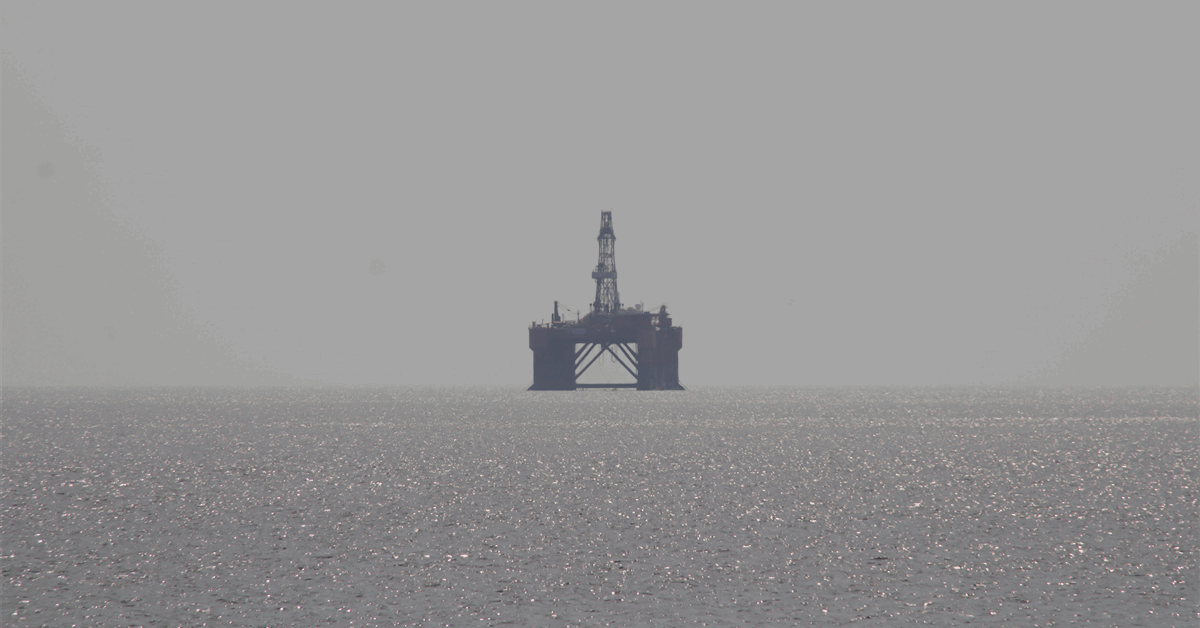
Shell PLC has made a final investment decision to proceed with a waterflood oil recovery project at the Kaikias field on the United States side of the Gulf of America.
“Water will be injected to displace additional oil in the reservoir formation which supplies production to Shell’s Ursa platform in the Mars Corridor”, the British company said.
“First injection is expected in 2028 and is anticipated to extend the production lifecycle of Ursa by several years”, Shell added.
Shell owns 100 percent of Kaikias, discovered 2014 in waters over 4,000 feet and about 130 miles off the Louisiana coast according to the company.
The field started production 2018 through the Ursa tension leg platform, which Shell operates with a 61.35 percent stake. BP PLC holds 22.69 percent and ECP GOM III LLC 15.96 percent.
Shell upstream president Peter Costello said, “Following our decision to increase our stake in Ursa earlier this year, this additional investment continues to maximize the value of the asset. It also contributes to our aim of maximizing high-margin production and longevity in a core basin to maintain liquids production”.
The stake increase was part of Shell’s $735 million acquisitions in the Gulf from ConocoPhillips that were completed in the second quarter. Shell acquired additional stakes of 15.96 percent in Ursa, one percent in the Europa prospect and 11.81 percent in Ursa Oil Pipeline Co – all operated by Shell.
“This acquisition is part of Shell’s strategy to invest in profitable and carbon-competitive oil and gas projects with a strong integrated value chain”, Shell said in a statement May 1 announcing the completion of the transaction.
“Deepening Shell’s interest in existing assets also contributes to maintaining stable liquids production from its advantaged upstream business”.
Elsewhere in the Gulf, Shell earlier this year put onstream a second tieback to the Appomattox production hub. Dover, discovered 2018 in the Norphlet play, contributes 20,000 barrels of oil equivalent a day (boed) at peak, according to a statement by Shell April 8. Shell owns 100 percent of Dover.
Dover would consist of up to two wells produced through a 17.5-mile flowline and riser, according to Shell.
It estimates 44.5 million boe of proven and probable reserves in Dover. Shell approved the project in the first quarter of 2023.
Dover is in the Mississippi Canyon in waters around 7,500 feet deep and about 170 miles off the southeast coast of New Orleans City, Louisiana, according to Shell.
Also in 2025 in the Gulf, Shell put onstream the Whale field, expecting production of up to 100,000 boed. Shell operates Whale with a 60 percent stake. Chevron Corp owns 40 percent.
Located in Alaminos Canyon Block 773, Whale features a semi-submersible production host in over 8,600 feet of water. Up to 15 wells would be tied back to the host via subsea infrastructure, according to the owners.
Discovered 2017, Whale holds estimated proven and probable reserves of 480 million boe. Its production facility is adjacent to the Silvertip field, also owned by Shell and Chevron, and lies about 10 miles from Shell and Chevron’s Perdido spar platform, according to the owners.
Shell says it is the top oil and gas producer in the Gulf.
To contact the author, email jov.onsat@rigzone.com
What do you think? We’d love to hear from you, join the conversation on the
Rigzone Energy Network.
The Rigzone Energy Network is a new social experience created for you and all energy professionals to Speak Up about our industry, share knowledge, connect with peers and industry insiders and engage in a professional community that will empower your career in energy.
element
var scriptTag = document.createElement(‘script’);
scriptTag.src = url;
scriptTag.async = true;
scriptTag.onload = implementationCode;
scriptTag.onreadystatechange = implementationCode;
location.appendChild(scriptTag);
};
var div = document.getElementById(‘rigzonelogo’);
div.innerHTML += ” +
‘ ‘ +
‘ +
”;
var initJobSearch = function () {
//console.log(“call back”);
}
var addMetaPixel = function () {
if (-1 > -1 || -1 > -1) {
/*Meta Pixel Code*/
!function(f,b,e,v,n,t,s)
{if(f.fbq)return;n=f.fbq=function(){n.callMethod?
n.callMethod.apply(n,arguments):n.queue.push(arguments)};
if(!f._fbq)f._fbq=n;n.push=n;n.loaded=!0;n.version=’2.0′;
n.queue=[];t=b.createElement(e);t.async=!0;
t.src=v;s=b.getElementsByTagName(e)[0];
s.parentNode.insertBefore(t,s)}(window, document,’script’,
‘https://connect.facebook.net/en_US/fbevents.js’);
fbq(‘init’, ‘1517407191885185’);
fbq(‘track’, ‘PageView’);
/*End Meta Pixel Code*/
} else if (0 > -1 && 70 > -1)
{
/*Meta Pixel Code*/
!function(f,b,e,v,n,t,s)
{if(f.fbq)return;n=f.fbq=function(){n.callMethod?
n.callMethod.apply(n,arguments):n.queue.push(arguments)};
if(!f._fbq)f._fbq=n;n.push=n;n.loaded=!0;n.version=’2.0′;
n.queue=[];t=b.createElement(e);t.async=!0;
t.src=v;s=b.getElementsByTagName(e)[0];
s.parentNode.insertBefore(t,s)}(window, document,’script’,
‘https://connect.facebook.net/en_US/fbevents.js’);
fbq(‘init’, ‘1517407191885185’);
fbq(‘track’, ‘PageView’);
/*End Meta Pixel Code*/
}
}
// function gtmFunctionForLayout()
// {
//loadJS(“https://www.googletagmanager.com/gtag/js?id=G-K6ZDLWV6VX”, initJobSearch, document.body);
//}
// window.onload = (e => {
// setTimeout(
// function () {
// document.addEventListener(“DOMContentLoaded”, function () {
// // Select all anchor elements with class ‘ui-tabs-anchor’
// const anchors = document.querySelectorAll(‘a .ui-tabs-anchor’);
// // Loop through each anchor and remove the role attribute if it is set to “presentation”
// anchors.forEach(anchor => {
// if (anchor.getAttribute(‘role’) === ‘presentation’) {
// anchor.removeAttribute(‘role’);
// }
// });
// });
// }
// , 200);
//});
