US Shale Boom Faces Existential Threat Amid Price Slump and Market Share Battles
The groundbreaking era of relentless growth in American shale oil production appears to be reaching a critical inflection point. Industry executives are sounding alarms, as a confluence of rising operational costs, declining crude prices, and aggressive international market maneuvers threaten to bring an abrupt end to a decade-long expansion that reshaped global energy dynamics. For investors, the landscape is shifting rapidly, demanding a reassessment of strategies in a sector grappling with unprecedented headwinds.
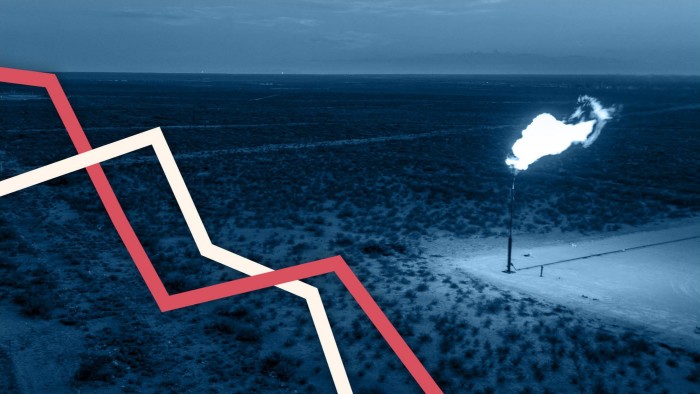
US oil companies are actively scaling back capital expenditures and decommissioning drilling rigs, a direct response to the escalating financial pressures. Tariffs imposed by the previous administration have inflated supply chain costs, while a persistent slide in crude oil prices has severely eroded profit margins. This challenging environment has prompted senior leadership across the US oil patch to suggest that the remarkable shale boom, which propelled the nation to become the world’s leading oil producer, is now facing its twilight.
Further exacerbating the domestic industry’s woes are the unexpected decisions by the OPEC+ alliance to increase crude output. These moves have injected significant uncertainty into an already fragile market, fueling concerns of a renewed price war and compelling analysts to revise down their projections for US production. The sentiment among producers is palpable.
“We’re operating on high alert at this point, examining every facet of our operations,” stated Clay Gaspar, Chief Executive Officer at Devon Energy, addressing investors recently. “Everything is subject to re-evaluation as we navigate what is clearly becoming a more distressed operating environment.”
The impact of these pressures is translating into concrete forecasts. S&P Global Commodity Insights projects a 1.1 percent decline in US oil output next year, settling at 13.3 million barrels per day. Such a reduction would mark the first annual decrease in a decade, excluding the anomalous year of 2020, when the global pandemic triggered an unprecedented collapse in demand, sending oil prices below zero and initiating widespread bankruptcies across key producing states like Texas and North Dakota. Recent market performance underscores the severity of the situation: US oil prices concluded last week at $61.53 a barrel, representing a substantial 23 percent drop from their peak earlier in the year. This figure stands notably below the crucial $65 a barrel threshold that the Federal Reserve Bank of Dallas’s quarterly energy survey identifies as the break-even point for many shale producers.
“The prevailing sentiment right now is one of endurance and resilience,” commented Herbert Vogel, Chief Executive Officer at SM Energy, speaking at the Super DUG conference in Fort Worth, reflecting the industry’s grim determination.
The Fading Glory of American Energy Dominance
A sustained fall in domestic oil production would signify the end of an extraordinary chapter in American energy history. The shale revolution delivered not only ever-increasing volumes of affordable oil and natural gas, powering the nation’s economy, but also significantly bolstered GDP and strengthened labor markets. Furthermore, a surge in energy exports dramatically improved the country’s trade balance, marking a period of unprecedented energy independence.
The explosive growth in shale output fundamentally altered the United States’ geopolitical standing, liberating it from its historical reliance on foreign energy suppliers, particularly nations within the OPEC cartel such as Saudi Arabia. This newfound independence provided the White House with greater diplomatic leverage, enabling it to impose sanctions on oil-exporting adversaries like Iran, Russia, and Venezuela without fear of crippling domestic energy shortages. Despite promises from the previous administration to “unleash” further drilling and production in pursuit of US “energy dominance,” current production, which reached record highs under the Biden administration, faces the risk of significant contraction if crude prices continue their downward trajectory.
The financial implications of sustained low prices are stark. Scott Sheffield, the former head of shale giant Pioneer Natural Resources, recently warned that if crude oil prices were to fall to $50 a barrel, US production could realistically decline by as much as 300,000 barrels per day – a volume exceeding the total output of several smaller OPEC member countries. This scenario highlights the delicate balance producers must maintain between operational costs and market prices.
Geopolitical Chess and Market Share Dynamics
Adding another layer of complexity to the challenges facing US producers is the recent strategy employed by major global exporters. The Kingdom of Saudi Arabia’s decision to increase its oil pumping in recent months is widely interpreted as a direct challenge to the market share held by American producers. This move underscores a broader geopolitical strategy, with seasoned industry leaders suggesting a clear objective.
“Saudi Arabia is actively working to reclaim market share, and it’s highly probable they will achieve this objective over the next five years,” Sheffield observed, pointing to a strategic long-term play that could fundamentally alter the competitive landscape for US shale. For investors, this signals a potential erosion of the American energy sector’s competitive edge, requiring careful consideration of global supply dynamics and geopolitical influences on crude prices.
The coming months will be pivotal for the US shale industry. As companies grapple with cost pressures, declining revenues, and an increasingly competitive global market, the investor community must brace for a period of consolidation, strategic retrenchment, and potentially, a significant recalibration of growth expectations. The era of easy growth and unbridled expansion appears to be drawing to a close, ushering in a new chapter defined by caution, efficiency, and intense competition.