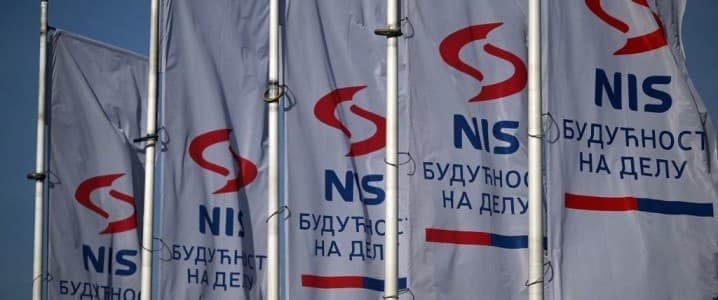
The Serbian government is on the verge of a significant geopolitical and economic maneuver, preparing legislative amendments that would permit the nationalization of Naftna Industrija Srbije (NIS), the nation’s sole oil refinery. This strategic asset, predominantly owned by Russia’s Gazprom Neft and Gazprom, faces an existential crisis as U.S. sanctions have curtailed its operations, prompting a scramble for solutions. For energy investors, this situation presents a complex tapestry of geopolitical risk, regional supply chain vulnerabilities, and potential shifts in energy security dynamics, all unfolding against a backdrop of fluctuating global crude prices. Understanding the immediate triggers, market reactions, and forward-looking implications is paramount for positioning portfolios effectively in the current environment.
Serbia’s Energy Lifeline Under Sanctions Pressure
The urgency behind Serbia’s nationalization preparations stems directly from the tightening grip of U.S. sanctions. NIS, located in Pancevo near Belgrade, is not merely a refinery; it is the cornerstone of Serbia’s energy independence, boasting a processing capacity of 4.8 million tons of crude per year. Its operational capacity is vital, exemplified by its processing of approximately 1.677 million tons in the first half of 2025, marking a robust 20% increase compared to the same period in 2024, when the facility underwent a significant maintenance turnaround. However, the expiration of the latest U.S. Department of Treasury’s Office of Foreign Assets Control (OFAC) waiver on October 8 proved to be a critical turning point. This led to banks ceasing the processing of NIS payments and, more critically, the cessation of crude deliveries via Croatia’s JANAF pipeline.
Serbian Energy Minister Dubravka Djedovic Handanovic had previously highlighted the dire consequences, stating that NIS would be unable to operate beyond November 25 without fresh crude supplies. While Hungary has stepped in, with its energy giant MOL doubling its oil product exports to Serbia since November via road, rail, and ship, this is largely a stopgap measure for refined products. MOL itself has acknowledged it cannot fully satisfy Serbia’s total market needs. The Serbian government’s proposed amendment, as articulated by Ana Brnabic, a close confidante of President Aleksandar Vucic, directly addresses this predicament, stating, “One of the amendments that will be submitted will be the one that will foresee the circumstance that at some point we will take over NIS.” This move underscores the critical need for a sustainable solution for the refinery’s crude intake, absent a timely third-party offer for ownership change.
Navigating Volatile Markets: Local Shocks Amidst Global Trends
The localized energy security crisis in Serbia unfolds within a broader global oil market that has seen considerable volatility. As of today, Brent Crude trades at $94.72, reflecting a marginal decline of 0.8% within a daily range of $93.87 to $95.69. Similarly, WTI Crude stands at $86.48, down 1.08% within its daily range of $85.5 to $86.78. Gasoline prices also show a slight dip, trading at $3.03, a 0.33% decrease. These daily movements are part of a more significant trend; over the past 14 days, Brent crude has experienced a substantial retreat, falling from $118.35 on March 31 to $94.86 on April 20, representing a precipitous 19.8% decline.
For investors, this context is crucial. While the nationalization of NIS represents a significant supply chain shock for Southeast Europe, its immediate impact on global crude prices is tempered by these larger market dynamics. The substantial drop in Brent suggests that broader concerns, perhaps related to global demand outlooks or an easing of other geopolitical tensions, are currently outweighing regional disruptions. Investors must, therefore, differentiate between regional product supply concerns, which could see localized price spikes for refined fuels in Serbia, and the overarching crude market sentiment, which remains susceptible to macroeconomic forces and global supply-demand balances.
Investor Focus: Price Direction and Upcoming Catalysts
Our proprietary reader intent data reveals a clear focus among investors on the future trajectory of oil prices, with common inquiries centering on questions like, “is WTI going up or down” and “what do you predict the price of oil per barrel will be by end of 2026?” The Serbian situation, while specific, adds another layer of complexity to these predictions, particularly for regional product markets. However, for the broader crude benchmarks, several key events in the coming weeks will provide critical signals that investors should monitor closely.
Tomorrow, April 21, the OPEC+ Joint Ministerial Monitoring Committee (JMMC) Meeting will be a pivotal event. Any signals regarding production policy adjustments from this influential group could significantly influence global crude supply expectations and, consequently, price direction. Following this, the market will scrutinize the EIA Weekly Petroleum Status Reports on April 22 and April 29, alongside the API Weekly Crude Inventory reports on April 28 and May 5. These reports offer vital insights into U.S. crude inventories, refinery utilization rates, and product demand, acting as a barometer for the world’s largest oil consumer. Furthermore, the Baker Hughes Rig Count on April 24 and May 1 will provide an indication of North American production activity. Perhaps most critically for investors seeking a longer-term outlook, the EIA Short-Term Energy Outlook, due on May 2, will offer an updated forecast for oil prices and market balances through the end of 2026, directly addressing the prevalent investor curiosity about year-end price levels. The interplay of these global data points with the ongoing nationalization discussions in Serbia will shape investment theses for both upstream and downstream energy assets.
Strategic Implications for Regional Energy Security and Future Investment
The potential nationalization of NIS carries profound implications for Serbia’s long-term energy security and the broader investment landscape in the Western Balkans. As the country’s sole refinery, its operational stability is paramount. The current reliance on Hungary for refined products, while a commendable act of regional solidarity, highlights the vulnerability of a supply chain dependent on road, rail, and ship transport for crucial energy resources. A successful nationalization, coupled with securing new, diversified crude supply routes, could stabilize Serbia’s domestic fuel market and reduce its exposure to external geopolitical pressures.
From an investment perspective, the “third party offer” clause in Serbia’s proposed legislation opens a window of opportunity, however narrow. Should the Serbian government seek a new international partner to operate NIS, it could attract interest from Western or other non-Russian energy firms looking to establish a strategic foothold in the region, provided the geopolitical and sanctions risks can be effectively mitigated. Such a scenario would require substantial capital investment in modernizing the refinery and securing long-term crude supply agreements, potentially creating new avenues for upstream and midstream players. Conversely, a full state takeover without a clear path to stable crude supply and operational funding could introduce prolonged uncertainty, deterring foreign direct investment in Serbia’s energy sector. Investors must weigh these outcomes, considering not just the immediate crisis but the potential for Serbia to recalibrate its energy strategy in a post-nationalization environment.


