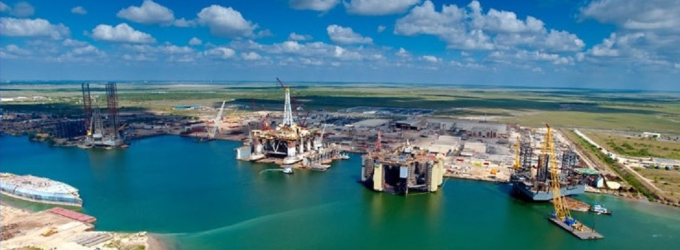
Seatrium Limited has made a decisive move to bolster its capital efficiency and streamline operations with the divestment of its AmFELS Yard in Brownsville, Texas. The S$65 million sale to Karpower Valley LLC, an affiliate of Karpowership, signals a clear strategic pivot for the offshore and marine giant, aiming to unlock value from what it deems surplus assets. This transaction, which sees the yard completing existing projects through 2025 before a full transfer of operations, is more than just an asset sale; it’s a focused realignment in a dynamic energy market, demanding investor attention.
Strategic Divestment in a Shifting Offshore Landscape
Seatrium’s decision to offload the AmFELS yard is a textbook example of an integrated offshore and marine company optimizing its global asset base. The S$65 million consideration for an asset with a book value of approximately S$39 million as of June 30, 2025, represents a significant premium, underscoring the strategic value perceived by the buyer and the successful execution of Seatrium’s divestment strategy. A notable aspect of the deal structure is the S$50 million deferred payment, due one year after closing. This structure allows the buyer, Karpower Valley LLC, an affiliate of Karpowership, to manage its capital outlay while providing Seatrium with a phased realization of the transaction’s value. The yard will continue to execute its current project pipeline, ensuring a smooth transition and continuity of operations through 2025, pending the Port of Brownsville’s approval of the lease transfer. This strategic divestment frees up capital that can be redeployed into higher-growth areas or used to enhance financial flexibility, aligning with the company’s stated goal of meeting evolving customer needs across the offshore energy sector.
Navigating Market Headwinds: Capital Efficiency Takes Center Stage
In the current volatile energy market, disciplined capital allocation is not just a preference, but a necessity. As of today, Brent Crude is trading at $98.05, reflecting a 1.35% decrease, with its day range fluctuating between $97.92 and $98.67. Similarly, WTI Crude sits at $89.46, down 1.88% today. This immediate snapshot follows a more significant trend: Brent Crude has seen a substantial decline of over 12.4% in just the last 14 days, falling from $112.57 on March 27 to $98.57 on April 16. Such price movements naturally pressure profitability margins across the energy value chain, from exploration and production to marine services. By divesting assets that are no longer considered core to its long-term vision, Seatrium is enhancing its capital efficiency and fortifying its balance sheet against potential market fluctuations. This move ensures resources are concentrated on areas of competitive advantage, particularly in engineering innovation and technology, which are less susceptible to short-term commodity price swings and more aligned with the long-term energy transition narrative.
Investor Focus: What the Market is Asking About Supply and Demand
Our proprietary investor intent data reveals a keen interest in the fundamental drivers of the oil market, particularly concerning supply and pricing. Investors are actively seeking answers to questions such as “What is the current Brent crude price?” and “What are OPEC+ current production quotas?”. This sustained focus on supply-side dynamics and immediate price movements underscores a prevailing uncertainty and the critical need for companies to demonstrate robust strategic planning. Seatrium’s divestment strategy directly addresses this investor sentiment by showing a proactive approach to capital management in an environment where market participants demand clarity and discipline. By streamlining its asset base and focusing on high-value services, Seatrium aims to position itself as a more resilient and adaptable player. This strategic clarity is crucial for attracting and retaining investor confidence, especially when the broader market is grappling with the implications of global supply decisions and their impact on future oil and gas project viability.
The Path Forward: Seatrium’s Enduring U.S. Presence and Upcoming Catalysts
Despite the sale of its AmFELS yard, Seatrium’s commitment to the U.S. market remains steadfast. The company will maintain a robust U.S. footprint through technology centers and offices in Houston, Texas, and a service hub in Vicksburg, Mississippi. These facilities are critical for supporting its specialized focus on engineering innovation and advanced technology solutions for offshore and energy clients. The continued collaboration with Karpowership, even after the yard transfer, highlights a strategic partnership that could deepen future opportunities. Looking ahead, several key energy events will shape the broader market landscape and potentially influence Seatrium’s operational environment. Investors will be closely watching the OPEC+ Joint Ministerial Monitoring Committee (JMMC) meeting on April 17 and the Full Ministerial Meeting on April 18, as any shifts in production policy could significantly impact crude prices and investment appetite for offshore projects. Furthermore, the API Weekly Crude Inventory reports on April 21 and April 28, followed by the EIA Weekly Petroleum Status Reports on April 22 and April 29, will provide crucial insights into demand trends and inventory levels. The Baker Hughes Rig Count reports on April 24 and May 1 will offer a pulse on U.S. drilling activity. These upcoming data points and decisions will inevitably inform the strategic direction for Seatrium’s remaining U.S. operations, particularly its engineering and technology services that cater to the offshore energy sector.
Seatrium’s divestment of the AmFELS yard is a calculated move to enhance capital efficiency and adapt to the evolving offshore energy landscape. By shedding a non-core asset at a premium and maintaining a focused presence in key U.S. technology and service hubs, the company is positioning itself for sustained growth. Amidst ongoing market volatility and critical upcoming energy events, Seatrium’s strategic realignment underscores a commitment to value creation and responsiveness to investor expectations, setting a clear course for its future operations in the global energy arena.