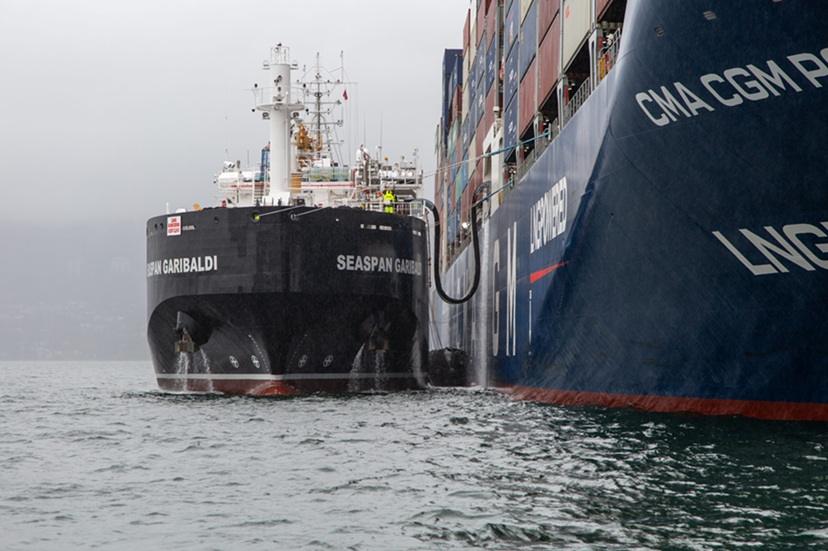
The global energy landscape is in constant flux, but one undeniable trend is the accelerating push towards decarbonization across hard-to-abate sectors. For oil and gas investors, understanding where capital is flowing in this transition is paramount. A recent strategic agreement between Seaspan Energy, a subsidiary of marine transportation giant Seaspan, and climate solutions provider Anew Climate signals a significant step forward in green shipping, offering a compelling case study for the evolving energy investment thesis. This partnership aims to deliver certified renewable liquefied natural gas (R-LNG) to ship owners on the North American West Coast, leveraging biomethane derived from organic waste. For investors navigating the complexities of the energy transition, this initiative highlights both the opportunities and the strategic considerations in the burgeoning market for sustainable marine fuels.
Green Shipping’s Future: The Strategic Imperative of R-LNG
The collaboration between Seaspan Energy and Anew Climate is more than just a supply agreement; it’s a blueprint for scaling decarbonization in the maritime sector. Anew Climate, backed by TPG Rise, will supply Renewable Natural Gas (RNG), also known as biomethane, which is chemically identical to fossil-based natural gas. This “drop-in” compatibility is a critical advantage, allowing ship owners to transition to lower-carbon fuels without necessitating costly overhauls of existing infrastructure or vessel engines. The fuel will be International Sustainability and Carbon Certification (ISCC) certified, meeting stringent standards aligned with frameworks like the International Maritime Organization’s (IMO) Net Zero Framework and the EU’s FuelEU Maritime Regulation.
This initiative directly addresses the mounting regulatory pressure on global shipping to reduce its carbon footprint. The IMO’s guidance increasingly encourages the adoption of alternative fuels, and partnerships like this demonstrate industry leadership in seeking commercially viable, certified lower-carbon solutions. For investors, the ability of R-LNG to support decarbonization efforts in a sector notoriously difficult to abate, without compromising performance or requiring extensive capital expenditure on new infrastructure, makes it a highly attractive proposition. It represents a pragmatic bridge fuel, enabling immediate emissions reductions while longer-term, more disruptive technologies mature.
Navigating Volatility: R-LNG’s Resilience Amidst Crude Price Swings
The investment landscape for energy assets is always dynamic, and the current market provides a stark illustration of this volatility. As of today, Brent Crude trades at $90.38, reflecting a significant 9.07% drop within the day’s range of $86.08 to $98.97. Similarly, WTI Crude stands at $82.59, down 9.41%, having fluctuated between $78.97 and $90.34. This intraday movement follows a broader trend; over the past 14 days, Brent has shed 18.5% of its value, declining from $112.78 on March 30th to $91.87 on April 17th. Gasoline prices have also seen a dip, currently at $2.93, down 5.18%.
While these sharp declines in traditional crude benchmarks might appear to diminish the immediate cost competitiveness of alternative fuels, a deeper analysis reveals a different picture for R-LNG. The investment case for sustainable fuels like R-LNG is not solely predicated on the daily fluctuations of crude prices. Rather, it is anchored in long-term regulatory mandates, corporate ESG commitments, and the desire for supply chain stability. For companies like Seaspan and their clients, the long-term cost of carbon emissions and the increasing demand for sustainable operations outweigh short-term fossil fuel price dips. The R-LNG market, driven by waste feedstock and environmental credits, operates on different economic fundamentals, offering a degree of insulation from geopolitical crude shocks. Smart investors recognize that the value proposition here extends beyond simple BTU economics, encompassing regulatory compliance, brand value, and future-proofing against carbon liabilities.
Future Catalysts and Strategic Outlook for Energy Investors
The coming weeks are packed with events that will shape the traditional oil and gas markets, providing crucial context for investors evaluating opportunities in alternative fuels. The upcoming **OPEC+ Joint Ministerial Monitoring Committee (JMMC) meeting on April 18th**, followed by the **Full Ministerial meeting on April 19th**, will be closely watched for any signals regarding production quotas. Any decision to adjust supply could significantly impact crude prices, influencing the competitive environment for R-LNG.
Further insights into market fundamentals will come from the regular **API and EIA Weekly Crude Inventory reports on April 21st and 28th (API), and April 22nd and 29th (EIA)**. These data releases will offer a snapshot of demand and supply balances in the U.S., while the **Baker Hughes Rig Count on April 24th and May 1st** will indicate future production trends. While these events primarily focus on fossil fuels, their outcomes indirectly affect the attractiveness of alternatives. A tightening crude market could accelerate the adoption of R-LNG as a cost-effective, compliant solution, whereas an oversupplied market might test the resolve of decarbonization initiatives. However, the long-term policy trajectory, particularly the IMO’s Net Zero Framework and the EU’s FuelEU Maritime Regulation, provides a robust, forward-looking tailwind for R-LNG adoption, irrespective of short-term crude volatility. Investors should view these upcoming events through the lens of how they either reinforce or challenge the long-term decarbonization narrative, rather than as sole determinants for green energy investments.
Investor Sentiment and the Long Game in Green Energy
OilMarketCap.com’s reader intent data reveals that many investors remain intensely focused on the traditional crude market. Questions like, “What do you predict the price of oil per barrel will be by end of 2026?” and “What are OPEC+ current production quotas?” consistently rank high. This reflects a natural preoccupation with the immediate and medium-term trajectory of fossil fuel prices, which continue to drive significant market movements.
However, the strategic move by Seaspan and Anew Climate underscores a crucial parallel investment thesis: that long-term value creation will increasingly stem from solutions addressing the energy transition. For sophisticated investors, allocating capital to companies providing certified lower-carbon fuels like R-LNG offers diversification from pure crude price exposure and positions portfolios to capitalize on the secular growth in sustainability mandates. Anew Climate’s strong position as one of the largest independent RNG marketers globally, combined with the backing of TPG Rise’s impact investing platform, signals institutional confidence in the scalability and profitability of this sector. Investing in these solutions isn’t just about environmental impact; it’s about tapping into a growing market for environmental credits, regulatory compliance services, and resilient fuel supply chains that are less susceptible to geopolitical risk. The long game in energy investing demands a keen eye on these transitional plays, which are poised to deliver sustained growth as the global economy continues its inexorable shift towards lower-carbon operations.


