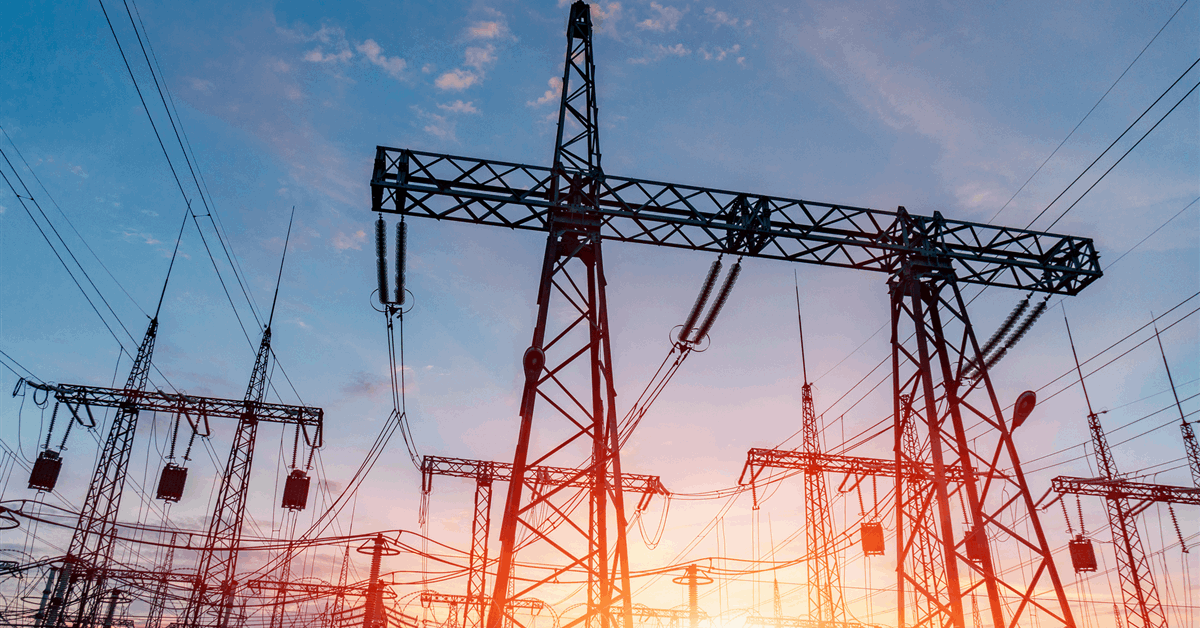
The recent green light for ScottishPower’s Redshaw 400-kilovolt (kV) substation in South Lanarkshire signals a tangible acceleration in the UK’s energy transition, a development that, while seemingly distant from traditional oil and gas, holds profound implications for how capital is allocated across the broader energy sector. This critical infrastructure project, designed to integrate some two gigawatts of new renewable energy into the grid and bolster network resilience, is a microcosm of a larger, global investment trend. For savvy oil and gas investors, understanding these shifts is paramount, as the dynamics of energy security, net-zero targets, and regulated returns increasingly compete with, and influence, the volatile commodity markets we typically track. As we dissect Iberdrola’s massive investment pivot and its real-world manifestation in projects like Redshaw, we must simultaneously navigate the immediate headwinds facing crude markets, where investor sentiment is currently being tested by a potent mix of supply-demand signals and macroeconomic uncertainty.
Iberdrola’s Strategic Pivot: Regulated Networks as a Growth Vector
ScottishPower, a key subsidiary of Spain’s Iberdrola SA, is spearheading the Redshaw substation project, a significant undertaking that underscores its parent company’s updated 2024-28 investment plan. This ambitious EUR 58 billion strategy is designed to transform Iberdrola into a more regulated entity, with networks serving as the primary growth engine. A staggering two-thirds of this investment, approximately EUR 37 billion, is earmarked for transmission and distribution networks, predominantly in the United Kingdom and the United States. The UK alone is slated to receive the largest share, totaling EUR 20 billion, highlighting the strategic importance of projects like Redshaw in upgrading aging infrastructure built as far back as the 1920s to accommodate modern renewable energy flows.
This capital allocation is a clear signal to investors: in an era of commodity price volatility, regulated assets offer stability and predictable returns. The Redshaw substation, with its 400-kV gas insulated switchgear (GIS) buildings and four 360MVA transformers, is a prime example of the physical investments underpinning this strategy. While the project is set to complete by 2031, its commencement later this year, pending final access details and surveys, represents immediate progress. For oil and gas investors, this trend of significant capital flowing into stable, regulated green infrastructure poses a direct question about portfolio diversification and the long-term attractiveness of traditional upstream and midstream assets versus the growing opportunities in the energy transition space.
Oil Market Turmoil: A Stark Contrast to Infrastructure Stability
The stability offered by regulated network investments stands in stark contrast to the current turbulence in the crude oil market. As of today, Brent Crude trades at $90.38, reflecting a significant 9.07% drop within the day’s range of $86.08-$98.97. Similarly, WTI Crude has fallen to $82.59, down 9.41% from its range of $78.97-$90.34. This immediate downturn caps a challenging period for crude, with Brent having declined by $22.4, or 19.9%, from $112.78 on March 30th to its current level on April 17th. Gasoline prices are also feeling the pressure, trading at $2.93, down 5.18%.
This dramatic shift raises a critical question frequently posed by our readers: “what do you predict the price of oil per barrel will be by end of 2026?” While precise predictions are inherently difficult, the current market dynamics are shaped by a confluence of factors. Easing geopolitical tensions, whispers of potentially weaker global demand, and a re-evaluation of supply-side constraints are all contributing to the downward pressure. The recent price action underscores the market’s sensitivity to even subtle shifts in these narratives. For investors accustomed to the boom-and-bust cycles of oil, the appeal of fixed, long-term returns from infrastructure projects like Redshaw becomes increasingly compelling during periods of such pronounced volatility.
Navigating Immediate Catalysts: OPEC+ and Inventory Data
Despite the long-term trends towards green infrastructure, the immediate focus for many oil and gas investors remains firmly on the upcoming market catalysts that will dictate short-term price movements. The next 14 days are packed with critical events. Of paramount importance are the OPEC+ JMMC Meeting on April 19th and the full OPEC+ Ministerial Meeting on April 20th. Investors are keenly asking about “OPEC+ current production quotas” and the potential for any adjustments. Any decision by the cartel to alter production levels, whether through deeper cuts or a surprise increase, could immediately send ripples through the market, potentially reversing or accelerating the current price decline. Given the recent drop, the market will be scrutinizing any signals of solidarity or divergence among member states.
Following these crucial policy meetings, the market will turn its attention to weekly supply-demand indicators from the United States. The API Weekly Crude Inventory reports on April 21st and April 28th, alongside the more comprehensive EIA Weekly Petroleum Status Reports on April 22nd and April 29th, will provide vital snapshots of crude and product inventories. Significant builds or draws in these reports can heavily influence market sentiment and price action. Furthermore, the Baker Hughes Rig Count on April 24th and May 1st will offer insights into North American production trends, a key variable in the global supply equation. These scheduled events represent immediate, tangible drivers that demand active monitoring from any investor navigating the oil and gas landscape.
Long-Term Horizon: Energy Security, Net Zero, and Investor Mandates
The Redshaw substation is not merely a regional project; it’s a strategic investment aligned with broader national and international energy objectives. As SP Energy Networks environmental planning manager Andrew Hutchison stated, the substation is “vital to improving our energy security and contributing towards Scotland’s, and the rest of the UK’s, net zero targets.” This emphasis on energy security and climate goals is increasingly shaping investor mandates and capital flows across the entire energy complex. While the immediate impact on oil and gas demand from a single substation might be negligible, the cumulative effect of such projects globally signals a gradual, yet determined, shift away from fossil fuel dependency, particularly in power generation.
For oil and gas investors, this necessitates a dual perspective. Short-term strategies will continue to be driven by OPEC+ decisions, inventory data, and geopolitical developments. However, a robust long-term strategy must acknowledge the growing momentum behind energy transition investments. The capital flowing into projects like Redshaw, backed by substantial corporate commitments like Iberdrola’s, represents a significant reallocation of resources. Understanding these parallel investment universes—the volatile, commodity-driven oil and gas sector and the more stable, regulated energy infrastructure arena—will be crucial for optimizing returns and managing risk in an evolving global energy market.


