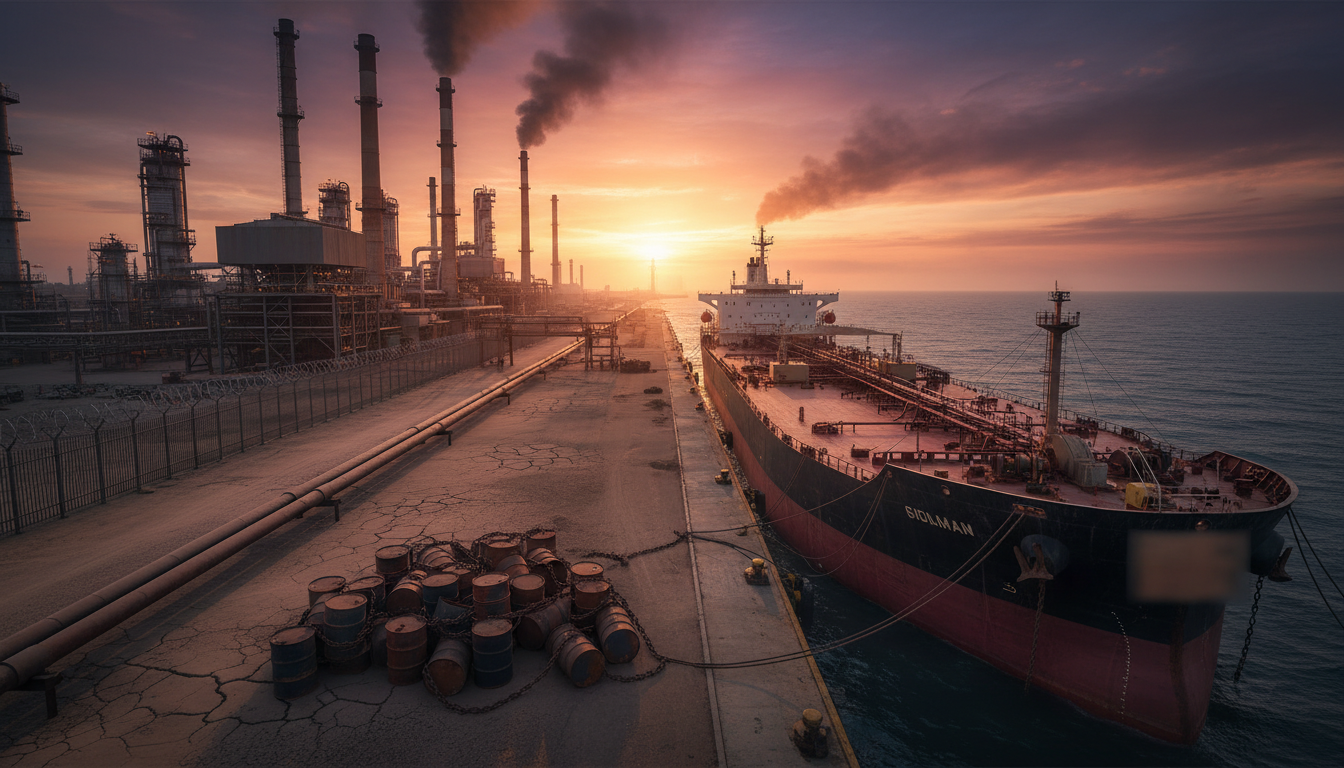
Iranian Oil Tankers Amass Off Coast Amid Heightened U.S. Sanctions Enforcement
Investors in the global energy markets are closely monitoring a significant development off Iran’s coast, where a flotilla of oil tankers has reportedly stalled. Recent satellite imagery and advanced maritime intelligence analyses reveal at least six Iranian crude oil carriers, along with an additional Suezmax vessel, congregated in a strategic anchorage near the port of Chabahar. This location places them outside the crucial Strait of Hormuz, yet still within the operational boundaries of the United States’ naval interception efforts.
The grouping of these vessels, predominantly Very Large Crude Carriers (VLCCs), suggests a continued commitment from Tehran to load and attempt to export its crude oil. However, their prolonged stationary status in this particular zone strongly indicates that the intensified American pressure campaign is achieving its objective of disrupting or at least substantially delaying these Iranian crude shipments. This dynamic creates an intriguing standoff, signaling both Iran’s persistent endeavors to maintain its oil trade and the U.S.’s determined efforts to enforce its sanctions regime.
U.S. Blockade Intensifies, Rerouting Dozens of Vessels
The U.S. Central Command (CENTCOM) recently underscored the effectiveness of its maritime operations, confirming that its blockade targeting vessels entering or exiting Iranian ports remains firmly in place. As of their latest public statement, U.S. forces have successfully redirected an impressive 34 vessels, a testament to the comprehensive nature of their enforcement actions. This ongoing interdiction highlights the significant logistical and financial hurdles faced by entities attempting to circumvent international sanctions.
Maritime intelligence providers are offering critical insights into this evolving situation. Windward, a leading firm in the sector, has confirmed the unwavering presence of this tanker cluster situated east of Hormuz near Chabahar. Their proprietary imaging and analytical tools have identified seven distinct tankers in the anchorage area: six VLCCs and one Suezmax. Critically, all these vessels are operating without Automatic Identification System (AIS) transmissions, a tactic commonly employed to obscure their movements and origins, often referred to as “going dark.”
Windward’s analysis further indicates that these vessels are maintaining fixed positions, showing no evidence of active loading operations or ship-to-ship transfers, which are often used for illicit cargo transfers. This observation reinforces the assessment that the vessels are engaged in sustained loitering rather than active commercial activities. The firm attributes this “dark mode” tanker positioning and the suspected use of one vessel for bunkering to a deliberate staging behavior, ruling out incidental congestion or mere short-term delays. This strategic positioning in the eastern Gulf of Oman is likely part of an adaptive response by Iran, designed to allow vessels to wait, reposition, or prepare for future movements under the persistent threat of interception.
Market Implications: A Closer Look at Iran’s Oil-on-Water Inventory
While the visual evidence and intelligence reports paint a clear picture of disrupted shipping, the immediate impact on global crude oil supply remains a nuanced subject for investors. Data from maritime risk and intelligence firm Vortexa, shared by its Director of Maritime Risk & Intelligence, Claire Jungman, provides a broader perspective on Iran’s existing oil inventory at sea. In the week leading up to April 21st, following the formal enforcement of the U.S. blockade, 34 energy tankers linked to Iran were recorded transiting the area. This number aligns with CENTCOM’s figures, confirming the active interdiction efforts.
However, Jungman’s analysis suggests that the blockade’s immediate effect on Iranian crude supply reaching the global market may not be substantial within the next two to three months. This assessment hinges on the considerable volume of Iranian crude already stored on water. As of April 21st, an estimated 160 million barrels of Iranian crude were afloat. Crucially, 130 million barrels of this total were already positioned outside the U.S. blockade zone, effectively bypassing the immediate enforcement area.
This substantial offshore inventory provides a significant buffer. Vortexa estimates that this volume is sufficient to meet approximately 2.5 months of typical Chinese crude import requirements. China remains Iran’s primary destination for crude oil, making this data particularly relevant for forecasting market stability and potential price impacts. Furthermore, experts anticipate that despite the robust blockade, additional Iranian vessels will likely continue to find ways to navigate through the U.S. enforcement network, albeit with increased difficulty and delay.
For oil and gas investors, this scenario presents a complex risk assessment. While the U.S. sanctions are undeniably creating operational hurdles for Iran, the sheer volume of crude oil already on the water mitigates the immediate supply shock. This suggests that while compliance risks for buyers and shippers remain elevated, the market may not experience a rapid contraction in Iranian crude availability in the near term. Instead, the situation points to a protracted ‘cat-and-mouse’ game, where Iran seeks new strategies to move its oil, and the U.S. continuously adapts its enforcement tactics. Monitoring these maritime developments, coupled with geopolitical shifts, will be essential for understanding future crude oil price trajectories and global energy supply dynamics.
The persistent efforts by Iran to circumvent sanctions, combined with the U.S.’s unwavering commitment to enforcement, underline the volatile nature of energy geopolitics. Investors must consider how these ongoing tensions could influence shipping costs, insurance premiums, and ultimately, the intricate balance of supply and demand in the international oil market. The stalled tanker fleet off Chabahar serves as a tangible symbol of these enduring challenges, demanding continuous vigilance from market participants.


