

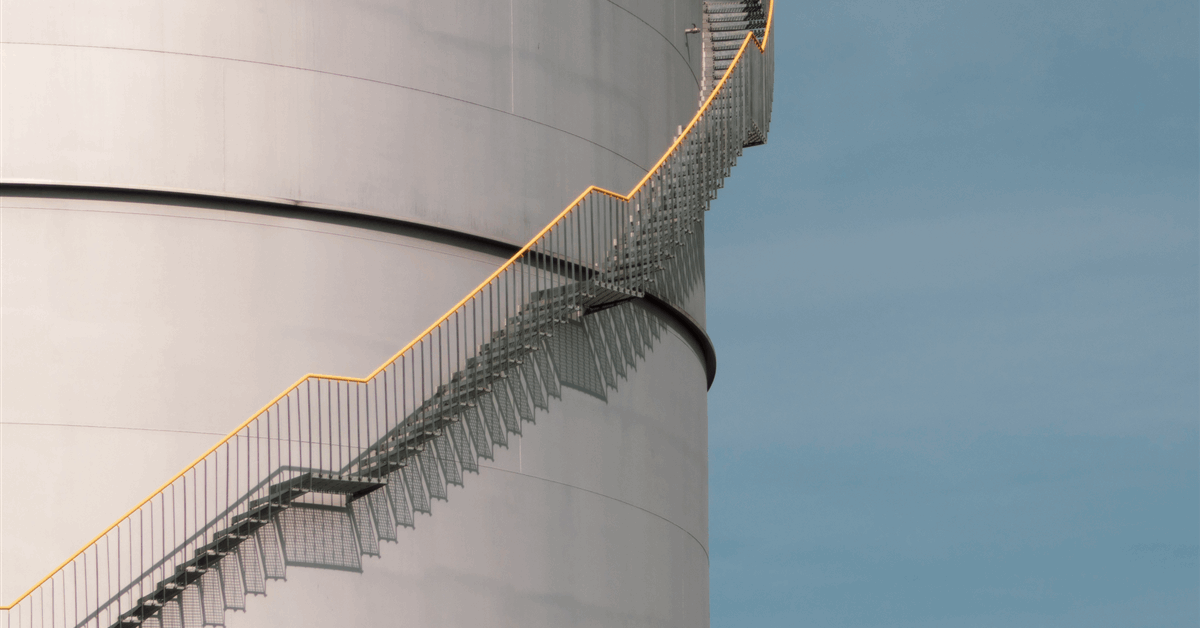
Saudi Arabia said there was an attempted attack at its biggest oil refinery at Ras Tanura, days after the plant was targeted by a drone that shut down operations.
Initial assessments indicate the attack was carried out by drone, and there was no damage, according to the state-run Saudi Press Agency. Saudi Aramco, which operates the 550,000 barrel-a-day plant, shut production as a precaution on Monday after the previous drone strike in the area.
Saudi Aramco is already taking steps to divert some of its crude supplies from its eastern region, where the Ras Tanura refinery and its biggest export terminal are located, and piping oil instead across the country to Yanbu on the Red Sea. While the company is looking for alternative routes to avoid the Strait of Hormuz, the Red Sea is far from risk-free as it potentially exposes shipments to the Iran-backed Houthis, who have pledged to resume attacks in the waterway.
The barrage of missiles and drones across the Middle East has put critical energy assets in the cross-hairs. Qatar has stopped production from the world’s biggest liquefied natural gas plant and Iraq has been forced into deep oil output cuts as storage tanks are filling up with tankers unable or unwilling to transit the Strait of Hormuz.
Crude oil prices have jumped to near $83 a barrel while European gas is trading near the highest levels in three years. Traders are also closely assessing a US plan to protect crucial tanker shipping in the Middle East.
Generated by readers, the comments included herein do not reflect the views and opinions of Rigzone. All comments are subject to editorial review. Off-topic, inappropriate or insulting comments will be removed.
element
var scriptTag = document.createElement(‘script’);
scriptTag.src = url;
scriptTag.async = true;
scriptTag.onload = implementationCode;
scriptTag.onreadystatechange = implementationCode;
location.appendChild(scriptTag);
};
var div = document.getElementById(‘rigzonelogo’);
div.innerHTML += ” +
‘ ‘ +
‘ +
”;
var initJobSearch = function () {
////console.log(“call back”);
}
var addMetaPixel = function () {
if (-1 > -1 || -1 > -1) {
/*Meta Pixel Code*/
!function(f,b,e,v,n,t,s)
{if(f.fbq)return;n=f.fbq=function(){n.callMethod?
n.callMethod.apply(n,arguments):n.queue.push(arguments)};
if(!f._fbq)f._fbq=n;n.push=n;n.loaded=!0;n.version=’2.0′;
n.queue=[];t=b.createElement(e);t.async=!0;
t.src=v;s=b.getElementsByTagName(e)[0];
s.parentNode.insertBefore(t,s)}(window, document,’script’,
‘https://connect.facebook.net/en_US/fbevents.js’);
fbq(‘init’, ‘1517407191885185’);
fbq(‘track’, ‘PageView’);
/*End Meta Pixel Code*/
} else if (0 > -1 && 79 > -1)
{
/*Meta Pixel Code*/
!function(f,b,e,v,n,t,s)
{if(f.fbq)return;n=f.fbq=function(){n.callMethod?
n.callMethod.apply(n,arguments):n.queue.push(arguments)};
if(!f._fbq)f._fbq=n;n.push=n;n.loaded=!0;n.version=’2.0′;
n.queue=[];t=b.createElement(e);t.async=!0;
t.src=v;s=b.getElementsByTagName(e)[0];
s.parentNode.insertBefore(t,s)}(window, document,’script’,
‘https://connect.facebook.net/en_US/fbevents.js’);
fbq(‘init’, ‘1517407191885185’);
fbq(‘track’, ‘PageView’);
/*End Meta Pixel Code*/
}
}
// function gtmFunctionForLayout()
// {
//loadJS(“https://www.googletagmanager.com/gtag/js?id=G-K6ZDLWV6VX”, initJobSearch, document.body);
//}
// window.onload = (e => {
// setTimeout(
// function () {
// document.addEventListener(“DOMContentLoaded”, function () {
// // Select all anchor elements with class ‘ui-tabs-anchor’
// const anchors = document.querySelectorAll(‘a .ui-tabs-anchor’);
// // Loop through each anchor and remove the role attribute if it is set to “presentation”
// anchors.forEach(anchor => {
// if (anchor.getAttribute(‘role’) === ‘presentation’) {
// anchor.removeAttribute(‘role’);
// }
// });
// });
// }
// , 200);
//});
