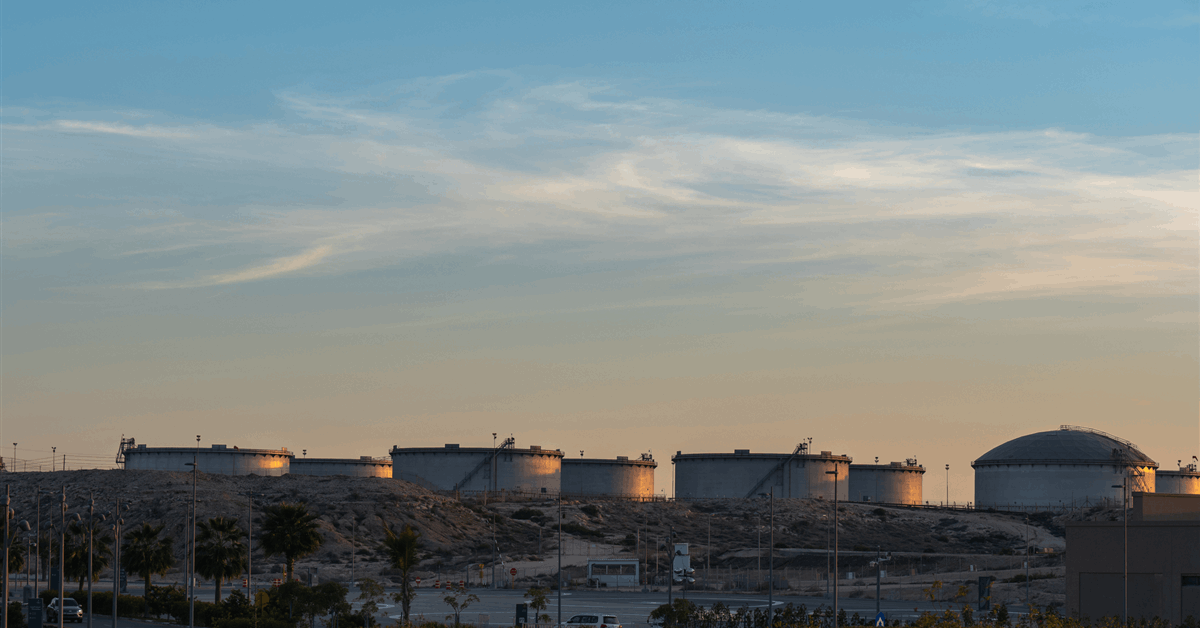
The global oil market is currently navigating a precarious landscape, with alarming signals emanating directly from the heart of the world’s most critical crude exporting region. Proprietary intelligence indicates that major oil storage facilities across Saudi Arabia and Iraq are rapidly approaching capacity, a direct consequence of significant disruptions to key export channels, most notably the Strait of Hormuz. This escalating storage crunch, unfolding against a backdrop of recent price declines, introduces a potent new layer of uncertainty for investors, amplifying downside risks and demanding a reassessment of current market dynamics. Understanding the immediate implications and forward trajectory of this challenge is paramount for any investor with exposure to energy markets.
Mounting Pressures: Storage Nearing Saturation in the Gulf
Geospatial analytics reveal a concerning trend across critical Middle Eastern terminals. As of early March, Saudi Arabia’s Ju’aymah terminal, a cornerstone of the Kingdom’s export infrastructure, was quickly running out of spare capacity. Further south, four out of six tanks at the Ras Tanura refinery were already at full capacity following recent regional incidents. This storage constraint is not unique to Saudi Arabia. Iraq, OPEC’s second-largest producer, faces an even more acute vulnerability. Its Basrah terminal, vital for southern exports, held less than two days of export capacity, a dire situation given its relatively limited storage infrastructure compared to its substantial output. This structural inadequacy means Iraq is particularly susceptible to export disruptions, with production already being curtailed at its largest fields.
Collectively, the five Arab producers in the Gulf boast an aggregate onshore storage capacity of approximately 350 million barrels. However, observed crude stockpiles in these nations stood at roughly 175 million barrels as of March 1st. Considering that operational capacity rarely exceeds 80% of nameplate levels, the effective buffer against sustained export challenges is considerably thinner than headline numbers suggest. This tightening storage, particularly in a region so central to global supply, creates a significant physical bottleneck that directly impacts the flow of oil to market and, consequently, its valuation.
Market Reaction: Price Downturn Amid Supply Bottlenecks
The market is already reflecting significant apprehension. As of today, Brent crude trades at $90.38 per barrel, holding flat for the day but marking a substantial decline from its $112.78 peak recorded just weeks ago on March 30th. WTI similarly sits at $82.59. This sharp, nearly 20% drop in Brent over the past fortnight underscores a market grappling with profound downside pressures. While a complete closure of a major chokepoint like the Strait of Hormuz would typically trigger a price surge due to supply fears, the current scenario suggests a more complex dynamic. The inability to physically export crude from these key producing nations results in a localized glut, effectively taking that unexportable volume off the immediate global market and creating regional price pressure for producers. This, combined with broader market sentiment or demand concerns, reinforces the existing bearish trend and exacerbates the risk of further price erosion if the export blockages persist and storage continues to fill.
Investor Priorities: Navigating Uncertainty and Upcoming Catalysts
Our proprietary reader intent data highlights a clear investor preoccupation with price direction, with many actively querying WTI’s trajectory and seeking predictions for oil prices by the end of 2026. This collective anxiety underscores the need for clear analysis in a highly volatile environment. The escalating storage crisis in the Gulf, coupled with the effective closure of the Strait of Hormuz, directly feeds into this uncertainty. Investors are not just asking “is WTI going up or down,” but rather “what fundamental shifts are driving this volatility?” The answer, in part, lies in these physical bottlenecks and geopolitical risks.
Looking ahead, the market will scrutinize several critical upcoming events. The OPEC+ Joint Ministerial Monitoring Committee (JMMC) meeting on April 20th, followed by the full OPEC+ Ministerial Meeting on April 25th, will be paramount. With key members like Saudi Arabia and Iraq facing severe internal storage constraints, any discussions around production quotas, compliance, or strategic adjustments will take on heightened significance. Will these nations be forced to unilaterally cut production due to a lack of storage, or will OPEC+ implement broader adjustments to stabilize the market? Furthermore, the weekly API and EIA crude inventory reports, scheduled for April 21st, 22nd, 28th, and 29th, will offer crucial insights into global inventory health, providing context for how broadly these Middle Eastern disruptions are impacting international stockpiles and refined product markets.
Strategic Portfolio Adjustments in a Shifting Landscape
For investors, the current environment demands both caution and strategic foresight. The combination of a critical export chokepoint disruption and rapidly filling storage in major producing hubs introduces a significant geopolitical risk premium while simultaneously creating a dynamic where regional supply gluts can depress local prices and signal broader market weakness. Upstream players in regions unaffected by these export constraints might see relative advantages, while those heavily reliant on Gulf exports face immediate operational and financial headwinds. Midstream infrastructure outside the immediate affected zone, particularly those offering alternative export routes or storage, could see increased demand. Downstream refiners, however, might grapple with disrupted crude supply chains and potentially higher input costs if the blockage persists and truly restricts global supply.
The ongoing situation underscores the necessity of a diversified energy portfolio. Investors should closely monitor not just headline crude prices, but also regional differentials, tanker rates, and the nuanced language emerging from OPEC+ meetings. The coming weeks, punctuated by key inventory releases and OPEC+ decisions, will provide further clarity on whether the market can absorb this shock without more significant price depreciation, or if the current storage crisis represents a tipping point for global oil supply dynamics. Vigilance and adaptability will be key to navigating this evolving landscape and positioning for potential opportunities or mitigating risks as we move towards the anticipated 2026 price targets our readers are focused on.