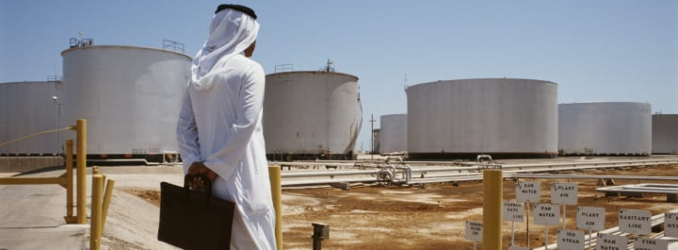
Saudi Cuts & Hormuz Woes Signal Supply Squeeze
The global oil market is grappling with a profound supply challenge as escalating geopolitical tensions have significantly impacted the crucial Strait of Hormuz. With this vital chokepoint facing unprecedented disruption, major producers in the Persian Gulf, led by Saudi Arabia, have initiated production adjustments, signaling a tightening supply landscape. This situation, combined with strategic storage considerations and unusual market maneuvers, presents a complex and volatile outlook for investors navigating the energy sector.
Hormuz Disruption Forces Strategic Production Adjustments
The Strait of Hormuz, a conduit for a substantial portion of the world’s seaborne oil, has seen its traffic severely curtailed amidst ongoing Middle East hostilities. This near-standstill has compelled significant projects to scale back operations, sending ripples through global supply chains and driving up crude prices. In response, Saudi Arabia, a key global producer, has commenced reducing its oil output. This move mirrors actions taken by other prominent OPEC members, including the United Arab Emirates, Kuwait, and Iraq, all facing similar operational pressures.
Saudi Arabia’s strategic response extends beyond simple cuts. The kingdom, which typically produces around 10 million barrels per day (MMbpd) and exports approximately 7 MMbpd, is actively diverting a portion of its shipments away from the Strait of Hormuz. Efforts are underway to reroute crude through the Yanbu pipeline to the Red Sea. However, the pipeline’s capacity of 5 MMbpd is insufficient to fully compensate for the typical export volumes, leaving a considerable gap. Analysts familiar with the region’s operations suggest that Saudi Arabia’s larger storage capacity, compared to its neighbors, allows it to pre-emptively lower production. This proactive measure aims to sustain field operations over a longer duration, avoiding complete shutdowns and preserving reservoir integrity in a period of uncertain export logistics.
Storage Capacity Under Pressure and Unconventional Market Moves
The ongoing supply chain chaos is placing immense pressure on regional storage capacities, prompting producers to undertake unusual market actions. JPMorgan Chase & Co. previously estimated that Saudi Arabia could exhaust its oil and fuel storage in just over two months from the conflict’s onset. In contrast, countries like Iraq and Kuwait faced much shorter timelines, potentially reaching capacity limits in about a week and two weeks, respectively, which prompted their earlier production reductions. Collective storage capacity for Arab producers in the Persian Gulf, including Saudi Arabia, the UAE, Kuwait, and Iraq, stands at roughly 100 million barrels of remaining usable capacity, representing about a third of their total. However, experts like Antoine Halff of Kayrros note that operational usage rarely exceeds 80% of nameplate levels, meaning the effective usable capacity is considerably lower in practice.
In a rare departure from its standard long-term contracts, Saudi Aramco has offered some crude supply via spot tenders for immediate delivery, including volumes from a supertanker near Taiwan. This unprecedented flexibility underscores the urgency producers feel to keep the market supplied under challenging conditions. Further illustrating the extraordinary measures being taken, a Saudi oil tanker was recently observed transiting the Strait of Hormuz with its satellite signal switched off, a highly unusual maneuver. While this vessel successfully navigated the passage, the vast majority of shipowners remain highly reluctant to traverse the chokepoint, highlighting the perceived risk and contributing to the supply bottleneck.
Navigating Volatility: Current Market Snapshot and Investor Concerns
Despite the clear indications of a tightening supply, recent market performance reveals a complex interplay of factors influencing crude prices. As of today, Brent crude trades at $92.61, experiencing a slight decline of 0.68%, with its day range between $92.57 and $94.21. Similarly, WTI crude is priced at $89.26, down 0.46%, moving within a day range of $88.76 to $90.71. This intraday dip, however, follows a more significant trend; Brent has seen a 7% decrease over the past 14 days, falling from $101.16 on April 1st to $94.09 on April 21st, before today’s further slight adjustment. This recent downward trajectory, amidst the backdrop of Hormuz disruptions, suggests that while supply concerns are acute, broader macroeconomic anxieties or profit-taking might be exerting counter-pressure on prices.
Our proprietary reader intent data indicates that investors are keenly focused on these price dynamics, with common queries revolving around the immediate direction of WTI and the long-term outlook for oil prices, specifically “what do you predict the price of oil per barrel will be by end of 2026?” This highlights a prevailing uncertainty: are current declines a temporary blip, or do they signal a deeper underlying shift? While the immediate supply squeeze from the Middle East provides clear bullish impetus, investors are balancing this against potential demand destruction scenarios or shifts in global economic sentiment. The market’s current volatility reflects this tension, where geopolitical risk premiums are being weighed against other fundamental drivers.
Forward Outlook: Key Data Points and Upcoming Catalysts
Looking ahead, investors will closely monitor a series of upcoming energy events for critical insights into market direction and potential catalysts. The EIA Weekly Petroleum Status Report, scheduled for release on April 22nd, April 29th, and May 6th, will provide crucial data on U.S. crude oil inventories, refinery utilization, and demand indicators. These reports are particularly important as they offer a counter-narrative to the Middle East supply issues, revealing whether robust U.S. demand or production can help mitigate global shortfalls, or if domestic trends exacerbate the tightening picture.
Further insights will come from the Baker Hughes Rig Count on April 24th and May 1st, which will shed light on North American drilling activity and future supply potential. Perhaps most significant for long-term outlooks will be the EIA Short-Term Energy Outlook on May 2nd. This comprehensive report will offer updated projections for global oil supply, demand, and prices, providing a benchmark against which investors can assess their strategies for the remainder of 2026. Any revisions to supply or demand forecasts in light of the Hormuz situation will be scrutinized, offering a clearer picture of how government analysts perceive the evolving geopolitical and market landscape. These upcoming data points will be instrumental in calibrating expectations for crude prices, which remain highly sensitive to both immediate supply shocks and broader economic signals.