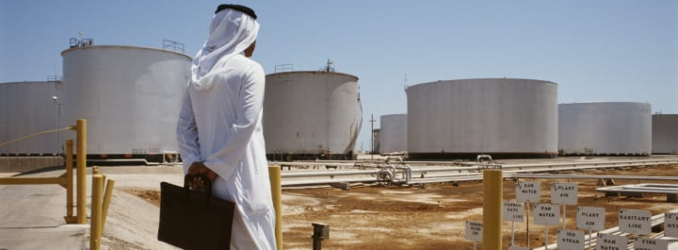
The global oil market is once again navigating treacherous waters, marked by significant geopolitical instability and a supply landscape in flux. Recent data indicates a substantial increase in OPEC crude production last month, largely spearheaded by Saudi Arabia, in a move that appears to have been a strategic pre-emptive measure amidst escalating regional tensions. However, this boost has been quickly overshadowed by the severe disruptions following recent conflict, which has effectively halted critical tanker flows through the Strait of Hormuz. As of today, Brent crude trades at $92.99, a slight dip of 0.27% within a day range of $92.57 to $94.21, while WTI crude sits at $89.44, down 0.26%. This immediate snapshot reflects a market grappling with contradictory signals: a significant supply shock on one hand, and attempts at stabilization and demand concerns on the other. For investors, understanding the interplay of these forces is paramount.
Saudi Arabia’s Strategic Output Surge Amidst Regional Volatility
Last month witnessed a notable surge in OPEC’s crude oil output, increasing by 640,000 barrels per day (bpd) – the largest monthly hike since June. This collective effort brought the 12 members’ total pumping to 29.52 MMbpd. The Kingdom of Saudi Arabia played a pivotal role in this expansion, accounting for approximately half of the additional production. Our proprietary tanker tracking data confirms that Riyadh, alongside other key producers in the Persian Gulf, significantly ramped up exports in the weeks leading up to the recent U.S.-Israeli attack on Iran. This proactive measure, which saw Saudi Arabia raise its production by 340,000 bpd to 10.34 MMbpd, and even notify OPEC of a larger boost of about 782,000 bpd, suggests an anticipation of market disruption. While OPEC+ nations had formally agreed to a production freeze for the first quarter, the looming prospect of regional conflict evidently shifted strategic calculations. This pre-emptive increase echoes a similar surge by the Kingdom and other Gulf producers prior to previous escalations, highlighting a pattern of anticipating and attempting to mitigate supply shocks.
The Strait of Hormuz: A Bottleneck with Global Repercussions
Despite Saudi Arabia’s efforts to bolster supply, the subsequent conflict and the effective cessation of tanker shipments through the vital Strait of Hormuz have created an unprecedented supply vacuum. Our intelligence indicates that Gulf countries, heavily reliant on this narrow corridor for exports, have been forced to shutter a staggering 8 MMbpd of crude production, in addition to 2 million barrels of condensate and natural gas liquids. This immediate and massive curtailment far outweighs any pre-emptive production increases, sending ripples across the global energy complex. The market’s initial reaction saw prices surge towards $100 per barrel in London, though they have since receded slightly to current levels of $92.99 for Brent. This highlights the sheer scale of the disruption and the enduring vulnerability of global energy supply chains to geopolitical flashpoints in the Middle East. Investors must acknowledge that while the Strait remains effectively closed, a significant risk premium will persist, irrespective of other market fundamentals.
Navigating Price Trajectories: Investor Concerns and Market Signals
The current market volatility has investors keenly focused on the direction of crude prices, particularly WTI, a question at the forefront of many inquiries this week. While Brent has seen a 7% decline from $101.16 on April 1st to $94.09 on April 21st, reflecting a period of uncertainty and some profit-taking, the current stabilization around $92.99 for Brent and $89.44 for WTI suggests a market seeking a new equilibrium. The International Energy Agency (IEA) nations, including major consumers like the U.S. and Japan, have responded to the supply shock by agreeing to release an unprecedented 400 million barrels from emergency oil reserves. While this move aims to cushion the immediate impact, its effectiveness in fully offsetting an ongoing 8 MMbpd daily production loss from the Gulf remains a point of contention. Investors are weighing the immediate relief from strategic reserves against the enduring supply deficit and the potential for prolonged disruption, making long-term price predictions, such as where oil might trade by the end of 2026, incredibly complex and contingent on geopolitical de-escalation.
Upcoming Catalysts and Forward-Looking Investor Strategy
For discerning investors, the coming weeks will offer crucial data points to help assess the evolving supply-demand picture and potential price trajectories. Our proprietary calendar of upcoming energy events highlights several key releases that will shape market sentiment. Tomorrow, April 22nd, the EIA Weekly Petroleum Status Report will provide an essential snapshot of U.S. crude oil and product inventories, offering insights into domestic supply and consumption trends. This will be followed by the Baker Hughes Rig Count on Friday, April 24th, which offers a forward-looking indicator of U.S. oil production activity. Investors should also closely monitor the API Weekly Crude Inventory reports on April 28th and May 5th, alongside subsequent EIA reports on April 29th and May 6th. Perhaps most significantly, the EIA Short-Term Energy Outlook, due on May 2nd, will offer updated forecasts on global and domestic supply, demand, and prices, providing a critical baseline for strategic planning. These regular data releases, combined with ongoing geopolitical developments, will be pivotal in determining whether current price levels hold, or if the market is poised for another significant shift, influencing investment decisions across the energy sector.


