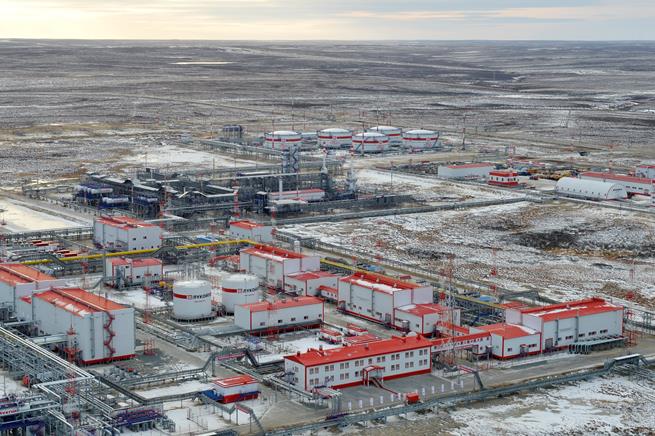
The global oil and gas landscape faces renewed turbulence as U.S. sanctions against Russian energy giant Lukoil PJSC have triggered an intense scramble for control over its vast international assets. With a critical deadline approaching, governments across Europe and the Middle East are racing to ensure operational continuity for oil fields, refineries, and distribution networks previously managed by Lukoil. This complex geopolitical chess match, exacerbated by the recent U.S. Treasury rejection of a key acquisition bid, introduces significant uncertainty into an already volatile market, demanding astute analysis from investors tracking global energy supply and demand dynamics.
Lukoil’s Sanctions Fallout: A Refined Market Under Pressure
The imposition of U.S. and UK sanctions last month, providing a brief window until November 21 for the termination of dealings with Lukoil, has sent shockwaves through the company’s sprawling international operations. The situation intensified dramatically when the U.S. Treasury intervened last week, labeling energy merchant Gunvor Group as a “Kremlin puppet” and effectively quashing its agreed deal to acquire Lukoil’s overseas assets. This move instantly dissolved what appeared to be a straightforward solution, thrusting multiple nations into an urgent search for alternative arrangements to maintain crucial energy infrastructure.
As of today, April 19, 2026, Brent Crude trades at $90.38 per barrel, marking a significant 9.07% decline from its opening, with WTI Crude similarly down 9.41% to $82.59. This recent downturn, following a 14-day trend where Brent shed $22.40, or nearly 20%, from its March 30 price of $112.78, underscores a broader market volatility. While global crude markets possess a reasonable buffer to absorb some supply disruptions, the refining sector is demonstrably more vulnerable. We are already seeing tangible impacts: Lukoil has declared force majeure at a major Iraqi oil field, accounting for approximately 10% of the country’s total output, necessitating intervention by state companies. Bulgaria has initiated steps towards full control of its largest refinery, and in Finland, some filling stations have faced fuel shortages due to disrupted deliveries from a Lukoil-affiliated company. These localized disruptions, though potentially minor individually, collectively highlight the fragility of the refining supply chain under such geopolitical stress.
Navigating Investor Concerns Amidst Supply Chain Shocks
Our proprietary reader intent data reveals a heightened focus among investors on the long-term trajectory of oil prices and the stability of global supply. Specifically, many are asking about the predicted price of oil per barrel by the end of 2026 and the current production quotas set by OPEC+. The Lukoil saga adds a complex layer to these critical questions. The uncertainty surrounding the operational future of these assets directly impacts the supply side equation, particularly for refined products. While the immediate crude market reaction, as seen in today’s price dip, might suggest a temporary oversupply perception, the reality on the ground in the refining sector could be quite different.
Investors should recognize that continued disruptions to Lukoil’s refining and distribution networks could lead to localized or regional product shortages, potentially putting upward pressure on gasoline and diesel prices even if crude markets remain soft. For instance, today’s gasoline price of $2.93, down 5.18%, could see upward pressure if the supply chain issues in Europe and elsewhere escalate. The scramble to nationalize or otherwise manage these assets is a stop-gap measure, but the efficiency and long-term viability of these transitions remain unproven. This situation presents both risks and opportunities for investors, favoring those with exposure to robust, geographically diversified refining operations or logistics firms capable of navigating such complex supply environments.
Forward Outlook: Key Dates and Strategic Responses
The looming November 21 deadline for Lukoil dealings serves as a critical inflection point, but the immediate weeks ahead are equally crucial for market signals. Looking at our upcoming energy events calendar, the OPEC+ Joint Ministerial Monitoring Committee (JMMC) Meeting on April 19, followed by the full OPEC+ Ministerial Meeting on April 20, will be pivotal. Investors will be scrutinizing any statements regarding current production quotas or potential adjustments, especially in light of the Lukoil disruptions. Will the alliance perceive these asset transfers as a material threat to global supply stability, warranting a reassessment of their output strategy?
Furthermore, the API Weekly Crude Inventory reports on April 21 and 28, along with the EIA Weekly Petroleum Status Reports on April 22 and 29, will provide essential insights into crude and product stock levels in the U.S., potentially indicating any ripple effects from the Lukoil situation. While these reports focus primarily on the U.S. market, they offer a global sentiment barometer. The Baker Hughes Rig Count on April 24 and May 1 will also be watched for signals on future supply capacity. The ongoing “scramble” by governments indicates a strong desire to prevent significant supply disruptions. Potential solutions range from state-backed entities temporarily taking over operations to a renewed search for politically palatable buyers, possibly consortiums or state-owned enterprises that can navigate the sanctions regime. The success or failure of these governmental interventions will largely determine the true impact on global energy markets beyond the immediate volatility.