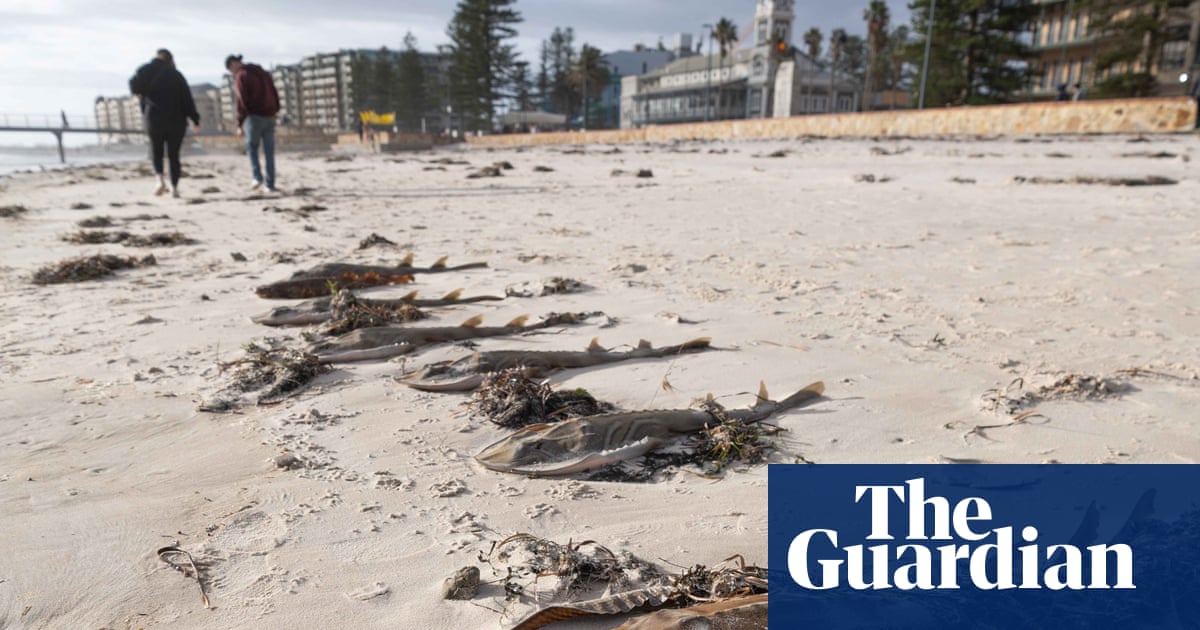
A catastrophic marine heatwave has ignited an algal bloom off South Australia, an ecological event scientists are now comparing in severity to the devastating Black Summer bushfires. While seemingly distant from the daily machinations of global crude markets, this unfolding disaster carries significant, albeit indirect, implications for energy investors. Beyond the immediate environmental toll, the scale of this crisis demands a robust governmental response, potentially diverting substantial capital and influencing long-term regulatory landscapes, all factors that prudent oil and gas investors must consider as they navigate an increasingly complex global energy transition.
The Unfolding Ecological Crisis and its Fiscal Wake
The severity of the South Australian algal bloom cannot be overstated. Experts from a consortium of Australian universities describe it as “one of the worst marine disasters in living memory,” prompting calls for immediate federal and state intervention. The comparison to the Black Summer bushfires, which necessitated a $2 billion national recovery fund (including over $200 million for wildlife), provides a critical lens for understanding the potential financial outlay. While federal and state governments have initially committed $14 million each in assistance, many voices, including Senator Anne Ruston and MP Rebekha Sharkie, argue this is “manifestly inadequate” given the magnitude of the problem and the clean-up required. For energy investors, this signals a potential for significant government spending to be redirected towards ecological recovery rather than, for instance, infrastructure development or even certain energy transition initiatives in the short to medium term. Such large-scale fiscal commitments, especially in a developed economy, can shift national budgetary priorities, subtly impacting the investment climate for various sectors, including energy.
Navigating Volatility: Current Market Realities Amidst Regional Shocks
Against the backdrop of this regional ecological emergency, global crude markets continue to churn, driven by their own supply-demand fundamentals. As of today, Brent crude trades at $94.85, showing a marginal daily dip of 0.08%, while WTI crude sits at $91.19, down 0.11%. Gasoline prices are also reflecting slight downward pressure at $2.99, down 0.33%. These slight movements reflect the daily ebb and flow within a tight market. Looking at the broader trend, Brent has experienced a notable shift over the past two weeks, declining from $108.01 on March 26th to $94.58 as of April 15th, representing a 12.4% drop. This recent downward pressure underscores that macro-economic concerns and global supply dynamics, such as OPEC+ output decisions and inventory levels, currently exert the most dominant influence on pricing. However, for astute investors, events like the South Australian algal bloom serve as a potent reminder of increasing environmental risks. While not a direct supply disruption for crude, such events contribute to a broader narrative of climate instability, which can have long-term implications for regulatory frameworks and the social license to operate for fossil fuel projects, particularly in sensitive coastal or marine environments.
ESG Scrutiny and Operational Risks in the South Australian Context
The unfolding crisis in South Australia will undoubtedly heighten ESG (Environmental, Social, Governance) scrutiny for energy companies operating in the region or considering future investments there. The Biodiversity Council’s call for “rapid investigation” and “long-term monitoring” of southern reefs, mirroring initiatives like the $40 million 10-year Great Barrier Reef monitoring program, signals a trend towards increased environmental oversight. Investors are increasingly asking about the long-term base-case Brent price forecasts for the next quarter and even for all of 2026. While these models typically account for geopolitical risks, demand shifts, and supply adjustments, the growing frequency and severity of environmental disasters introduce a new layer of unquantifiable risk. This heightened environmental sensitivity could translate into more stringent permitting processes, increased operational costs due to enhanced monitoring requirements, or even public opposition to new projects. Companies perceived as having inadequate environmental safeguards or response plans could face reputational damage and financial penalties, affecting their valuations and investor appeal. The South Australian event, therefore, acts as a bellwether for how future environmental policies might evolve, potentially impacting offshore exploration, production, and shipping routes globally.
Ahead of the Curve: Monitoring Key Catalysts and Future Implications
Looking forward, while the immediate focus for oil and gas investors remains on critical market catalysts, the South Australian crisis will weave into the broader tapestry of energy policy and investment strategy. This week brings the Baker Hughes Rig Count on Friday, followed swiftly by the OPEC+ JMMC meeting on Saturday and the full Ministerial meeting on Monday, April 20th. These OPEC+ discussions will be paramount in shaping near-term supply outlooks and are a primary driver for our base-case Brent price forecast for the next quarter. Further insights into demand will come from the API Weekly Crude Inventory on April 21st and the EIA Weekly Petroleum Status Report on April 22nd. Yet, as governments grapple with the ecological fallout in South Australia, the precedent set by their response could inform future environmental regulations that affect the energy sector. Increased funding for marine research and monitoring, as advocated by scientists, might lead to stricter operational standards for maritime industries. For investors building a consensus 2026 Brent forecast, factoring in the escalating frequency of such environmental events and their potential to influence policy, divert government resources, and strengthen ESG mandates is becoming non-negotiable. This South Australian crisis is not just an environmental headline; it’s a signal for an evolving risk landscape that demands proactive consideration in energy investment strategies.


