The decision by South Korea to implement a price cap on fuel products, a move unseen in three decades, serves as a stark reminder of the escalating inflationary pressures stemming from a volatile global energy market. This emergency measure, driven by President Lee Jae Myung’s administration to curb surging consumer costs, underscores the profound economic strain placed on import-reliant nations by geopolitical instability. For investors, Seoul’s unprecedented intervention is not merely a regional headline; it’s a critical signal of how deeply oil market turbulence can ripple through national economies, influencing everything from monetary policy to consumer spending and corporate earnings. As the global energy landscape grapples with supply uncertainties and persistent demand, understanding these government responses and the underlying market dynamics is paramount for informed investment decisions.
Geopolitical Headwinds Fueling Inflation and Policy Responses
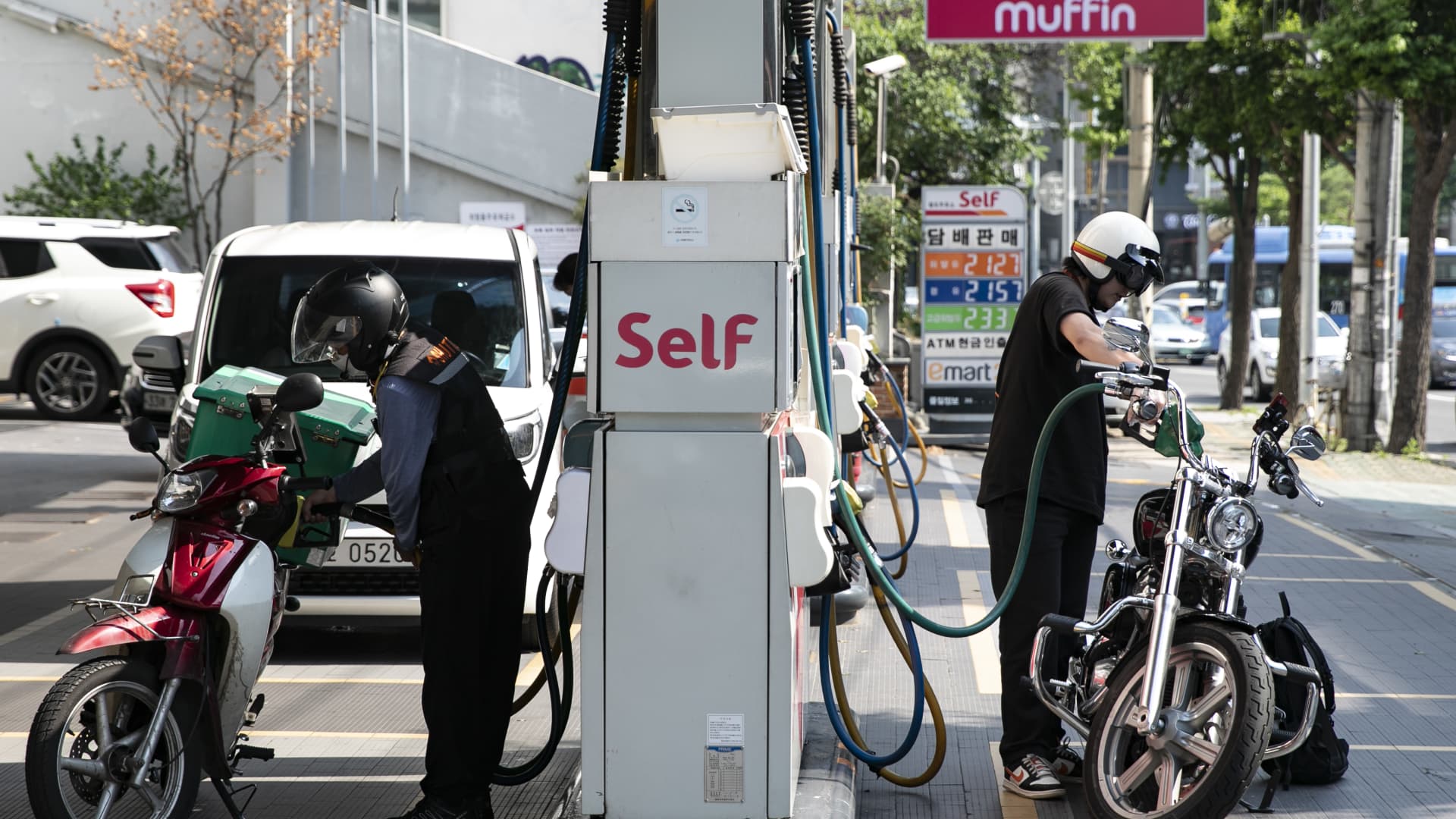
South Korea’s dramatic intervention with a fuel price cap directly responds to the significant burden placed on its trade-dependent economy by soaring energy costs. The catalyst, as highlighted by President Lee, is the ongoing conflict in the Middle East, which has prompted key producers to cut output and amplified concerns over supply security. While the immediate price surges seen in the past, with Brent futures jumping 13% and WTI soaring 30% in a single day, represent historical volatility, the underlying geopolitical risk premium remains a dominant factor. As of today, Brent crude trades at $92.61, reflecting a -0.68% dip within a daily range of $92.57 to $94.21. Similarly, WTI crude stands at $89.26, down -0.46% in a range of $88.76 to $90.71. These figures, while off their absolute peaks, still represent an elevated price environment compared to historical averages, especially when considering the 14-day trend shows Brent declining from $101.16 to $94.09, indicating a recent cooling but from a high base. This sustained high-price environment forces governments like South Korea’s to act decisively, even if such measures can distort market signals in the long run. The local impact is clear: average gasoline prices in Seoul crossed 1,900 won ($1.28) per liter for the first time in nearly four years, further underscoring the consumer pain. Investors must recognize that such governmental price controls, while aimed at short-term relief, can introduce new complexities into the energy market, potentially impacting refiner margins and local demand elasticity.
Diversification and Supply Security: A Key Investment Theme
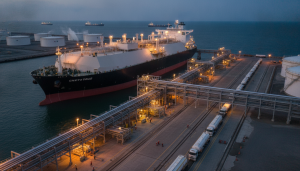
President Lee Jae Myung’s call to “swiftly identify alternative supply lines that do not transit the Strait of Hormuz” reveals a strategic imperative that will shape energy infrastructure investment for years to come. The Strait of Hormuz, a critical chokepoint for global oil shipments, carries inherent geopolitical risk, making diversification a top priority for energy-importing nations. This focus on energy security translates into potential opportunities for investors in a range of sectors. Companies involved in LNG infrastructure, pipeline projects bypassing traditional routes, renewable energy development, and even enhanced oil recovery projects in more stable regions could see increased interest and capital allocation. Our proprietary data indicates that investor sentiment is highly attuned to supply-side stability, with many asking “is WTI going up or down?” The answer is intrinsically tied to the perceived security of supply, and any efforts to de-risk supply chains will have a measurable impact. Therefore, identifying companies that can benefit from this long-term shift towards greater energy independence and supply resilience will be crucial for portfolio outperformance. Furthermore, the volatility observed in the Kospi, experiencing record swings and multiple trading curbs, alongside the South Korean won hitting its weakest level against the dollar since 2009, highlights the broader financial market instability that geopolitical energy shocks can unleash. Investing in assets that offer a hedge against such currency and equity market volatility, perhaps through exposure to robust energy producers outside high-risk regions or commodity-linked instruments, becomes increasingly attractive.
Upcoming Catalysts and Forward-Looking Price Dynamics
The immediate trajectory of crude prices will be heavily influenced by a series of upcoming data releases and ongoing geopolitical developments. Investors are actively seeking clarity on the future, with questions like “what do you predict the price of oil per barrel will be by end of 2026?” dominating our reader intent signals. While long-term predictions are fraught with variables, short-term catalysts offer tangible insights. This week, the EIA Weekly Petroleum Status Report, due on April 22nd, will provide critical data on U.S. crude oil and product inventories, refinery utilization, and demand indicators. A significant build or draw in inventories can trigger immediate price reactions, signaling either an oversupplied or undersupplied market. Following this, the Baker Hughes Rig Count on April 24th will offer an early look into North American production trends, indicating whether producers are responding to current price levels with increased drilling activity. Looking further ahead, the API Weekly Crude Inventory on April 28th and another EIA Weekly Petroleum Status Report on April 29th will continue to shape the narrative around U.S. supply-demand balances. Crucially, the EIA Short-Term Energy Outlook on May 2nd will offer a more comprehensive forecast on global and domestic supply, demand, and price trends, providing a vital framework for investors evaluating their positions. These scheduled events, combined with the unpredictable nature of geopolitical events, ensure that the oil market will remain highly dynamic, requiring agile investment strategies. Any signs of easing supply concerns or unexpected demand weakness could pressure prices, while further geopolitical escalation or unexpected production cuts would likely push them higher.
Navigating Investment in a Volatile Energy Landscape
The current environment, exemplified by South Korea’s fuel cap and the broader geopolitical tensions, demands a nuanced approach from oil and gas investors. The days of simply riding an upward price trend are increasingly challenged by government interventions, currency fluctuations, and the ever-present threat of supply disruptions. Our proprietary data shows gasoline prices at $3.1, down -0.96% today, indicating that while crude remains elevated, downstream prices can exhibit their own dynamics, influenced by refining margins and local policies. Investors should consider strategies that account for both the immediate volatility and the longer-term structural shifts in energy markets. This includes evaluating companies with diversified asset portfolios, strong balance sheets that can withstand market swings, and those actively involved in energy transition technologies or infrastructure. Furthermore, understanding the interplay between crude prices, currency movements, and national economic policies, as seen with the Kospi’s wild swings and the Won’s depreciation, is vital. Hedging strategies, selective exposure to integrated majors, or focusing on niche energy service providers that benefit from increased capital expenditure in energy security and diversification could offer resilience. Ultimately, the market is signaling a continued era of elevated risk premium for crude, but also a growing imperative for nations to secure their energy future, creating both challenges and compelling opportunities for the discerning investor.