

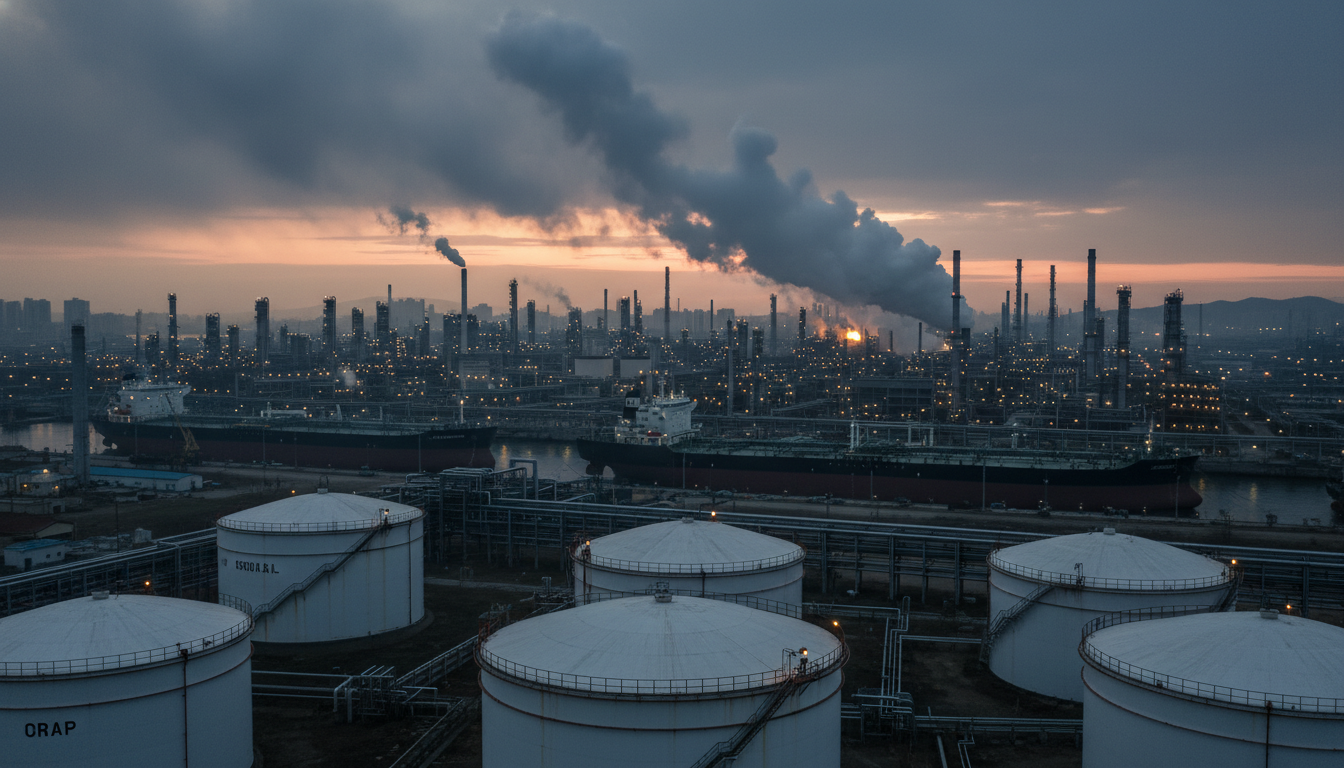
South Korea Eyes Drastic Measures as Oil Price Threshold Looms
Seoul is preparing its economy for a significant energy crunch, with the nation’s finance minister signaling that widespread driving restrictions could be enacted if crude oil prices surge past the critical $120 per barrel mark. This preemptive strategy underscores the escalating concern within a major global economy over the potential for supply disruptions stemming from the ongoing conflict in Iran. Investors are watching closely as this move could set a precedent for demand-side interventions in other energy-dependent economies.
Finance Minister Koo Yun Cheol recently revealed on KBS that the government is actively evaluating the extension of current driving limitations to the general populace. “We are reviewing whether to extend the system to the private sector to encourage public cooperation,” Cheol stated, emphasizing the hope that such drastic measures ultimately prove unnecessary should the geopolitical landscape stabilize. This proactive stance reflects a deep-seated anxiety over the nation’s energy security and the broader implications for its robust industrial base.
Historic Precedent and Escalating Concerns
The proposed expansion of driving curtailments would mark a historic moment for South Korea, representing the first such nationwide intervention since the 1991 Gulf War. Currently, restrictions are in place for civil servants, limiting their access to government facilities by car based on the final digit of their license plates. Extending this system to the private sector would signal a profound elevation of concern, highlighting the severe economic ramifications anticipated from a sustained period of high crude prices.
President Lee Jae Myung has already implored citizens to conserve energy, urging a shift towards public transportation and a reduction in electricity consumption. These appeals underscore the gravity of the situation, as a prolonged conflict involving Iran threatens to destabilize global energy markets and inflict inflationary pressures on nations heavily reliant on imported hydrocarbons. For South Korea, a cornerstone of global technology supply chains, an energy shock carries immense risk, potentially disrupting manufacturing and export capabilities.
Economic Vulnerability and Global Market Impact
South Korea stands as a paradoxical player in the global energy arena: a massive importer of crude oil and a significant exporter of refined fuels across Asia and beyond. This dual role means the nation is acutely sensitive to volatility in global crude prices. The rising cost of raw materials, exacerbated by the current energy environment, is a direct threat to corporate margins and consumer purchasing power. Furthermore, the conflict’s broader impact on shipping conditions and supply chains could impede trade flows, dampening the country’s economic vitality.
Despite these headwinds, early March data indicated that South Korea’s export growth maintained notable momentum, driven by resilient global demand. This resilience, however, is now under threat as input costs soar. The nation’s deep reliance on Middle Eastern energy imports makes it particularly vulnerable to any escalation in regional tensions, feeding inflationary spirals and potentially constraining economic growth. Investors should note that a slowdown in South Korea, a key manufacturing hub, could have cascading effects throughout global supply networks.
Investor Outlook: Navigating Energy Volatility
The potential implementation of widespread driving restrictions in South Korea serves as a powerful indicator of the extreme measures governments may consider to manage energy demand in a volatile market. For investors, this scenario underscores the critical importance of monitoring geopolitical developments and their direct impact on global commodity prices. The $120 per barrel threshold is not merely a price point for South Korea; it represents a psychological and economic tipping point that could trigger similar demand-side management strategies in other nations, reshaping short-term oil consumption patterns.
Companies with significant exposure to South Korean manufacturing, logistics, or consumer markets may face increased operational costs and potential demand shifts. Conversely, businesses in the renewable energy sector or those offering energy-efficient solutions could see renewed interest as nations strive to reduce their reliance on volatile fossil fuel markets. The interconnectedness of global trade and energy security means that Seoul’s response to rising oil prices will be keenly observed, offering valuable insights into the broader economic landscape and the evolving strategies to mitigate the impact of energy shocks.
As the Iran conflict continues to unfold, market participants must factor in not only direct supply disruptions but also the subsequent policy responses from major consuming nations like South Korea. These interventions, while aimed at cushioning domestic economies, inevitably ripple through international commodity markets, influencing everything from crude prices to the cost of goods and services globally. The coming weeks will be crucial in determining whether the $120 per barrel mark becomes a reality, and with it, a new era of energy management strategies for a world grappling with geopolitical uncertainty.
